United Nations
NATO Is an Alliance, Not a Protection Racket
Even if unsuccessful, Donald Trump’s aggressive campaign to acquire Greenland threatens to undermine America’s reputation as a champion of western security, freedom, and co-operation.
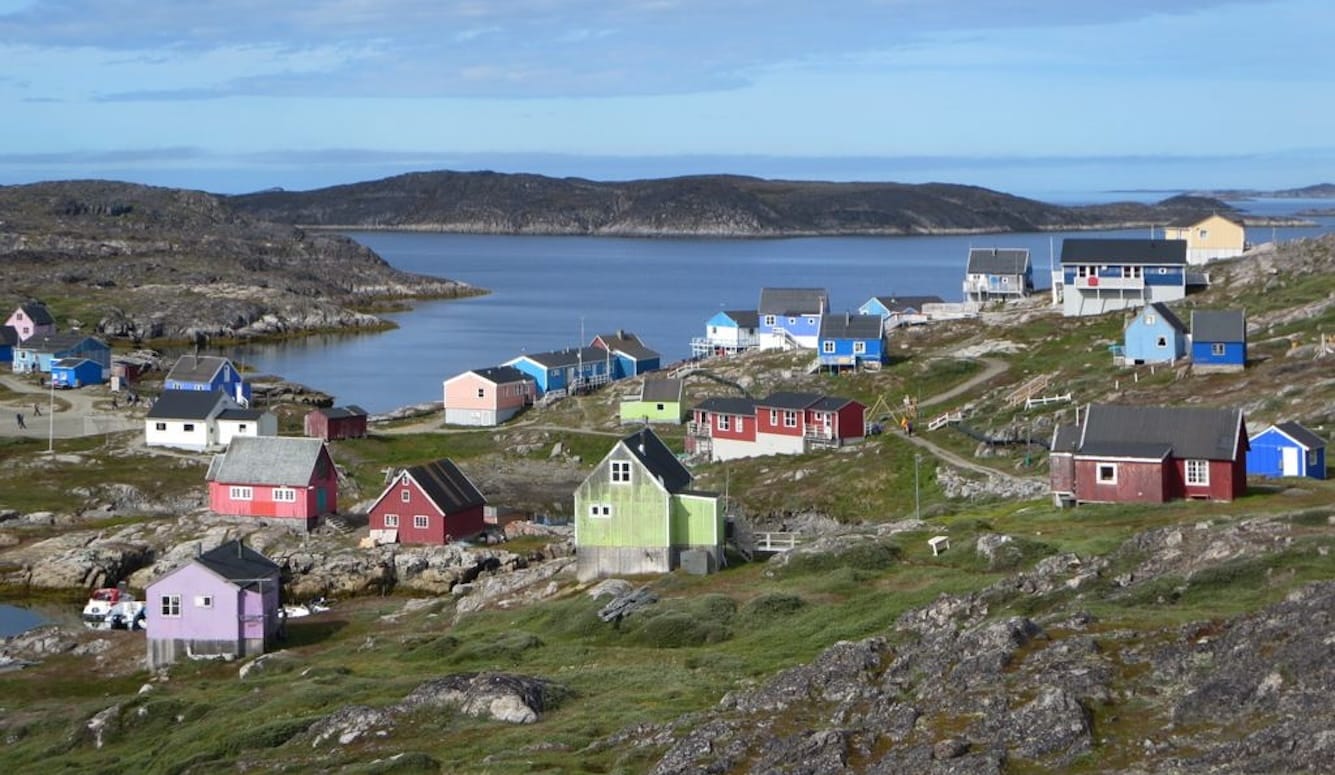

There are moments when geopolitical machinations reveal a government’s underlying character. The suggestion that the United States might purchase, annex, or otherwise take sovereign control of Greenland—an idea that’s been on Donald Trump’s mind since 2019—is one of them.
What looks like a simple play for minerals, surveillance stations, and military bases goes to an important moral question. Will the nation once viewed as the leading force for democracy and liberalism treat a territory controlled by an ally (in this case, Denmark) as if it were a commodity to be seized by force or purchased under duress? Or will it continue to respect the sovereign rights of others—a tendency that undergirds the international institutions joining Western democracies in common cause since the end of World War II?
Trump is certainly not the first US president to prioritise American interests over the letter of international law. But his predecessors typically did so when they were acting in (or against) rogue states that supported terrorism, attacked neighbours, or committed mass murder against their citizens. Saddam Hussein’s Iraq, for instance, checked all of these boxes. Denmark, by contrast, is a model democracy; not to mention a charter member of NATO.
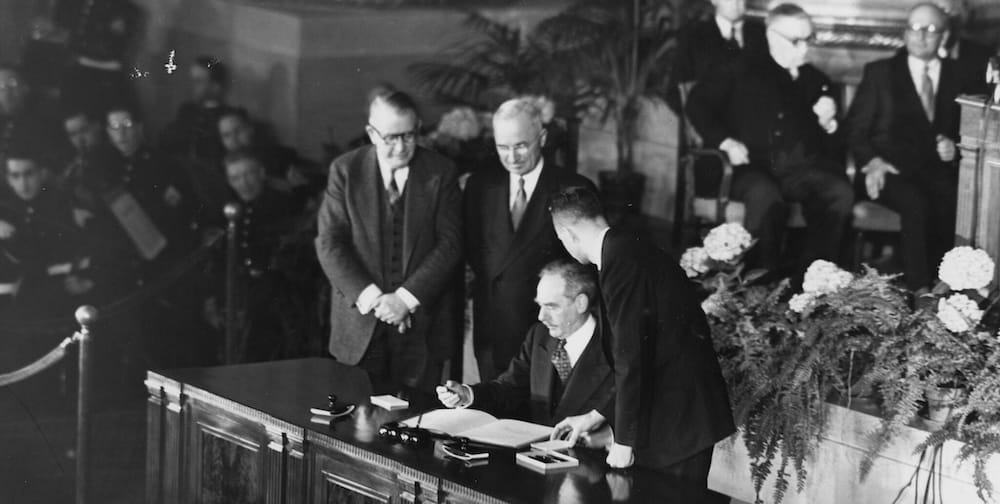
US President Harry Truman led the construction of the liberal international order in the late 1940s. And the United States continued to play a central role in the United Nations, the International Monetary Fund, the World Bank, the North American Aerospace Defense Command, and, of course, NATO itself. Of that organisation’s founding in 1949, Truman said: “In this treaty, we seek to establish freedom from aggression and from the use of force in the North Atlantic community.”
That community, then and now, includes Greenland—an autonomous territory that has long been part of what is formally known as the Kingdom of Denmark. But this hasn’t stopped Trump from using aggressive tactics to acquire the island, including threats of punitive tariffs against fellow NATO members that oppose his ambitions. Several European states, including France, Germany, Sweden, Norway, and the UK have taken these threats so seriously that they’ve recently sent symbolic military deployments to the island.
Speaking at the World Economic Forum in Davos, Switzerland on 21 January, Trump backed away from previous unsettling suggestions to the effect that he’d use military means to acquire Greenland. But no one knows whether that posture will change, as he’s been known to pivot abruptly on other geopolitical issues. (And the fact that Trump often seems to confuse Greenland with Iceland, an independent country 300 km away at its closest point, doesn’t inspire confidence that he’s yet studied the issue systematically.)
The strategic benefits offered by Greenland’s vast landmass and position in the middle of the North Atlantic are real. As historian Greg Koabel recently wrote in Quillette, this was widely understood throughout World War II. During the Cold War, the air bases and radar stations operated by United States and its NATO allies were seen as essential means to protect Western nations from a potential Soviet attack.
 Greg Koabel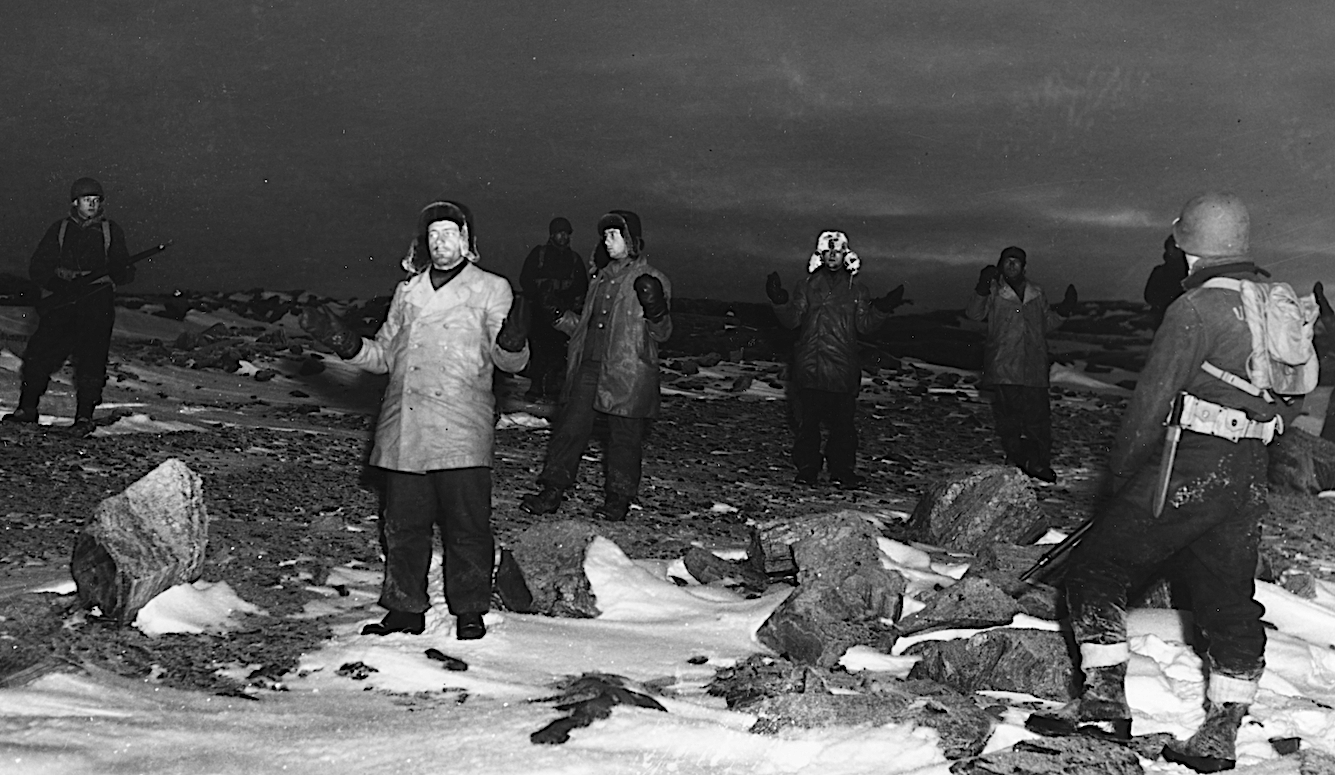
But Greenland is not terra nullius. It’s home to a (mostly) Inuit population whose roots on the island go back a millennium. Over time, these residents have gained almost complete autonomy under their self-government arrangement with Denmark. Trump’s apparent belief that the island is a prize to be won or bartered for—like one of those Caribbean colonies that European powers traded back and forth following the Napoleonic wars—is an insulting anachronism.
This approach is also self-defeating as a matter of foreign policy. For eight decades, the United States has not just been an architect, but also a beneficiary, of a rules-based international order built on reciprocal commitments. Even if nothing comes of Trump’s Greenland fixation, his manner of prosecuting it has sent all the wrong signals to America’s allies.
Keep reading
France’s Imaginary Austerity
A Clockwork Filmmaker


The Insight Trap

Cornell and Consent