European Politics
Europe Needs a New Alliance
Trump’s threat to annex Greenland has revealed the shakiness of America’s commitment to NATO. Europe urgently needs to create its own alternative.
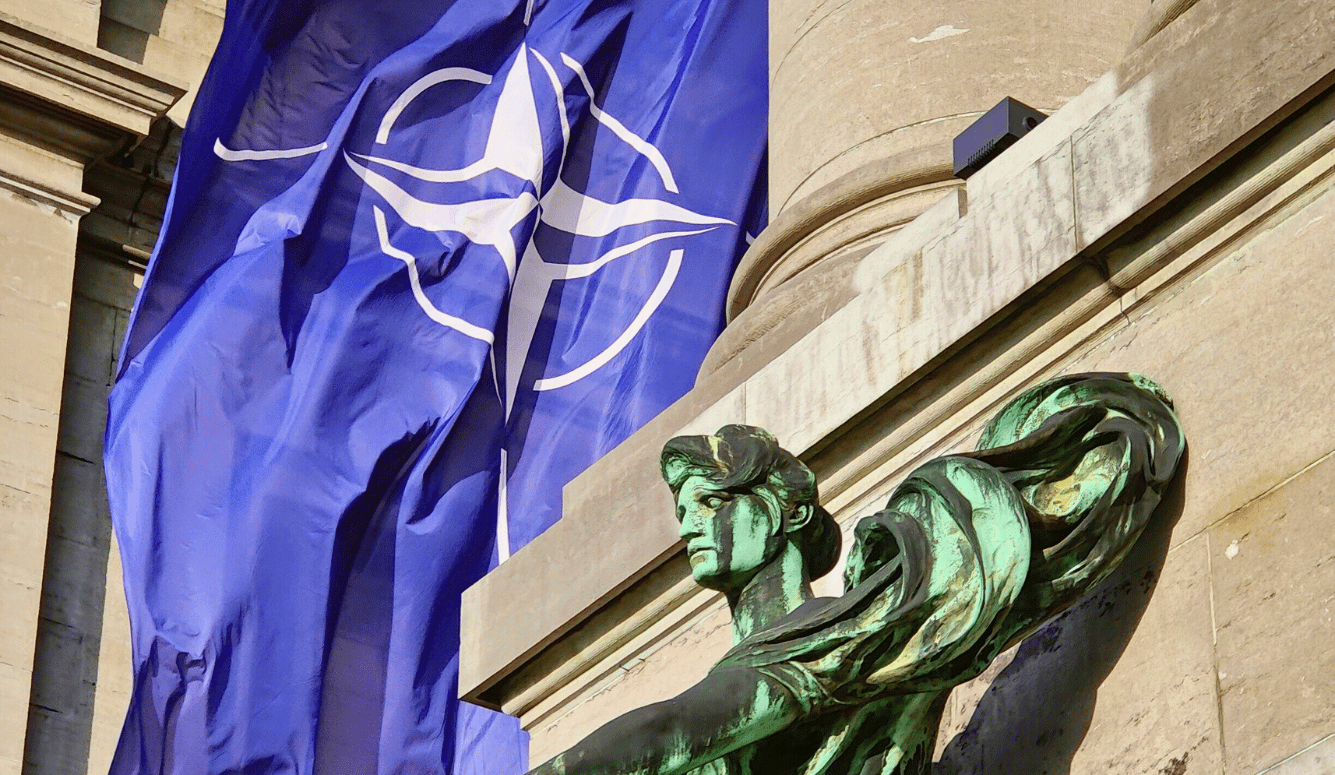

Although European leaders have become used to hostile and erratic behaviour from the current US government, Donald Trump’s proposal to annex part of the Kingdom of Denmark went far beyond what most sane people had expected. Despite Trump’s subsequent promise—“I won’t do it”—and the after-the-fact reassurances from Trump-understanders that it was all just a clever ruse and that he never actually intended an invasion, the incident has enormous consequences for the US–European alliance.
The idea that the US needs to annex Greenland for homeland defence is nonsense. America has had full access to the island since 1951. And it is the Americans themselves who unilaterally decided to reduce their presence in Greenland from around 10,000 troops during the Cold War to less than 200 today.
The second American argument for annexation was far more sinister: that because Denmark is too small to defend Greenland on its own it is obliged to hand it over for the sake of the island’s own security. This is also nonsense. Greenland does not appear to be facing a realistic threat from Russia or China—at least for now. And in any case, the extreme logistical challenges involved in launching an invasion of the island from either of those countries would mean that a fairly small Danish or European troop and naval presence would be enough to prevent a takeover attempt—which would only happen in the context of a broader war. Moreover, if the US really does see Russia as a threat and wants to limit its ability to project power, by far the most effective way to do that would be to provide Ukraine with robust military support—which the Trump administration has ceased to do.
But the main issue is not whether the Trump administration’s threat analysis was correct, but the idea that a robust US defence of Greenland would require annexation. This has seismic consequences for NATO. The foundational commitment of the alliance is that every member treat an attack on the territory of its allies—including the Danish territory of Greenland—as equivalent to an attack on itself. The idea that the US couldn’t or wouldn’t help defend Greenland unless it became a US territory is deeply incompatible with this principle. And if the US would no longer honour its alliance commitments over Greenland because it is not a part of the United States, why would we expect it to honour its commitments anywhere else?
To make matters worse, the US has not only dispensed with the most important principle of the Western alliance but introduced a new threat: itself. If the price for remaining Denmark’s ally is annexing part of its territory, why should we expect different treatment of other NATO members? Why shouldn’t we expect the US to blackmail the UK over Shetland or Orkney? Or demand that Greece hand over the island of Crete?
It’s easy to breathe a sigh of relief and pretend it’s all fine again now that Trump has announced he’s made “the ultimate long-term deal” regarding Greenland and doesn’t even need to carry out his threat of imposing new tariffs—let alone launch a military invasion. But the reality of the last few weeks is that the US has been acting as if NATO had already ceased to exist. For all intents and purposes, perhaps that means it no longer does. That is a fundamentally new development, and a decisive turning point.
Regardless of what the text of a treaty says, security guarantees and mutual defence commitments are only valuable if allies trust each other to act on them. Just as importantly, they only act as a deterrent if potential enemies trust that they will be acted upon. In this context, trust is not a matter of fluffy geopolitical liberalism or soft power: both world wars in the last century broke out because belligerents doubted that their enemies’ ostensible allies could be trusted to act upon the security commitments they had signed up to.
Keep reading
Gemma Tognini on Australia’s Political Revolt

Rubio in Athens
How France Lost Control of Its Streets
How to Suppress Men’s Writing

Back to the Dark Ages