Iran
Iran’s Weekend of Blood
How internet blackouts, morgue data, and medical testimony point to a five-digit death toll.
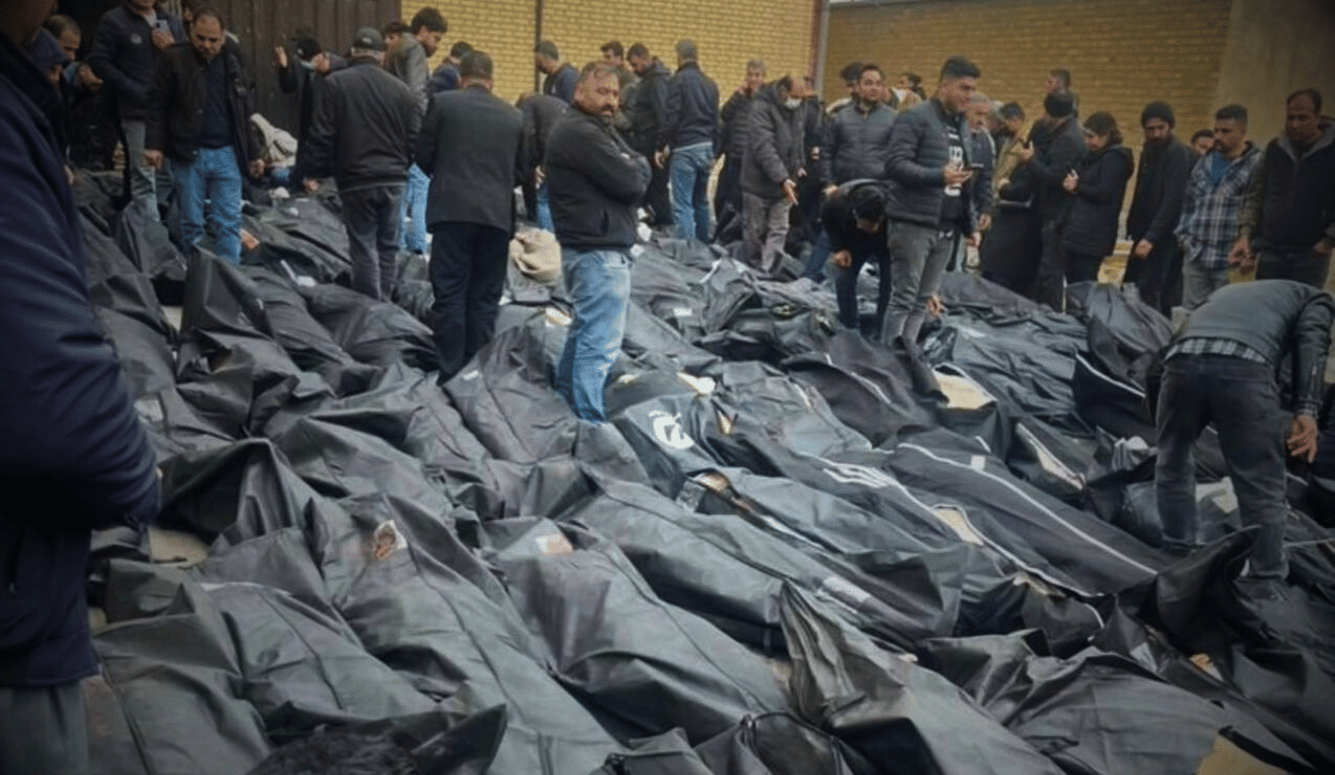

We know that the Islamic Republic has massacred the Iranian people during four nights of protests, but we do not know much more than that. In ordinary times, it would be difficult to know how many fell to the Islamic Republic’s cruelty. With a complete internet blackout and a habitually lying government, all assessments remain provisional and require further investigation.
The first report came from CBS News. Two sources within the Islamic Republic government confided to the outlet that between 12,000 and 20,000 people had been killed. A foreign diplomat reported that the number was accurate. The Sunday Times later obtained a report from doctors on the ground estimating 16,500 deaths, with an additional 330,000 injured.
Official statements conflict. During a speech, Ali Khamenei, known for paying detailed attention to uprisings and a consumer of his secret police’s intelligence analyses, blamed the United States for “several thousand” deaths. Minister of Foreign Affairs Abbas Araghchi contradicted his boss in a Wall Street Journal op-ed, claiming that “the death toll is in the hundreds.”
Footage leaking out of Iran pic.twitter.com/CmYaQtnaJL
— Open Source Intel (@Osint613) January 22, 2026
Open-source intelligence, as well as my private conversations with medical professionals, lead me to believe the higher estimates. Even state television cannot deny the destruction, so it has tried to frame this popular uprising as a foreign conspiracy. It aired an interview with a journalist who had visited the forensic examiner’s office at Kahrizak, which is the main (but not the only) morgue in Tehran province. The man said, “Tehran’s forensic examiner has four sheds, one large shed and three small ones,” adding that the number of the bodies had surpassed the capacity. He explained the chaos: “The medical examiner was not prepared for this level [of corpses brought in] … and was surprised.”
The forensic examiner’s office later defended itself, inviting state television to report on its work. An examiner explains that each person gets a specific serial number, and the number goes up by one for each new body. The video shows the death certificate from the last body brought in on 7 January and another one from 9 January (not necessarily the last certificate of the day). Subtracting the numbers confirms that at least 559 bodies were taken to Tehran province’s main morgue on 8 and 9 January, likely a higher number.
Separately, BBC Persian counted 396 bodies in the sheds outside the refrigerators, with more preserved inside. The Iranian opposition website Factnameh uses MapChecking technology and estimates that the facility has a capacity of around 800 corpses, while available footage suggests that it was operating beyond that limit.
One can safely estimate that Tehran’s largest morgue received somewhere between 700 and 1,200 bodies over those two nights. Protests continued for two more nights, but fatalities were reportedly lower. Tehran province’s population is roughly a seventh of the national population, and protests in other cities, such as Mashhad, appear to have been even bloodier.
In Rasht, a city of 750,000 people, the regime reportedly set fire to the bazaar, forcing vendors and customers to leave. The guards were waiting at the exits and opened fire on civilians, killing hundreds of people in a few minutes.
A diaspora member who talked with bureaucrats in Rasht reported that fatalities were around 600, slightly fewer than one per 1,000 of the city’s population.
Anecdotal stories from the protests further confirm calamities. I interviewed a surgeon at a small clinic in a bougie neighbourhood of Tehran, where protests were not very tense. During the first two nights, more than sixty people arrived. Four were dead upon arrival, but the doctors saved the rest, after ensuring that none of them were guards. He emphasised that the small number and high quality of care at an expensive hospital saved their lives. “Most of the injured ended up at large, public hospitals,” he added. “Their internal organs—wombs, intestines, and stomachs—were literally hanging out of their bodies. None of my patients would have made it there.”
I asked if he had been in touch with his colleagues across the city. He responded affirmatively. “A friend works at a hospital in a poor neighbourhood where protests were very tense, and even my clinic could not have saved their patients. They were all physically crushed.” I asked what kind of rifle could cause such damage, and he did not know the answer.
To worsen matters, the regime has reportedly ambushed hospitals to prevent treatment and arrest protesters. One video shows a corpse at a morgue with an intubating tube attached to its mouth, with what looks like a kill-shot wound on the head. Likely, a guard summarily executed him at the hospital.
Reportedly, the third and fourth nights mostly involved pellet gun shots, which the surgeon confirmed. The guards aimed at protesters’ heads, with many absorbing dozens of pellet bullets in their faces. This tactic was also used in 2022, when they targeted protesters’ eyes. Many have been permanently blinded, and the security forces have reportedly been ambushing ophthalmology clinics in recent days.
A young Iranian I talked to relayed a second-hand story. In a middle-class neighbourhood in eastern Tehran, two protesters were carrying AK-47s, claiming that they had driven from Ilam in western Iran to join the protests in the capital. They suggested taking the local police station, but the plan went awry. The cops opened fire on them. In the blink of an eye, the man witnessed seven or eight people meet their fates.
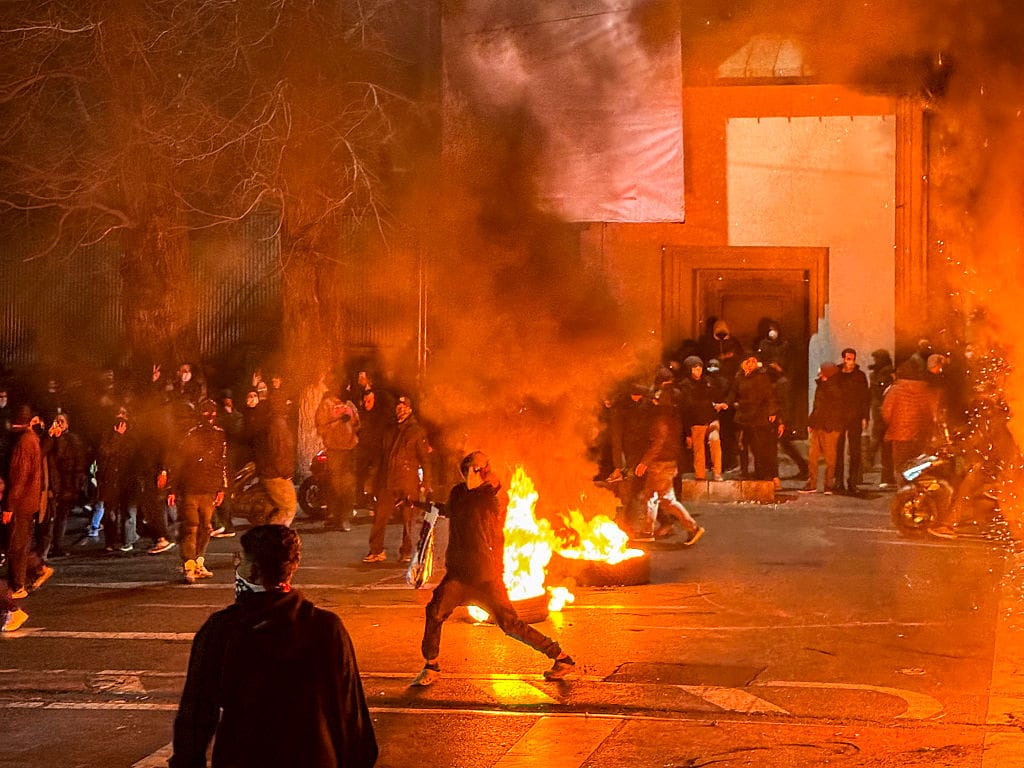
He also confirmed that people have been fearful of seeking professional treatment for their minor injuries, adding that some went to the gym for their gym friends to remove pellet bullets from their faces.
Considering all these factors, the most conservative estimate suggests that the number of the dead in Tehran alone is in the low thousands. The most conservative estimate for nationwide deaths is in the high thousands, and almost certainly in five digits.
Public reports and interviews I have had with people inside confirm that Iran’s foreign proxies heavily participated in the crackdown. Most suspect that they were from the Iraqi Hashd al-Sha’abi, but one cannot rule out others, especially the Lebanese Hezbollah and Afghan Fatemiyoun. The Islamic Republic has employed their services in previous protests, dating back to 2009.
The 2019 protests were the deadliest, with 1,500 dead in a week, which was also the week in which the Arab, and possibly Afghan, proxies had the heaviest hand in suppression. This led to a revolt within the system, with the rank and file enraged that foreigners were allowed to massacre their compatriots.
These two factors also led to the suspicion that the regime was not united in using extreme violence to end the protests. In 2022, the regime took a much softer approach, allowing the movement to continue for months until it exhausted itself and died down. This uncommon softness confirmed the divided views on how to deal with protesters.
 Zoe Booth
The future is unwritten, and a potential US attack could change everything. Nonetheless, we should watch the regime’s rank and file for their reaction once the dust settles, expecting defections and a possible revolt from within the system. There has already been anecdotal evidence to give hope for defections. The daughter of a commander called an opposition television station in London to apologise for her father’s sins. “I hate him,” she said, adding that most of the regime’s commanders abuse their own children. Despite the lack of internet access, an officer in the special unit tasked with cracking down on riots posted a video of himself in uniform to denounce the regime, his face visible.
People like to say that nobody likes their country bombed, but many Iranians appear to disagree. Every message coming out of Iran is begging for foreign intervention. More than that, I am yet to talk to anyone who does not have their own list of targets. They think they have done everything within their power, but that is not enough. There is optimism among Iranians that the might of the American military will come to their aid, mixed with a fear that it might not, and they will have to resign themselves to the fact that their butchers will never be toppled. The catastrophe has been larger than any of them expected.
For context, over the twenty years of the Global War on Terror, roughly 7,000 Americans were killed in action in Afghanistan and Iraq combined. Conservative estimates suggest that at least twice that number were killed in Iran, largely over a single weekend. Put differently, the Islamic Republic may have killed more of its own citizens in four nights than the United States lost troops in two decades of continuous war.
Two years after sponsoring the 7 October massacre, the Islamic Republic appears to have carried out a second one—this time against its own people. During the subsequent Twelve-Day War, between 400 and 700 Iranian civilians were reportedly killed by external enemies. Even the most cautious estimates of the protest crackdown exceed that figure by an order of magnitude.
IRAN: Footage shows Islamic Revolutionary Guard Corps personnel using large knives during the crackdown on protests. pic.twitter.com/usmtORKVe7
— Open Source Intel (@Osint613) January 17, 2026
In historical terms, this places the events among the deadliest episodes of state violence in the modern era. The Tiananmen Square massacre is believed to have killed between several hundred and a few thousand people. The Islamist regime may have surpassed that toll in days. It far exceeds the casualties of the 2009 Green Movement, the 2019 Iranian protests (around 1,500 dead), the 2013 Rabaa massacre in Egypt (roughly 1,000), and even many of the bloodiest crackdowns of the Arab Spring.
If the five-digit estimates are even approximately correct, this would constitute one of the largest single episodes of government violence against civilians in the 21st century—and one of the largest in the late 20th and early 21st centuries combined.
Keep reading
Treating Myths as Science
The Edifice Complex
Letters to the Editor
Criminal Research

Getting Away With It