Skip to content

Podcast

Adam Louis-Klein on Why He Founded the Movement Against Antizionism | Quillette Cetera Ep. 60

From settler‑colonial theory to Soviet propaganda, this episode examines how antizionism evolved into a coherent anti‑Jewish ideology—and why liberal democracies struggle to name it.
· 28 min read
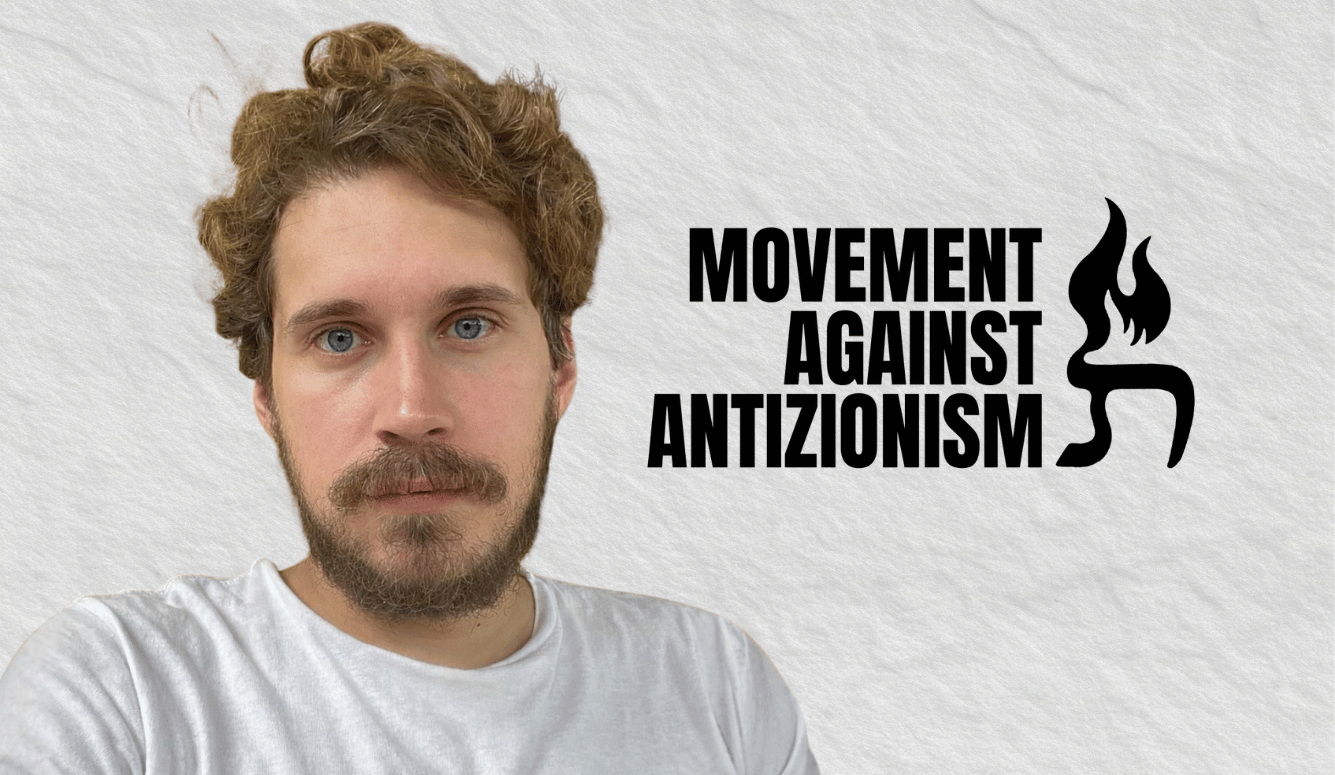
Portrait of a bearded man in a white T-shirt against a plain background, alongside a “Movement Against Antizionism” logo.
Adam Louis-Klein (provided) and the MAAZ logo.

Adam Louis-Klein is an anthropologist and PhD candidate at McGill University. His research focuses on Indigenous cosmologies in the Colombian Amazon and comparative forms of peoplehood. He is the founder of the Movement Against Antizionism (MAAZ), which challenges antizionist ideology as a distinct form of anti-Jewish hatred. His writing and advocacy explore the intersection of academic discourse, identity, and political propaganda.

Zoe Booth: Could you talk a little bit about why you founded MAAZ?

Adam Louis-Klein: Yes. I started in the Amazon, basically. I was in the middle of the jungle with an Indigenous people, doing something that wasn’t directly related to this, on October 7th. I’d been without internet or phone for months. I returned to a local town on October 9th, opened my computer, and the images from the Nova Music Festival were the first thing I saw.

The second thing that happened was that I started to be purged from my academic world—essentially because I stood in solidarity with Israelis and spoke up against what was happening. What emerged immediately was a kind of anti-Jewish environment. At the time, I understood that as antisemitism. That was the language I had: this was antisemitic. These were people claiming they were engaged in political critique, but they were clearly extremely hateful.

The way they talked about Israel was something I’d never seen before—the visceral rage they had, the fact they were saying these things just after a massacre had been committed against Israeli civilians. That was really stunning. I’d never witnessed anything like it.

Over the next two years, I tried to make sense of my experience using the tools I’d learned in the academy—critical academic tools from anthropology and philosophy—to understand what I was witnessing. As I thought and wrote about it more, I came to understand that what I was seeing was a coherent ideology: antizionism. I began to see it as important to highlight antizionism as its own ideology—a violent ideology, and an anti-Jewish one.

I then connected with a group of activists who were also moving in that direction. They wanted to see a transformation within the Jewish community, and within public culture more broadly—naming antizionism, speaking about it, and developing a language to fight back against it. That’s how I founded the Movement Against Antizionism.

ZB: Fascinating. The language you’ve developed around antizionism—would you say it’s directly influenced by the language you’ve encountered in academia, which has been used to demonise Zionism? Is it a mirror? Are you essentially doing what they’re doing—parroting it back to them—or is it a whole new language?

ALK: There’s definitely an element of that. I studied how to critique structures of oppression, power, and discrimination. I’m in the humanities—left academia—and that’s essentially what it does. I work with Indigenous people, so I’ve studied how European colonialism plays out, and I’ve seen it playing out in the present. South America is one of the few places where European colonialism arguably still exists. In many other parts of the world it’s over, and now we see non-European colonialism.

We don’t have to go into all of that—although maybe we should. It’s important to understanding the genocide libel and how that became normalised, because it grew out of Australian scholars who tried to apply settler colonialism theory to Israel.

I learned that language and that way of thinking. And I saw that what antizionism is doing to Jews is a mirror inversion of reality.

You have Jews—people indigenous to the land of Israel, who were exiled, a diasporic people, oppressed for thousands of years, and still under attack today through violence, wars, and attempts to annihilate them. And yet antizionism constructs Jews as the opposite: not indigenous, but settler-colonial oppressors. Not victims, but perpetrators.

So when we see genocidal aggression against Jews—from Hamas, from Iranian proxies like the Houthis and Hezbollah—it’s inverted into a narrative in which Jews or Israelis are committing genocide.

There are a lot of these inversions that need to be undone. You do, in a sense, need to invert the inversion.

ZB: It’s so intellectually challenging—even for well-read people with some grounding in linguistics or political science. Even I find it hard to identify or push back against the linguistic manipulation I’m faced with every day.

It’s destabilising, because you can’t determine what’s true and what’s false. The manipulation runs so deep that you end up questioning yourself. Even just saying something like, “I don’t believe this is a genocide”—that took me a long time. It’s such a taboo.

ALK: Exactly. They’ve hijacked language. That’s part of their power as a majority, essentially. They spread libels by extracting terms—coloniser, apartheid, genocide, racist, baby killer. That’s the power of libel: you’re not concerned with truth; you’re using language as a blunt weapon to stigmatise a group.

I can call you a genocider. I can call you a racist. Not because it’s true, but because I have the power to say it—and a mass of people ready to form a lynch mob and repeat the accusation. Violence is then encouraged on that basis.

That hijacking of language is something I experienced in the academy as well. It became difficult to speak the truth, because these libels have been repeated so often that they start to feel like basic assumptions of the discourse. There’s no space left to say anything else.

That’s why it’s so important to have our own language to speak back to antizionism. And we have to reappropriate the language of the academy. The academy stole that language and now says: “You don’t have a right to use critical academic frameworks to talk about antizionism—because you’re the oppressor and we’re the ones judging you.”

So we have to take that language back.

ZB: Working at Quillette, and having moved from the far left to what some call a centre-right space—I don’t consider myself right-wing, but many would cast Quillette that way—I’m used to being called a bigot, a Nazi. I’m used to these terms being thrown around, and it never really affected me before October 7th, because it wasn’t about Jewish issues.

But something about the discourse since October 7th—the way it's been weaponised against Jews—it’s different. It feels like it has more traction. People believe it now.

Before, people rolled their eyes at the Left’s overuse of “Nazi”—everyone was a Nazi, and it was almost a joke. But now people seem to really believe it, especially in the context of the Israel–Palestine conflict. I don’t understand why.

ALK: You’re right. They had already started abusing language. We saw the term “genocide” being misused even before October 7th. There were attempts to say that trans people were experiencing a genocide, or that Indigenous people in Canada were still undergoing a genocide. Now, both of those communities do face serious challenges and forms of oppression, but those claims stretched the term into something polemical.

At the same time, I agree with you—Israel is now constructed as a kind of metaphysical, cosmic evil. And there’s a specific kind of sting in calling Jews “Nazis.” The Soviets really mastered that with their antizionist propaganda campaign after 1967. They depicted Israelis with swastikas, even put the swastika inside the Star of David. There’s a real obsession with recasting the Jew as the Nazi—the victim who’s become the evil perpetrator.

Their whole ideology is built on inversions, like the ones you mentioned.

ZB: Why is it so tantalising to portray a victim as the perpetrator? I’m still trying to understand that.

ALK: It’s about constructing Jews as evil. After the Holocaust, that kind of evil was impossible to ignore. The Holocaust became a paradigmatic example of evil. At the same time, the United States could position itself as having defeated the Nazis, so in the emerging liberal order, it was useful to position the Holocaust as a central evil.

That also made Jews into absolute victims, which doesn’t really work in leftist frameworks where victimhood confers moral worth—especially not when you still have longstanding anti-Jewish hatred, which is deeply embedded in both Christian and Islamic civilisations.

So, for antizionism to take root, it had to reconstruct Jews as evil. That meant recasting Jews as Nazis—essentially, turning the ultimate victims into the ultimate perpetrators.

ZB: How has the image of the Jew on the Left changed over the last few decades? My understanding is that in the ’60s and ’70s—maybe even earlier, during the era of Golda Meir and Ben-Gurion—socialist Israeli leaders were celebrated on the Left, especially in Australia and the US. What happened? How did that image become so degraded?

ALK: At first, the Arabs were seen as the Goliath. The Holocaust was still fresh in people’s minds. Jews were understood as victims, and in 1948, the surrounding Arab states converged on Israel. That’s how the conflict was initially framed.

Then, in the 1960s, with the emergence of Palestinian nationalism, the framing shifted. The conflict started to be seen as Israel versus Palestine, rather than Israel versus the Arab world. This reconfiguration—along with the broader Arab nationalist movements like Nasserism—changed perceptions.

So instead of a war between a small Jewish state and a coalition of hostile neighbours, the narrative became one of an aggressive, powerful Israel oppressing a small, minority Palestinian population. That shift gave antizionism a powerful rhetorical weapon.

It was no longer about pan-Arab aggression—it became a story of a dominant power oppressing a colonised people. Israel, in this view, was now aligned with US imperialism.

Then came the Oslo Accords in the ’90s, and there was a hope that this framing—Israel versus Palestine—could lead to symmetry, a two-state solution. But that all fell apart. The Second Intifada in the early 2000s, 9/11, and the re-emergence of Islamist violence on a large scale all played a part.

At the same time, we had the Durban Conference, where the UN gathered in South Africa and effectively rehabilitated Soviet-era antizionist propaganda—things like “Zionism is racism” and the apartheid libel. That’s when BDS started to gain traction.

All of this coincided with the rise of Hamas in Gaza around 2005. With each successive war, antizionism exploded further in the West. And I think with October 7th, we saw that pattern repeat again—but it also crossed a threshold. Antizionism has now fully broken through. It’s been normalised in the West in a way we’ve never seen before.

ZB: Just to clarify—are you saying that originally the conflict was seen as Jews versus Arabs, and then in the 1960s it shifted to Israelis versus Palestinians? And that this shift made the conflict seem less—

ALK: Yes.

ZB: “Israeli” sounds stronger than “Jew”—especially in a post-Holocaust context.

ALK: Yes, especially after 1967. When Israel won the Six-Day War, it was seen as a miraculous victory. But at that point, Israel occupied the West Bank and Gaza, and that’s when the Soviet antizionist propaganda campaign really took off. They framed Israel as the aggressor—even though it wasn’t true in that case.

And then, in 1979, when Israel made peace with Egypt—a move that was widely condemned by many in the Arab and Islamic world—Arab nationalism started to recede.

ZB: What did the Soviets have to gain from degrading Israel’s image in the West? Was it just about undermining a Western ally in the Middle East?

ALK: Yes. The Soviets were aligned with the Arabs and using that alliance to play them off against the West, promoting their version of socialism—Arab socialism. That basically meant nationalising industry and calling it anti-imperialism, even if they weren’t developing anything close to a communist society.

After the Soviet Union collapsed in 1989, the hero figure that the Western Left had previously found in the USSR and Arab regimes was replaced. They shifted toward Islamism. That’s how we ended up with the Red–Green Alliance: the alliance between the Western Left and Islamist movements.

Antizionism today is articulated through that alliance—not through Soviet ideology anymore, but through this new left-Islamist axis.

ZB: And what role does modern Russia play in this discourse, or in promoting certain narratives?

ALK: Russia today plays less of a role in promoting antizionism. They’ve moved back towards a more classical form of antisemitism, which is quite popular in Russia now. It’s an interesting development—it shows that history doesn’t always move in a straight line.

In the West, though, we’ve moved through three distinct phases: from medieval anti-Judaism, which opposed Jews on religious grounds—Jews as followers of a heretical faith—to classical antisemitism in the 19th and 20th centuries, which viewed Jews as conspiratorial threats to the nation. And now, we’re in the antizionist phase, where the Jewish state is seen as a fundamental evil violating the international order.

ZB: I’m speculating a bit here and need to look into it further, but I’ve heard that in Australia the Russian government—or rather, the Russian Orthodox Church, which is basically an arm of the Kremlin—is playing a role in disseminating certain narratives. Especially within religious communities, including churches.

And I know that a few years ago in Paris, it was confirmed that Russian actors were behind antisemitic incidents—like spray-painting Stars of David on Jewish homes and businesses—to stoke chaos and tension. That kind of thing—chaos creation—feels similar to what Iran’s been doing in Sydney too, with reports of people being paid to firebomb Jewish businesses. It’s all about fuelling instability.

ALK: Yes, exactly. Antizionism constitutes itself as a kind of global war on Jews. Its focus is Israel—it paints Israel as the world’s most evil state—but then it targets diaspora Jews as “Zionist traitors” unless they pass a litmus test. That means publicly disavowing Zionism and renouncing Israel.

It’s a form of collective targeting. The entire Jewish community becomes implicated, even if the primary rhetoric is supposedly about Israel.

ZB: The Australian government is soon to launch a royal commission into antisemitism—how it’s been handled or, rather, mishandled. How do you think governments should respond to antizionism and antizionist rhetoric?

ALK: The big problem is that in public discourse—and even within many Jewish institutions—there’s barely any discussion of antizionism as such. There’s talk about antisemitism, and plenty of statements that antisemitism is rising, that it’s wrong, that it’s bad. But none of that addresses the core of what’s happening.

We don’t hear much about antizionist libels—the coloniser, apartheid, and genocide accusations. Just recently in the US, a synagogue was firebombed. What followed? A generic condemnation of antisemitism. But what about antizionism? Silence.

Those statements don’t mean anything if they don’t address the specific libels being used to incite violence. If you don’t connect those libels to the violence, you’re not really confronting what’s going on. You have to name them as libels. You have to recognise that they’re defamatory claims designed to stigmatise—not legitimate political opinions.

If someone says, “Israel is committing genocide,” and you reply, “Well, that may be free speech,” or “That’s a political opinion,” you’re failing to grasp how libels and violence are connected. These aren’t abstract ideas; they’re language weapons used to incite hatred against a specific community.

ZB: That’s so true. And that’s why the work you’re doing through MAAZ is so important—because it actually makes that connection. It’s been completely normalised to separate the two, when in fact they’re deeply linked.

ALK: It’s always framed as just “criticism of Israel”—no matter how extreme the rhetoric. And I think a lot of legacy Jewish organisations have internalised that framing. They’ve accepted the idea that antizionism is legitimate, and that we shouldn’t speak out against it directly. They argue we should only intervene when it “crosses the line” into antisemitism.

But that framing doesn’t make sense. Antizionists aren’t classical antisemites. They don’t always talk about Jewish conspiracies or Rothschilds or immigration plots. The frameworks we currently use to define antisemitism often assume those are the only forms of Jew-hatred.

But there’s a fully developed antizionist movement out there—people harassing Jews as “Zionists,” calling them genocidal colonisers. If we don’t recognise that as its own distinct ideology of hatred, we’re missing the core of the problem.

ZB: Can you talk about some basic things we can do—or stop doing—when discussing these issues? Any practical tips?

ALK: One of the most dangerous patterns I see is this idea of “crossing the line” discourse. People say things like, “Well, antizionism crosses the line into antisemitism,” or “Antizionists are secretly antisemites.” The idea is that they’re just pretending to care about Israel when really, deep down, they hate all Jews.

That framing misunderstands the actual dynamic. It suggests antizionism is just a cover for classical antisemitism, where people hate Jews as Jews and use Israel as a proxy. But what’s really going on is that there’s a movement specifically targeting Israel and Israelis—often with real, visceral hatred—and then extending that hatred to diaspora Jews, who are marked as “Zionists.”

It’s not projection from diaspora Jews onto Israel—it’s hatred of Israel that gets extended to anyone seen as part of that collective.

ZB: And that’s a key point MAAZ makes: even if you’re not sure whether hating Israel is antisemitic, the fact that there’s a mass movement dedicated to hating a whole country and its people is deeply abnormal. We don’t do this with any other country.

ALK: Exactly. It’s not normal. And yet it’s become completely normalised. There’s a global movement—millions of people—who genuinely want to destroy a country of nine million people. And they believe that Israel is the most evil state on the planet.

ZB: It’s terrifying how far this has spread in such a short time. I grew up in Newcastle—not a tiny town, but smaller than Sydney. I didn’t meet a Jewish person until I was in my twenties, and I’d never met an Israeli. Now, people I grew up with—people who’ve never expressed a political opinion in their lives—are sharing content on social media saying, “This is a genocide happening before our eyes. We can’t be complicit.”

Even setting aside the fact that I care about Jews and Israelis, just looking at it through a marketing lens—it’s an incredible propaganda campaign. The psychology behind it is incredible. My friend’s dad, who’s a bus driver and has never left Newcastle, is now reposting this content and believes it. It’s astonishing.

ALK: It’s incredibly easy to get people to latch onto it. In our current culture, everyone agrees that racism, colonialism, and genocide are the ultimate evils. Since Auschwitz, the civil rights movement, and the end of apartheid in South Africa, these have become universal moral red lines.

So if you can take one country and label it as all three—racist, colonial, genocidal—you’ve created a scapegoat. People will get angry. You only need to circulate enough decontextualised, selective, or outright fake information—AI-generated images, fabricated footage—and it triggers this righteous outrage.

That outrage gets channelled into action: sharing posts, joining protests, targeting institutions. It’s a lynch-mob dynamic. And the thing that fuels it is repetition of libels.

ZB: I guess it could’ve happened with Russia—people could’ve directed that same energy at Russia for invading Ukraine. But they didn’t. Is it just that there weren’t enough people who hated Russia with that level of emotion?

ALK: Yes. You need numbers. You need the critical mass to amplify and circulate those libels. Jew-haters often claim Jews have immense power—but the irony is that it’s antizionists who now have the power to construct and promote these narratives.

And when I say antizionism is distinct from classical antisemitism, or that we can criticise it on its own terms, I’m not saying it’s disconnected from the history of Jew-hatred. It’s obviously not incidental that the target of this hatred is the Jewish state.

It’s actually stunning how central Australian scholars have been in shaping contemporary antizionism. You really can’t overstate it.

After the Second Intifada in the early 2000s, antizionism became mainstream in the West in a way it hadn’t before. During the Soviet period, it was mostly limited to small radical Marxist parties with ties to Moscow—groups that had very little prestige in the broader academy.

There were some French intellectuals who imported Soviet propaganda into Western leftist spaces, but it didn’t have much academic influence. You didn’t have serious antizionists with major academic authority.

Edward Said is part of the story, of course—he helped reshape Oriental Studies and Middle Eastern Studies—but antizionism didn’t have a strong institutional foothold in academia until the post-2000s. And that’s where Australian scholars come in.

In the late ’90s and early 2000s, Australia was in the midst of what became known as the “history wars”—debates about whether Australia had committed genocide against Indigenous peoples, and to what extent. Scholars like Patrick Wolfe, Dirk Moses, and Lorenzo Veracini seized on that debate and started transforming the concept of genocide. They argued it didn’t need to look like the Holocaust—it could be a drawn-out, structural process.

ZB: Keith Windschuttle versus…

ALK: Exactly. They reframed genocide as a protracted dynamic. And that had analytical value—it helped describe long-term colonial violence. But then, in the post-Intifada period, they took that framework and applied it to Israel.

There had been an earlier attempt by an Arab nationalist, Fayez Sayegh, in 1965, to label Israel a settler-colonial state. But it wasn’t taken seriously. It wasn’t until the 2000s, when these Australian scholars revived the settler colonial framework, that it gained real traction.

They reframed Israel not as part of a territorial or religious conflict, but as a project of genocide—an inherently violent settler-colonial state. When Veracini published Israel and Settler Society in 2006, he had to argue this explicitly, because most people at that time still saw Israel–Palestine as a territorial dispute—two peoples fighting over land—or as a religious conflict, with different groups claiming divine entitlement to the same territory.

That kind of conflict isn’t unique—it happens all over the world when empires collapse and ethnic groups vie for land. But Veracini was arguing that this wasn’t a conflict between two national groups—it was a unilateral project of erasure by a colonial oppressor.

It was an obscene inversion—to cast Jews as white settlers. But it’s what made antizionism so potent in Anglophone countries like Australia, Canada, and the US—countries with their own white settler histories. It allowed people to displace their own national guilt onto Jews and Israelis.

That’s why the antizionist movement in Australia has been so particularly virulent. I don’t know all the connections, but I don’t think it’s a coincidence. Australia is effectively the intellectual cradle of contemporary Western antizionism.

There was an antizionist legitimising the Bondi attacks—essentially justifying the murder of a child in Australia by calling them a white settler. That kind of antizionist ideology traces directly back to Patrick Wolfe. It’s being used now to justify the murder of Jews.

ZB: For the past few years, I’ve had an issue with this academic language—terms like “settler colonialism”—even before it started being applied to Israel. So it hasn’t been hard for me to reject that framing. But for many Jews who were on the left, and who genuinely believed in those concepts and used that language, it must be more difficult. Are you one of those people? Have you had to change your opinion on settler colonialism? What’s been your arc?

ALK: I was a radical leftist coming out of college. I was in a group called Socialist Alternative when I lived in New York City. Some Marxist groups criticised us for being too liberal because we occasionally engaged with the Democratic Party, but actually, we were further to the left than the DSA. It was a Trotskyist group.

Over time, I drifted from it. The whole leftist intellectual universe, especially in academia, started to feel stale. The theories were being applied mechanically, without inspiration. The academy wasn’t producing anything new—it had become obsessed with identifying the “suffering subject.” The goal was always to locate the victim.

So I do see serious problems with how those frameworks—like settler colonial theory—have been used. They’ve been overstretched. They’ve become hollow. But I wouldn’t propose wiping the entire slate clean.

And I don’t think it’s coherent to say, as some do, that the problem is victim–oppressor binaries in general. Some argue that antizionism stems from the idea that Jews are successful, and that success means power, and therefore Jews must be evil. That’s a kind of anti-meritocratic interpretation of DEI frameworks. But that argument goes too far and doesn’t quite hold up.

Because if you’re against bigotry and violence toward Jews, then you’re acknowledging that Jews are victims of oppression. So you can’t just throw out all models of oppression. What we need is to apply them more truthfully—and allow for moral complexity.

Yes, Israel has a powerful military. But it developed that power in response to persistent violence. So it’s both strong and vulnerable.

I try to focus on antizionism as a specific form of oppression. I take a forensic approach. I’m not trying to deconstruct the entire academic system—it wouldn’t work, and it would face huge resistance anyway. People don’t want to discard those frameworks altogether, especially not in the case of places like Australia, where settler colonial theory actually has more relevance than it does for Israel.

ZB: Are you still working with Indigenous communities—like the group you were studying in the Amazon—or have you focused entirely on antizionism since October 7th?

ALK: I’m still writing my dissertation, which is about the Desana people I worked with in the Colombian Amazon. The dissertation has taken on more of a comparative angle—comparing Jewish peoplehood and Desana peoplehood, and the different covenantal identities that define each group.

The Desana also have a concept of chosenness. They believe they descend from a specific god—who is God himself to them—and they can only preserve their identity through their relationship with that god and that name.

So I’ve also been thinking a lot about Jewish indigeneity, and how the term “indigenous” itself has been stripped of its actual meaning.

ZB: So how do you define indigeneity?

ALK: If you base it on actual work with Indigenous communities, indigeneity is a cultural feature. It’s about how a group relates to a particular land—a sacred relationship that’s inherently tied to identity.

In Australia, for example, you have the concept of the Dreaming—a mythic, timeless era that links people to specific sites. Those sites—wells, hills, landscapes—become sacred, associated with rituals, and define a clan’s or a people’s identity.

With Jews, it’s the same. The land of Israel is an inherent part of Jewish culture and civilisation. Our story is about our relationship to that land: we were there, we were exiled to Egypt, we returned, we were exiled again, and we returned again. The entire story is a cycle of connection to that land.

Indigeneity doesn’t mean you’ve lived in the same place forever—that applies to no one, because all humans have migrated. It doesn’t mean you were the first person there—because someone always came before. And it’s not about blood quantum or DNA tests. You sometimes hear antizionists say things like, “You’re not from Israel—you’re from France or Germany; I did a DNA test too and I’m from Africa.” That’s just ignorant.

There’s a total lack of understanding about what indigeneity actually means—especially among the very people using settler colonial frameworks to erase Jewish identity.

If you say Jews have nothing to do with Israel, you don’t understand Judaism. You’re erasing an entire people. It’s blatantly bigoted. And the question is: how has this become so normalised? Why is it so hard for people to call it what it is—bigotry?

One problem is that we still only talk about classical antisemitism. But classical antisemitism had no problem with the idea that Jews were from Israel. In fact, that was the problem: Jews were seen as Oriental foreigners who didn’t belong in Europe. Antizionism is the opposite—it denies Jews any connection to Israel at all.

ZB: You made a really strong point in another podcast I listened to—it was a hard one to get through. You were speaking with a Palestinian man in Sweden, I think—Omar. My blood pressure was through the roof. I don’t know how you stayed so calm, but it was inspiring. If people want to hear how to debate a hostile person with poise and grace, they should listen to that. You had a lot of patience.

One thing you said that really struck me—and I’d never thought about it before—is that there are different types of genocide. A lot of us think of the Holocaust as being motivated by racial supremacy, like the Germans believing they were a superior race. But as you pointed out, there was also a kind of settler-colonial ideology at play: Jews were seen as foreign, as colonisers of Germany. They were viewed as outsiders who had infiltrated and needed to be exterminated.

ALK: Yes, exactly. There’s this idea today that genocide is something that always happens to Indigenous people—or people who are seen as Indigenous. That’s how we frame colonial genocides now. But in many cases, genocide has been driven by the belief that a group is alien, foreign, invasive.

The Holocaust is a key example of that. The Nazis constructed Jews as colonisers—people who had infiltrated and corrupted German society. And they weren’t the only ones. The Rwandan genocide followed a very similar ideological structure to how Israelis are now portrayed in the Israel–Palestine context.

The Hutus saw the Tutsis as dominating oppressors. European colonisers had racialised the Tutsis as “more white,” more aristocratic. The Hutus internalised that and came to believe the Tutsis were colonisers. So when the genocide happened, it was framed as an anti-colonial uprising.

ZB: Were they actually the same people? Or were Tutsis and Hutus really distinct ethnic groups?

ALK: There’s debate about that. The Tutsis and Hutus do often look physically different—Tutsis are usually taller and thinner, while Hutus are more stocky—but some argue those distinctions are more class-based than ethnic. In the past, the Tutsis were the aristocracy, so they were seen as the ruling group. That gave rise to the idea that the Hutus were rising up against their oppressors.

So again, the language of colonialism and oppression—of fighting back against an elite—was central to the ideology of the Hutu genocide. That’s exactly the language Hamas used on October 7th. They portrayed Israelis as settlers, as colonisers, and claimed all of them were legitimate targets. It’s the same ideological structure.

ZB: On that topic—wasn’t it Alaa Abd el-Fattah, the Egyptian activist, who made those kinds of comments? I think Starmer allowed him to return to the UK, despite him saying he wanted to “genocide white people.” That was trending a couple of weeks ago. I think Quillette published a piece on it.

The Strange Case of Alaa Abd El-Fattah
How human rights law led the UK to roll out the red carpet for a man who expressed hatred of white people and support for killing civilians.

I remember seeing tweets where he’d said horrific things about Jews and Zionists, but also about white people more generally. And the MPs who had fought to bring him back to the UK just came out with the usual statements: “We had no idea. We condemn these abhorrent views.” That kind of thing.

But I found it odd that no one was talking about the white genocide comments. I mean, yes, what he said about Jews was awful. But shouldn’t people have been just as alarmed by the rest?

That said—and I want to be careful here—I don’t think it’s right to talk about genocide against white people. But I also don’t really believe it when people say it. Because with Jews, we know genocide is always on the table. It’s always a possibility. It’s happened so many times. But “white genocide” feels more abstract. I don’t know what it would even mean. As an anthropologist, what do you think? Is there such a thing as white genocide?

ALK: There are a lot of white people. And “whiteness” today has become this incredibly charged term—especially in the context of conversations about colonialism and racism.

In the US at least, white supremacy is not the dominant force it once was. Yes, you have figures like Nick Fuentes who are white supremacists. But overall, the civil rights movement was effective. Most white people today are very aware of racism and want to distance themselves from it.

Whiteness has now become a kind of symbol for colonial heritage and systemic power. It’s not really about culture or shared identity anymore.

So I’m not concerned about “white genocide” as a concept. I think it’s a strange thing to be concerned about. I also don’t understand why someone would identify positively with whiteness as a category. It’s not a coherent identity in the same way that, say, Jewish identity or Kurdish identity might be.

That said, I am concerned about the state of European culture and Western civilisation. These societies don’t seem to be producing much of cultural value anymore, and they don’t seem interested in preserving their heritage or traditions. That’s a legitimate concern.

And then there’s the influence of Islamism in Europe—which I do find worrying. The number of Muslims in these countries is often exaggerated, but the level of influence Islamism has—and the deference it receives—is not exaggerated.

There are people in these countries, including Islamist movements, who are explicitly committed to subverting Western civilisation. Their goal is to establish a Muslim state governed by Sharia law, which would subjugate non-Muslims as dhimmis.

Not all Muslims are part of that, of course—but there are definitely people trying to carry it out.

ZB: It’s that inversion that I find so manipulative. I think it was Goebbels who said something like, “Accuse them of what you’re doing”?

ALK: Yes. The Nazis studied The Protocols of the Elders of Zion, that classic antisemitic conspiracy text. It was created by Russian pogromists in the late 19th century. They plagiarised parts of Machiavelli’s The Prince, attributed them to Jews, and claimed it was a Jewish plan for world domination.

Hitler read it and said, “We should learn from this—this is how we achieve power.” So the Nazis believed Jews were plotting global domination and decided to adopt that model themselves.

So when you see people accusing Jews of having global power and plotting control—it’s often a projection of what the accusers themselves are doing or aspiring to do.

ZB: I did want to go back to that topic of white genocide. When I was debating people who believe a white genocide is imminent, I said, “I’m open to believing it—just explain how it would happen here in Australia.”

The best argument someone gave me was that it would be a slow, cultural genocide—something that might happen if, say, China took over. But when I looked into it, the only real historical examples I could find were things like the Haitian Revolution—uprisings of Indigenous or formerly enslaved people against colonial oppressors.

Are there any interesting or lesser-known instances of genocide that you think we could learn from?

ALK: Yes. One thing that’s often forgotten today—though it was a major focus during the Cold War—is the scale of atrocities committed by the Soviet Union.

Raphael Lemkin, who coined the term “genocide,” wrote about what he called the Ukrainian genocide. In the 1930s, Stalin intentionally starved millions of Ukrainians during the Holodomor. He also targeted Ukrainian bishops, intellectuals—anyone who could sustain a cultural or national identity. It was about breaking group coherence.

Much of this was justified as political. Stalin framed it as the liquidation of kulaks—a class of small landowners. So even when the targeting aligned with ethnic boundaries, it was presented as a class-based or political purge.

And that’s incredibly relevant today. Because we’re hearing the same kinds of justifications: violence against Jews is framed as political. It’s not antisemitism, we’re told—it’s “antizionism.” These are “Zionists,” not Jews. They’re being targeted because of their politics.

Just recently, in Washington, D.C., an antizionist murdered Yaron Lischinsky and Sarah Milgram. But the media categorised it as political violence. It was reported in the same breath as the murder of Charlie Kirk, for instance—who was targeted because he was a conservative with certain views on immigration and gender.

But there’s a huge difference. Lischinsky and Milgram were Israeli embassy employees. They were murdered for being Zionists. And the media essentially reinforced the idea that “Zionist” is a political identity that makes someone a legitimate target.

This is the same logic you see in Soviet or Cambodian genocide—where political enemies are targeted in ways that map closely onto ethnic lines, but it’s still framed as politics.

Antizionism is an anti-Jewish ideology that constructs itself as political, but it functions in the same way.

ZB: Do you know how well organised the antizionist side actually is? Because it seems incredibly coordinated. The talking points are airtight. It’s slick. And I know that’s what you’re trying to do with MAAZ—to develop a coherent system and language to respond—but how are they doing it so well?

ALK: They’re extremely well-organised. And they’re deeply embedded in all the activist networks.

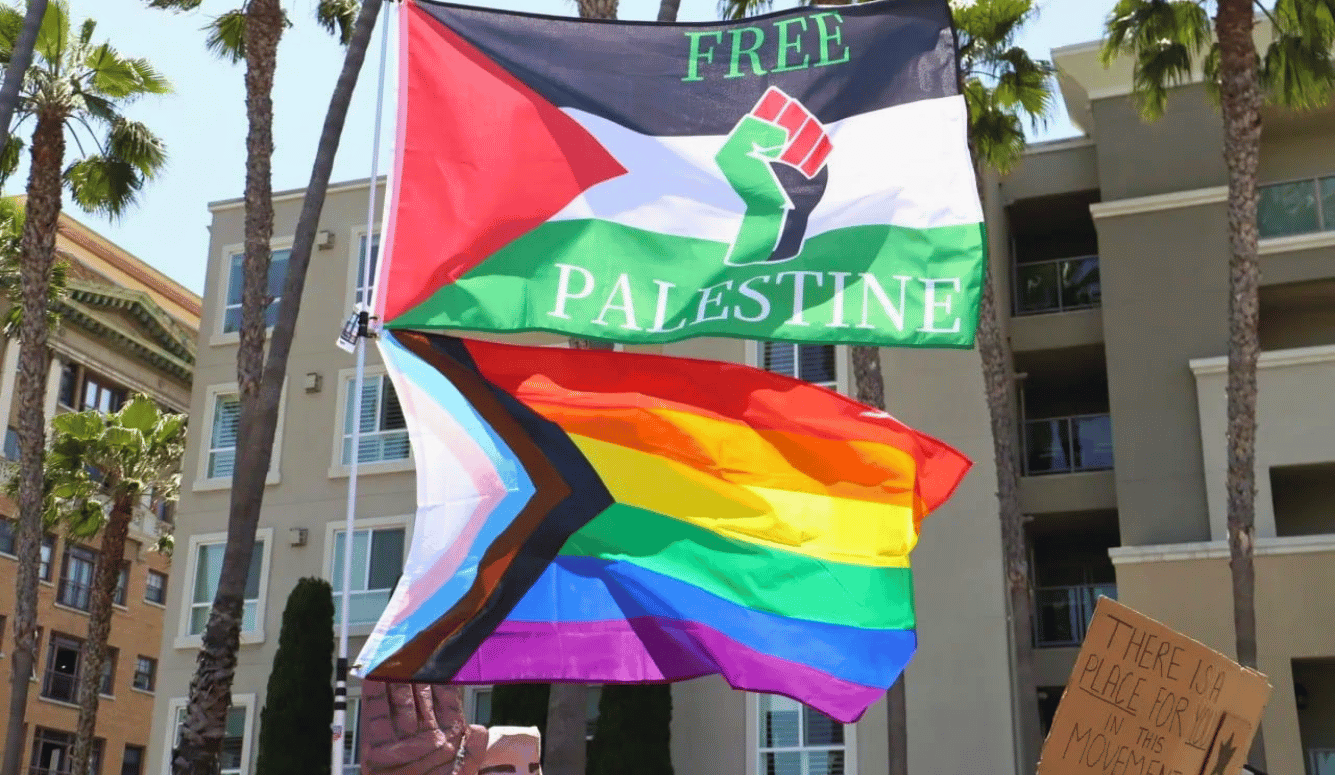
They did a very clever thing: they framed antizionism as just another social justice cause. That allowed them to plug into existing movements—LGBTQ rights, anti-racism, feminism, Indigenous solidarity. And now, all those movements can rally around “Palestine” as the ultimate intersectional cause.

So they’ve appropriated the social justice mantle, even though antizionism is fundamentally a racist hate movement.

What we need to do is reframe the narrative. We need to show that opposing antizionism is the real justice position—because antizionism victimises Jews and Israelis, and it also harms Palestinians. It excludes moderate Palestinian voices, punishes dissent, and supports extremist movements that prolong the conflict.

It shows no interest in improving Palestinians’ actual lives—just in perpetuating a narrative of victimhood and vengeance. So if we care about real justice, we have to name antizionism as the injustice that it is.

ZB: And why do you drop the hyphen in “antizionism”?

ALK: Because we don’t believe antizionism is meaningfully dependent on Zionism. It’s not a reaction to something real—it’s a construct.

Zionism was a fairly standard national self-determination movement, like many others in the late 19th and early 20th centuries. Jews were a minority seeking a homeland. They got one in 1948.

The idea that Zionism needs to be an ongoing ideology is something antizionists insist on. They inflate Zionism into a cosmic evil, so they can justify treating Israel as uniquely illegitimate.

So when you use the hyphen, it suggests that antizionism is a reaction to something that’s still active and ideological. We drop the hyphen to signal that antizionism is not a response—it’s an ideology in its own right. It constructs “Zionists” as an evil category, and anyone marked as such becomes a legitimate target.

And that can include anyone—any Jew who doesn’t disavow Israel, who has Israeli family, who expresses solidarity. So “Zionist” becomes a racialised slur. That’s why we write antizionism without the hyphen—it’s not dependent on Zionism at all.

ZB: We’re going to finish with some roleplay. I’ll throw some common talking points at you, and you show us how to respond—briefly, like we might in a conversation.

ALK: Sure.

ZB: “Israel is an apartheid state.”

ALK: Apartheid was a system of racial domination where black South Africans were denied citizenship and basic rights. In Israel, Arabs have full citizenship, can vote, serve in the Knesset and judiciary, and are part of public life. It’s not apartheid. It’s a lie used to stigmatise Jews.

ZB: “Israel is committing genocide.”

ALK: The Palestinian population has grown exponentially since 1948. That’s not what genocide looks like. Accusing Israel of genocide is a blood libel—it’s designed to demonise and incite hatred.

ZB: “But what about the children?”

ALK: Hamas uses children as human shields. Israel warns civilians before strikes, more than any military in the world. Hamas embeds in schools and hospitals. The tragedy is real, but the blame lies with those who started the war and use civilians as cover.

ZB: “Jews are white settlers in the Middle East.”

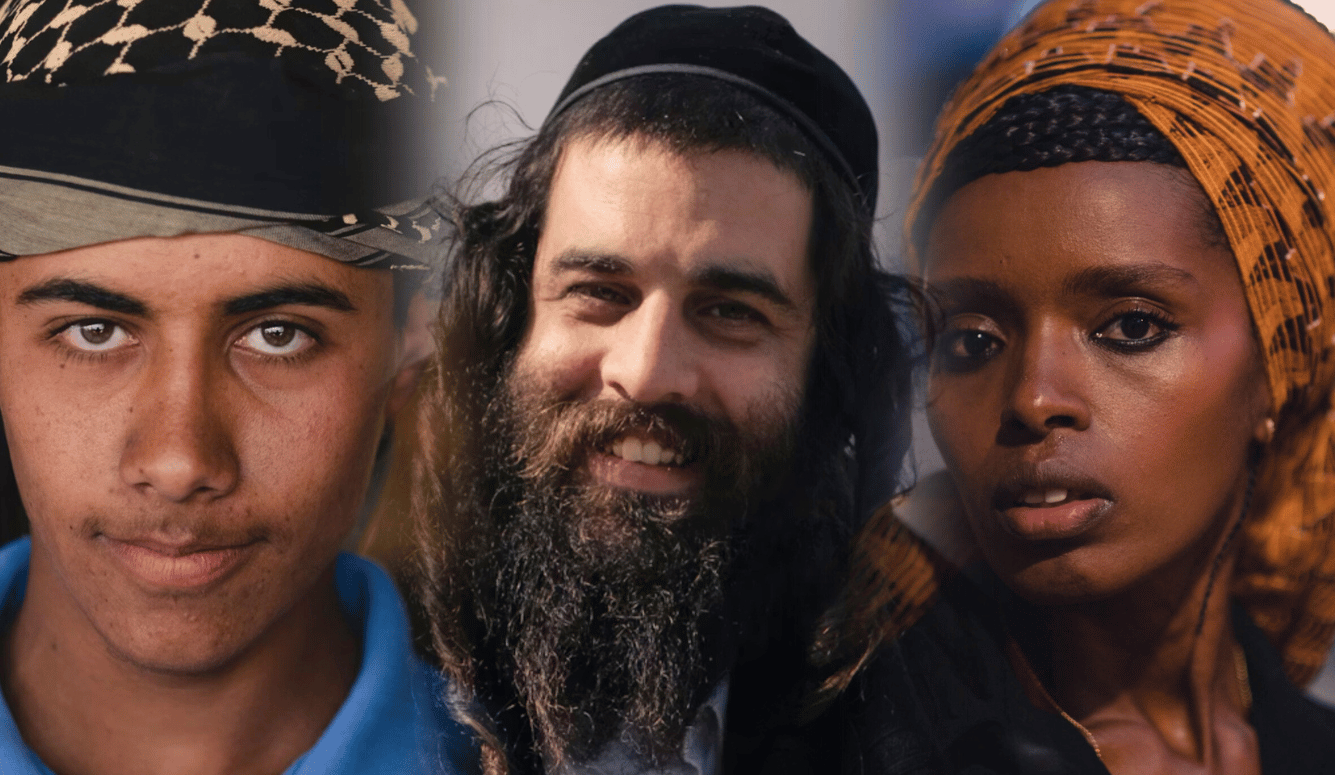
ALK: Jews are Indigenous to the land of Israel. That’s where Jewish civilisation began. Most Israeli Jews are Mizrahi—descended from Jews expelled from Arab countries, not Europe. Zionism is a decolonial movement.

ZB: “Zionism is racism.”

ALK: That phrase comes from Soviet propaganda in the 1970s, adopted by the UN under pressure from dictatorships. Zionism is Jewish self-determination. Calling it racism is a way of denying Jews what every other people has.

ZB: “Israel is a colonial project.”

ALK: Colonialism is when an empire sends settlers to extract resources. Israel was built by refugees returning to their ancestral homeland. Jews were fleeing persecution, not sent by an empire to colonise.

ZB: OK. I think that’s a good place to end it. Is there anything else you want to say?

ALK: Just that we need courage. This is a moment when Jews and our allies need to speak clearly and firmly. We can’t afford to play defence anymore. We need to go on the offensive—not in a violent way, but intellectually and morally. We need to name the problem and fight it with truth.

ZB: Thank you so much for coming on the podcast.

ALK: Thank you.

💡
If you found this episode valuable, please consider sharing it with friends. Every time you share a Quillette podcast, it helps the show grow and helps get these ideas out to a wider audience.