Language
Guarding the Gates of Our Language
One hundred years after the publication of Fowler’s ‘Dictionary of Modern English Usage,’ it is more important than ever to uphold standards of correct English.


“Women having the vote reduces men’s political power.” If this sentence offends you, then take heart: you are not alone. Like generations of people who have fought for a better world, you recognise it as a grievous sin against proper English usage, one of thousands detailed in Henry Watson Fowler’s A Dictionary of Modern English Usage, which turns 100 this year.
The particular violation in this case, as Fowler taught, is using the participle “having” as a noun (a verbal noun or gerund) without modifying “women” to its adjectival form “women’s.” If, on the other hand, “having the vote” was intended as an adjectival phrase, then the verb should have been changed to its plural form “reduce.” Without modification, Fowler thunders in one of many lengthy, delicious entries, the sentence is “vulgar,” “indefensible,” and “repulsive.”
As the world of letters remembers the seminal influence of Fowler’s English Usage this year, it is important not to miss the larger importance of the book. The success of English as the world’s language, and the growing political power of non-native and non-standard English speakers in English-speaking countries, not to mention the rise of crowd-sourced AI English, have turned Fowler’s English Usage into an object of rage because of its role as a cultural gatekeeper. But once a culture loses control of its language, everything else is sure to follow. Celebrating Fowler should mean celebrating the importance of gatekeeping. The English-speaking peoples, more prone to cultural decay because of their success and attractiveness, should use this year to remind themselves (and their critics) that they, like all cultures, have a right to preserve their integrity by holding the linguistic vandals at bay.
Like The King’s English, which Fowler published with his brother, Francis George, in 1906, English Usage is a marvel of knowledge and entertainment. While Fowler called the first book a “negative” manual of mistakes, he considered the second a more congenial vade mecum, literally a “go with me” guidebook that could be a personal companion for life. That his eccentric guide has survived a century of brickbats from the critics tells us how many people treated the book as Fowler intended.
Nothing of the sort could be published today. The entry on the correct usage of “that” runs for a full ten pages. “Which” takes up thirteen. Yet Fowler never takes himself too seriously as an arbiter of taste. The sympathetic entry on “illogicalities” opens with the lament that “The spread of education adds to the writer’s burdens by multiplying that pestilent fellow the critical reader,” and ends with the punning “All our pet illogicalities will have to be cleared away by degrees.” I am especially grateful for the lexicographer’s pithy outburst against misplacement of the word “only,” perhaps the most consistent error in contemporary English. Of the sentence “He only died a week ago,” Fowler remarks: “As if he could have done anything else more striking or final.”
Fowler was no prig. His guide rails at the pedantic and the slovenly in equal measure. The slow drift of the word “decimate” from its original meaning of a light loss (literally one in ten) to its new one of a large loss, he writes, is acceptable as long as the large loss is not quantified, as in “The frost decimated eighty percent of the cherry crop.”
He was also no in-bred nativist, believing that language should change and adapt to new influences as long as it remains clear and understandable. He deplored attempts to revive old Saxon words—“bodeful” rather than “ominous,” “birdlore” rather than “ornithology”—which he considered a lost cause. Those mavens of “speech-craft,” as they called it, were no different from the Oxbridge dons in turning away from standard usage. “What the wise man does is to recognize that the conversational usage of educated people in general, not his predilections or a literary fashion of the moment, is the naturalizing authority.”
In this sense, Fowler was a precious product of his time. In Edwardian England, there was such a thing as “the conversational usage of educated people” that could be referred to as arbiter of disputes. A few pamphlets here, a few querulous letters to the Times there, and all would be set aright among the literate class. “He enjoyed correcting the great,” his friend and biographer Gordon Coulton, a Cambridge historian, writes, “not because he envied them or thought himself impeccable, but because in their case he felt correction to be a real public service.” He also embodied a deeply conservative English idea of change. In his essay on orthography, he writes, “English had better be treated in the English way, and its spelling not be revolutionized but amended in detail, here a little and there a little as absurdities become intolerable, till a result is attained that shall neither overburden schoolboys nor stultify intelligence nor outrage the scholar.” Not all those spelling battles were won: Mahomet gave way to Mohammed against his advice. But his battle-cry against “letting the learned gentry bully us out of our traditional” usage remains pertinent. In my world of ice hockey, we are so far holding the line against “linesperson.”
When it first appeared in 1926, Modern English Usage was celebrated as an essential guide, but also a terror. Every writer feels a sense of alarm on reading the book, as one reviewer noted: “His previous light-hearted impulses, in selecting his vocabulary, wilt under the searchlight that Mr. Fowler’s articles turn on his usage.” Indeed, the joke goes that Fowler’s main contribution was to rid the world of bad writers by shaming them into silence. The London Times wrote a wounded editorial warning that the book would cause the average writer to suffer a crisis of confidence. “He is like the centipede in the poem, which lost the power of walking as soon as the frog asked him which leg he moved first.”
Oxford University Press asked Fowler to write an American adaptation of the book, but he knew it would flop. The Americans were too keen on the original. When the press published another scholar’s American usage guide in 1935, Fowler was vindicated by its poor sales. Indeed, the remarkable thing about “Fowler,” as it is called, is how seriously it has always been taken in the United States. Its transatlantic importance was symbolically affirmed in 1944, when Winston Churchill received a memo about a message he had written about the planned D-Day invasion in which an American aide insisted that Churchill use the word “intense” rather than “intensive.” “You should read Fowler’s Modern English Usage,” Churchill scolded the aide, perhaps recalling that Fowler’s entry on the words compared “intense bombardment” with “intensive bombardment.” A German signals station with a copy of Fowler might have learned that the Allied strategy called for heavy rather than concentrated bombing. And so Fowler’s Modern English Usage came ashore at Normandy and helped to liberate Europe from the Nazis much as it had liberated English speakers from solecism.
 Robert D. King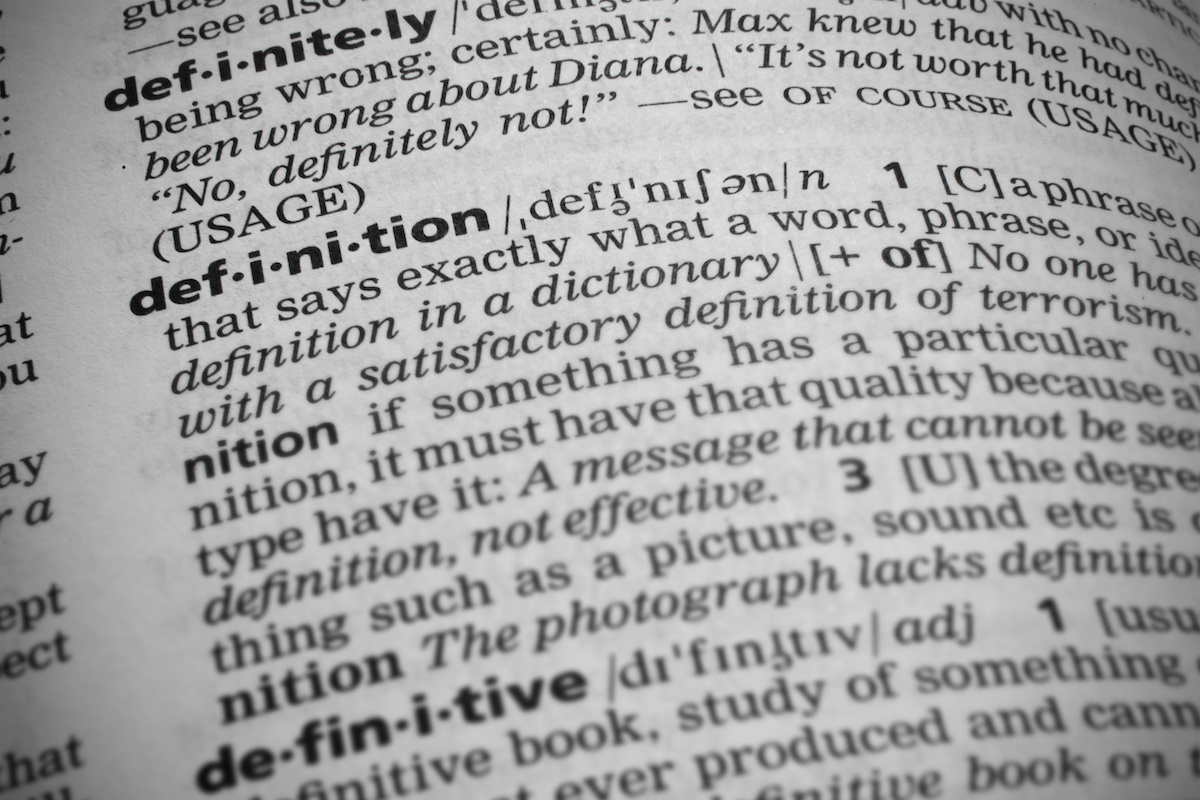
A gentle revision of Fowler that left most of the original intact was carried out in 1966. The editor of that revision, a retired British civil servant named Ernest Gowers, called the original “a gust of common sense that swept away the cobwebs of grammarians’ fetishes.” But the accusers of the 1960s felt that Fowler was not nearly commonsensical enough. For them, any idea of standard usage was tantamount to pedantry. As Gowers lamented: “The revolt against the tyranny of the old grammarians seems to be producing a school of thought which holds that grammar is obsolete.”
Fowler was coming under intense bombardment from the Left. The Gowers revision was assailed for not blasting Fowler back into the reactionary darkness of Little England. The book was “a classic which, like the Bible, may be misused to serve, if not the Devil’s purposes, those of naivete, ignorance and intolerance,” wrote one progressive American professor of the 1966 revision. “Thus it may be, and has been, a dangerous book.”
Intolerance, and discrimination, were, of course, the whole point. Fowler taught readers to be intolerant of bad usage and to be discriminating in what they read. In the early stages of what we today recognise as woke publishing, Fowler was a useful tool. Insisting that many black and brown authors, like many white ones, wrote crap English was possible only with Fowler at the ready, a shield to raise as one charged into the thicket of bad writing promoted by publishers offering “diverse perspectives” from “marginalised voices.”
Bowing before the assaults, Oxford University Press chose a critic of the book to produce a third edition in 1996. Robert Burchfield was a product of the 1960s, an Oxford don obsessed with race, class, and gender. He denigrated the original as “an enduring monument to all that was acceptable in the standard English of the southern counties of England in the first quarter of the twentieth century.” It was “a three-coloured flag that was to be saluted and revered” as well as “a fossil.”
Burchfield’s “revision” was more like a lobotomy. In addition to rewriting almost every entry into dull academic prose, he removed anything deemed politically incorrect. Gone, for instance, is Fowler’s admonition that for pronouns, “where the matter of sex is not conspicuous or important, he and his shall be allowed to represent a person instead of a man.” Ignore that stricture, he notes, and you end up with sentences like “Everyone was blowing their noses.”
Burchfield also removed all judgement in favour of description. Fowler’s put-downs of ill-usage as “rot” or “illiterate” became Burchfield’s “nonstandard” or “not often used.” The confining of English usage to standard forms is oppression, the revision seems to say. As one reviewer put it: “The warden had become the prison psychologist.” Burchfield even added an entry on “black English” calling it “a stridently alternative form of American speech, a variety that is richly imagistic and inventive.” True, perhaps, but also irrelevant to the question of standard usage. Vulgar, indefensible, repulsive, and illiterate rot as the sage might say.
Oliver Traldi
Disgust with the 1996 revision seemed greatest in the US. The American writer James Bowman accused Burchfield of being “tolerant” of everything “when what is wanted in a usage manual is something more along the lines of an Old Testament prophet.” Bowman compared the Burchfield edition to a city council declaring a nuclear-free zone, hoping that standard usage would go away because it declared it so. But standards did not go away, and for those who still believed in a meritocratic society, maintaining them was a key to upward mobility.
Even the New York Times dismissed the 1996 edition as “of doubtful value to a reader in search of guidance.” Guidance, after all, was the point of a guide. As two German linguists wrote in a study of the original book’s enduring popularity, published in the academic journal English Today in 2010: “The general public liked the strict judgments.”
Most surprising, perhaps, is the enduring allegiance to Fowler at The New Yorker, citadel of oppressed writers, and writers on oppression, in modern American letters. In a curtain-raiser in September 2025 for the Fowler centenary, the University of Delaware academic Ben Yagoda traced the inextricable links between the magazine, launched in 1925, and Fowler, almost as if the magazine was founded as a sort of Society for the Propagation of the Fowler in the United States. In one telling anecdote culled from the magazine’s archives, Yagoda found that the young John Updike, while studying at Oxford in 1954, had submitted a poem to the magazine that was caught up in a minor storm of editorial debate on punctuation according to Fowler. Updike bowed before the strictures, and his corrected poem was published later that year. Thereafter, he seems to have become Keeper of the Fowler at The New Yorker. His scathing review of Burchfield’s 1996 desecration is a monument to fine English sensibilities in the New World. “It has the charm, in this age of cultural diversity and politically correct sensitivity, of assuring all users of English that no intelligible usage is absolutely wrong,” Updike writes. “But it proposes no ideal of clarity in language or, beyond that, of grace, which might serve as an instrument of discrimination.” That word again.
As Updike foresaw, the globalisation of English and the radicalisation of the academy mean that the need for Fowler has become greater not less. “The language is a mess, except as scoured and rinsed and hung out to dry by Fowler.”
Perhaps sensing the winds of reaction, Oxford University Press re-issued the original in 2010, with an introductory essay by a professor from Bangor who celebrates its wonders despite its inconsistencies. Do we detect in this reissue a return to cultural gatekeeping, or at least a recognition that the English language, the culture of the English-speaking peoples who invented it, is not some open source code for the world’s “diverse” peoples to ransack but a precious inheritance whose preservation requires more, not less, effort because of its success?
The rub, of course, is that we can no longer consult “the conversational usage of educated people” as a guide to our cultural patrimony because that cohort has now become the problem not the solution. The US-based Conference on College Composition and Communication issued a denunciation in 2021 of what it called “White Language Supremacy,” calling standard English a tool to oppress those “whose dynamic language practices do not fit monolingual white ideologies.” Many educated people today would have us all sounding like a cross between an HR manual and Kamala Harris. All the more reason, then, to revive a determined, punctilious, and judgmental culture of correct English among those interested in cultural preservation. The point of gates, after all, is not just what they keep out but what they enclose within.
A reply to this essay, written by Oliver Kamm, can be read here.
Keep reading
The Battle for the Strait

Germany’s Cozy Catastrophe

AI and the Wiki Wars

Foreign Power, Local Politics

Podcast #333: The Search for Truth