Podcast
Corey Walker on Audience Capture, Identity Politics, and Anti-Israel Hysteria | Quillette Cetera Ep. 59
From algorithmic incentives to progressive posturing, this episode explores how antisemitism has become a feature—not a bug—of influencer culture.
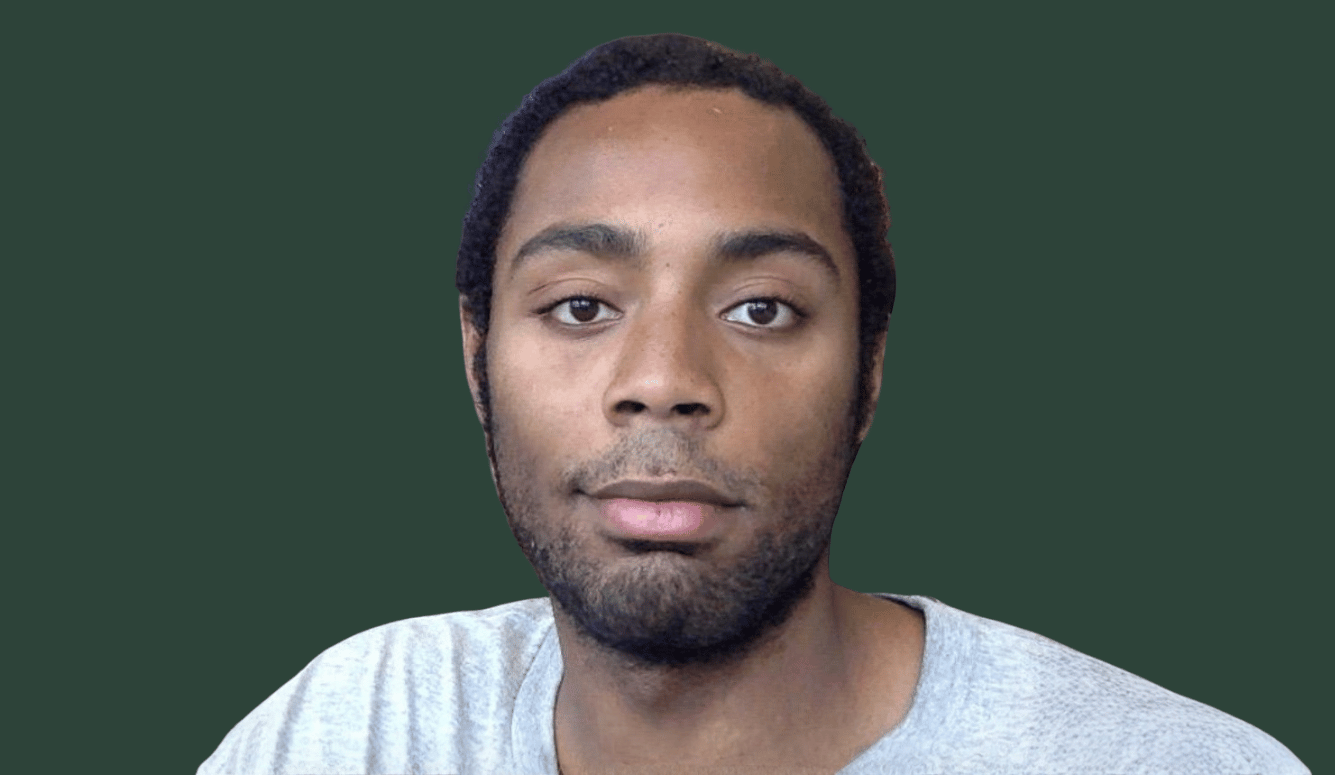

From algorithmic incentives to progressive posturing, this episode explores how antisemitism has become a feature—not a bug—of influencer culture. Zoe Booth speaks with Corey Walker, a Washington, D.C.-based reporter focusing on the Middle East and global terror groups, about audience capture, the anti-Western project of the modern Left, and why Israel represents values worth conserving.
Zoe Booth: Corey, thank you so much for joining me this morning.
Corey Walker: Thank you for having me.
ZB: Your essay really helped me—and so many others—understand what's actually happening, that these people have been captured by their audiences. Could you explain a little about what prompted you? Was there one specific incident that led you to write this essay?
 Corey Walker
CW: Well, I can’t say it was one specific incident. It was more a generalised feeling that a lot of our institutions have shifted in a very anti-Western direction. It’s anti-Israel, but I would say, by proxy, it’s anti-American. What’s fascinating is that our social media landscape is mirroring that.
You’ve got a lot of major podcasters, major YouTubers, all taking this very reflexive anti-Israel stance. It can be any kind of podcast or YouTube channel that has nothing to do with politics—it could literally be about gardening or cooking—and you’ll watch it and they’re like, “Free Palestine... there’s a genocide in Gaza... Zionism is evil.”
ZB: Ms Rachel as well...
CW: And it’s like, I’m just here to listen to you give me baking tips. I’m not here to talk about foreign policy. It’s all-consuming. I wanted to write about it because I just think a lot of this is insane. It’s dangerous. We’re facing a huge disinformation campaign—not just regarding Israel, but also the legitimacy of Western institutions, which I think are at stake.
That’s important to push back against. As I said, it’s not just about Israel—that’s the canary in the coal mine—their broader goal is to dismantle our institutions. In America, we literally had someone in the Biden administration—his name escapes me right now—but he spoke before Congress. One of the agencies did a report and revealed that Iran is conducting a widespread propaganda campaign in the United States, laundering their message through student groups and activist organisations.
And if you look at the podcast realm, because it’s so anti-establishment—since they oppose the default stance of our governments, which is pro-Israel—they’ve taken up an anti-Israel position. I think that’s dangerous—not because you can’t criticise the Israeli government—but because what’s happening is inherently anti-Western. I don’t know if these people realise they’re doing it, but they’re laundering the reputations of international terrorist groups. And they’re excusing a lot of antisemitism.
You can see it reflected in figures like Tucker Carlson and Candace Owens, obviously, but even in more—I hesitate to say ‘benign’—but less egregious figures like Megyn Kelly, for instance. These are dangerous dynamics that need to be discussed more thoroughly. I believe in free speech, but it goes both ways. I’m allowed to say what I think too.
ZB: One hundred percent. I really like the way you’ve framed this. It’s the way I’ve been trying to explain it to non-Jewish friends and also to my audience. It’s not about Israel. If you zoom out, you realise it’s really not about Jews or Israel. It’s about the values at stake.
People have criticised Quillette since October 7th, asking why we’ve taken such a pro-Israel stance. We're supposed to be centrist, so people assume we’re not meant to take a position on anything. But we’re not pro-Israel because it’s Israel. It’s because Israel is aligned with our values. We’re very clear about what our values are—and it just so happens that Israel, in general, is aligned with them. Everything they’re working towards—it’s that simple for me.
CW: I think it’s important that some institutions serve as a counterweight, because so many elite institutions—especially in America—have gone in an extreme anti-Israel direction. You see it in elite media—The New York Times, The Washington Post, the AP. You see it in elite universities—Columbia, Harvard, the University of Pennsylvania, MIT all had to testify before Congress for not addressing anti-American and anti-Israel sentiment on their campuses.
And it’s also reflected in general life. If you’re under 35, it’s really rare to find someone who is pro-Israel, or even mildly pro-Israel, unless they’re Jewish. And even then—
ZB: People tell me I’m the only one in their feeds. The only woman, usually, who’s like, “Yeah, pro-Israel.”
CW: Exactly. And it becomes this status symbol, right? Like being anti-climate change used to be—a signal of your values. It’s expected that if you’re in elite social classes, you’re anti-climate change, pro-LGBT rights, and so on—these elite cultural signifiers.
ZB: It’s a suite of ideas, yeah.
CW: Exactly. And being anti-Israel has become one of them. I’ve spent a lot of time in artistic circles—I’m a writer, I talk to a lot of fiction writers—and literally all of them are anti-Israel. The ones who aren’t are either silent or condemned. And now they can’t even stay silent, because some literary conferences make you sign declarations—saying you’re anti-Zionist, that you’ll never go to Jerusalem or attend the literary festival there.
All our institutions have taken this stance. Someone has to say something different—we’re heading towards a very dangerous cliff.
ZB: So what do you do when you’re faced with that at literary festivals—where they try to make you sign things or get on board?
CW: Well, fortunately, I haven’t been confronted with that directly, because I edit for a Zionist journal, and I list that on my CV, so I think they tend to filter me out beforehand.
But some of my friends have had to face a moral choice. My friend circle has become increasingly Jewish since October 7th—not by design, but just naturally, due to the stance I’ve taken. And a lot of them have decided to create alternatives to the exclusionary systems that exist. Systems that say: “We’ll accept you, but only if you’re the right kind of Jew”—the kind who’s anti-Zionist.
So they’re forming their own groups and creating their own structures to ensure they won’t be completely excluded from the industry. They’ve found literary agents or publishers who are sympathetic to Israel, and they’ve formed an alliance. That way, if someone gets iced out or blacklisted by the mainstream, they have someone else to go to. They have a fallback option. I think that’s crucial.
Because if you don’t have a security blanket, the risk is too high. If expressing your views could get you blacklisted from an industry you love, why would anyone logically come out and speak? The two options are: acquiesce and bend to the mob, or stay silent. And neither is healthy.
So my advice is to build your own buffer—to insulate yourself from these antisemitic or anti-Israel hate mobs, whichever term you’re more comfortable with. They're incredibly fervent, especially in elite artistic circles. You have to be careful and make sure you have people around you who can support you if things go south.
ZB: Yeah. And as a result, here in Australia, a few weeks after October 7th, a group of Jewish artists—poets, painters, writers, filmmakers—created a WhatsApp group. They were all really left-wing Jews working in the arts, and they just wanted a space to talk and support one another during such a difficult time.
CW: Mm-hmm.
ZB: And do you know what happened? Someone on the far-left infiltrated the group and doxxed them—all of them. Personal information, everything they’d shared, all their stories. Just completely exposed them and painted the group as something sinister. It was disgusting. The hatred—I’ve never seen anything like it.
And I’ve also never seen such obsession. As you said, “fervent” is the right word. Just yesterday, there was a story in the news about a seventy-year-old grandmother in my area—a very Jewish area—who was waking up in the middle of the night, most nights of the week, to scrawl antisemitic and anti-Israel graffiti around the neighbourhood. This went on for months.
Eventually the community came together, installed more cameras, and tracked her down. Turns out she was an acupuncturist—your classic crunchy, lefty, possibly conspiratorial type. And I just don’t understand how someone—who’s not Jewish, not Israeli, not Palestinian, not Muslim—could become so obsessed with this issue. Getting up in the middle of the night, week after week, to deface a neighbourhood? Why?
CW: Like I said, I think it’s part of a broader project against the West. A lot of people view Israel as a Western outpost in the Middle East. They don’t see it as a Middle Eastern country—they see it the same way they view France or Germany: a nation filled with “white people” or “white Jews.” That perception isn’t accurate, but it persists.
It also doesn’t help that Israel is successful. I think their GDP per capita is now on par with Germany. The country is thriving—second most venture capital per capita in the world. Israeli startups are booming. I think Wiz, an Israeli company, just sold to Google for over $30 billion. Tech is huge—like 25 percent of Tel Aviv works in tech.
ZB: Yeah, I’ve heard that. Like 25 percent of the city, right?
CW: Exactly. And it’s only getting more successful, more advanced—militarily as well, with developments like Iron Beam to supplement Iron Dome. So Israel is perceived as both “Western” and capitalist, and a lot of people on the Left despise that. They hate capitalism, they hate tech, they hate success.
They have this strange affinity for the Global South—third-worldism. So they latch onto that. Israel, by contrast, is confident, proud, and doesn’t apologise for existing. That’s rare in the West now.
You go to France or the UK and try to find a white person under 35 who isn’t ashamed of their heritage. They feel obligated to apologise for the sins of the past. Israelis aren’t like that. They’re not pretending their country is perfect, but they’re proud of who they are. They’re having children—they’re above replacement fertility. They believe in winning wars. They fight for what they believe in. That moral clarity is something we’ve lost in the West.
ZB: It’s so refreshing. I just got back from my first trip to Israel last week, and everything you’re saying brings it all back. It was genuinely inspiring. People there love life. They’re not ashamed. Here in Australia, especially in more elite or professional circles, you can’t say, “I love Australia. I’m proud of who we are.” It’s socially unacceptable. But in Israel, everyone—right or left—is proud.
It gave me the feeling that they’ll survive anything, even a nuclear bomb. And not just because of the tech—that’s a byproduct of the belief system. They know who they are.
CW: Yeah. I mean, Iron Dome has only existed for about twenty years. Israel lived without that kind of air protection for much longer. People are used to war, used to being attacked. They know the reality—they send their loved ones off to fight, to possibly be maimed or killed.
So when you live with those existential threats, you don’t have the luxury of delusions. You can’t afford to think, “If we’re just nice enough, the world will reciprocate.” Israelis know that’s not how the world works. They’ve given up land and still been attacked. They’ve watched neighbours be massacred—like the 2,000 Druze who were slaughtered in Syria, and the world didn’t lift a finger. Not the UN, not human rights organisations. No one cared.
ZB: Mm-hmm. In Syria?
CW: Yes—a state-sanctioned massacre. And if you’re an Israeli Jew and you see that, you stop believing in the so-called international system. They’ve seen through the propaganda. In the West, we still believe it—because we don’t have to live with the consequences of our beliefs.
As Rob Henderson puts it, it’s a luxury belief. These are beliefs people hold because they don’t pay the price for them. They’re platitudes. They sound good, but they don’t mean anything.
ZB: Yes! Rob Henderson, exactly—“luxury beliefs.”
Skip to content
CW: We get to say these things, and they don’t cost us anything.
ZB: Yeah. And remind me — didn’t Israel offer citizenship to the Druze of Syria? Something like that?
CW: I don’t know the full history, so I can’t speak with authority. But I do know Israel has a significant Druze minority, and they serve in the IDF. They’re known to be quite patriotic. One reason Israel struck targets in Syria after the massacre was to show the Druze community that the state supports them. Israel was the only country that stepped up. Everyone else just ignored it.
ZB: Yes—I met some Druze when I was there. I think it was a Hezbollah rocket that misfired and landed in Majdal Shams in northern Israel. It killed Druze children—I believe it was on a football field or somewhere like that. Horrific. I visited a Druze village. It was fascinating. I didn’t get to spend enough time there, but the food was amazing.
CW: Yes, I think about twelve children were killed. They were playing outside.
Benny Morris
ZB: And I spoke to a man who had been a commander in the IDF—he talked about Druze service in the military. They’re a fascinating people. Similar to Jews in some ways—for instance, you can’t convert to become Druze, and you’re not supposed to marry out. So the dating pool is... limited.
CW: Yeah, very limited. And conservative, especially around gender roles. Druze women do serve in the IDF, but at lower rates than men. But yes, a deeply traditional community. Very interesting.
ZB: One thing I noticed while I was in Israel—the women are incredibly nice. I live in Bondi, Sydney, which is sort of like Venice Beach in California—very image-obsessed. Everyone’s at the gym, in bikinis, and everyone looks perfect. So the culture here, especially among women, can be a bit... cold.
CW: You’re famous for your beaches, yeah.
ZB: Exactly. I go to a Pilates studio where the women don’t even look at one another. No acknowledgement of your existence. Classic “hot girl” behaviour. But in Israel, it didn’t matter how attractive someone was—they were down-to-earth. Humble. And I think that’s because it doesn’t matter how hot you are—you pick up a gun and serve your country like everyone else. You’re not special.
CW: Yeah. I think that’s similar to what happened in Britain during World War II. Before the war, classism was a massive issue—still is, to some extent. But the war forced everyone to huddle together—whether you went to Eton or a state school, you were in the same bomb shelters under London. Everyone was facing existential fear together.
I think when you’re dealing with that kind of crisis—missiles over your head, being drafted—it strips away pretension. Doesn’t matter if you live in a multimillion-dollar penthouse in Tel Aviv or a tiny flat in a suburb—you’re all in it together. That humbles people.
You realise that some things are much more important than appearances. If your survival isn’t guaranteed, you’re grateful for each day. It reorients your worldview.
My experience is that Israelis have a bad reputation internationally, but the ones I’ve met are some of the nicest, most down-to-earth people. And yes, some of the most beautiful women I’ve ever met were from Israel—I don’t know how they do it—but they’re also incredibly kind and sweet.
ZB: One hundred percent. They’re just so grounded.
CW: That’s more than I can say for a lot of American women. Often, the more attractive they are, the less kind they are.
ZB: Yes! I think what makes them so attractive—bit of a tangent—is not just looks, but their values. They’re proud, they’re tough, they know who they are, they’ll fight for what they believe in. That’s hot. Half the guys here are like, “I can’t celebrate Australia Day,” and it’s just... no. Massive turn-off.
CW: Right. That’s why I don’t understand the anti-Israel sentiment among some on the political Right. Israel embodies values the Right supposedly believes in—patriotism, a willingness to love and defend your country despite its flaws, strong families, high birth rates, fighting for what you believe in.
Also, they don’t care about elite consensus or international opinion. They just do what they think is right. I understand why the Left hates them. But the Right?
Meanwhile, American conservatives idolise Hungary, which I think is far more problematic, frankly—and poorer, too. Yet Israel, which is thriving and conservative in many ways, gets ignored or bashed.
ZB: Exactly. I’ve never met a more based people than Israelis. The Right should be looking to them for inspiration. I wonder if it’s due to a disinformation campaign—the Russians, the Qataris, paying influencers...
CW: Maybe.
ZB: It’s the only thing that makes sense to me. Well, that and the old America First/“why should we fund APAC” arguments—and also this weird antisemitic stereotype of all Jews being Woody Allen-like weaklings. But Israelis are the opposite of that.
And you can’t even tell who’s Jewish or Arab in Israel half the time. So many Mizrahi Jews—that’s part of why Hamas dressed up as IDF soldiers on October 7th. They blend in. You can’t tell the difference.
Anyway, I’m ranting.
CW: No, you’re not ranting at all. I’d just say, it’s hard to pinpoint a single reason. But it’s important to acknowledge that antisemitic views among young people on the Right have been rising for a while.
There are studies—you can look them up—going back to around 2021, showing that about 25 percent of conservatives under thirty held negative views about Jewish people. They believed things like “Jews have too much power,” or “too much influence in government.” The usual tropes—that they have dual loyalty, that they run the banks, the media, Hollywood.
These ideas were already circulating. And with the war in Gaza, I’m sure those numbers have gone up. It’s a mindset that already existed, and podcasters are just feeding it.
ZB: Because that’s their audience.
CW: Exactly. Podcasts skew young—the median age of listeners is probably 32 or so—and if a sizeable chunk of that audience already leans anti-Israel or anti-Jewish, it makes sense, from a business perspective, to play to it.
And look, not all of it is overt antisemitism. Some of it is just isolationism—people who think we shouldn’t have any foreign entanglements. They oppose aid to Ukraine and Israel. That’s a political stance. I don’t agree with it, but I acknowledge it’s not necessarily driven by hate.
ZB: What did you call that earlier? Paleoconservative?
CW: Yeah, paleoconservative. The opposite of neoconservative. So neocons are pro-intervention, want America involved around the world—spreading democracy, supporting allies. Paleocons are the opposite—isolationist. They think we should focus solely on domestic issues, ignore foreign conflicts, and cut aid everywhere.
They’d argue we shouldn’t be involved with Israel, or Taiwan, or Ukraine—just take care of America. I think that’s shortsighted, but some people genuinely believe it.
Then there’s the other group—people who just don’t like Jews. And they see US support for Israel as proof that Jews run everything, that they have outsize power, and that it’s corrupt.
That’s obviously antisemitic. But there’s a large audience for it. And unfortunately, a lot of these podcasters are just amoral. They’ll say whatever gets them more views.
ZB: Yeah, I think that’s the common ground on the populist Right and Left—resentment. Thomas Sowell summarises it well: people don’t like Jews because they succeed. Cultural reasons, maybe historical survival pressures—but in general, Jews do well.
And when you’re a guy on the Right, struggling—can’t get a wife, can’t buy a house like your dad or grandfather could—and you see Jews or Israel doing well, it becomes easy to find a scapegoat. Externalise the problem. Blame someone else instead of looking in the mirror.
To me, that’s what makes antisemitism so deeply unattractive—especially on the Right. It’s weak. It’s a victim mindset.
CW: Yeah. It’s the conservative version of when the Left blames everything on “white privilege.” There’s always some guy behind the curtain—some secret power keeping you down. It’s lazy thinking.
I’ve listened to a lot of far-right, antisemitic YouTubers—because I write about them—and they all say the same things: “Jews run the Ivy Leagues, they dominate banking, media, Hollywood,” and so on.
And, yes, many Jews did help build those industries. Hollywood, for instance, was pioneered by American Jews. That’s not a conspiracy—it’s just history. But it becomes this resentment-based narrative.
In this populist moment, a lot of young people—rightly, I think—feel economically screwed. It’s hard to afford a home, to build a life. I’ve given up on the idea of owning property, personally. And I imagine it’s the same in Sydney.
ZB: A hundred per cent.
CW: People are angry. But instead of targeting the right institutions, the ones actually failing them, they look for easy villains. And Jews are a convenient target because they’re visible and successful.
That’s the tragedy of populism without direction—it becomes conspiratorial. Even in my own family, growing up, I heard vague antisemitic things. You know, “Jews run the banks,” or “they’re holding black people down.” I didn’t know what to make of that at fifteen.
Now, obviously, I have a more nuanced view. But back then, it just sat there in the background.
ZB: Where did you grow up?
CW: Chicago—South Side.
ZB: Is there a big Jewish community there?
CW: Yeah, definitely. Not as big as New York’s, but still significant. Most of the Jewish community is on the North Side and in the northern suburbs—that’s the wealthier area.
I grew up in a lower-income, mostly black area on the South Side. Sad that he’s our cultural ambassador, but yes—Chief Keef is from around there.
ZB: (Laughs.) I only know about the South Side from Chief Keef.
CW: And Kanye West, before he lost his mind and became a Nazi. I used to be so proud that he was from the South Side.
Anyway, there’s also a strong Nation of Islam presence in that part of Chicago. And for people who don’t know—the Nation of Islam calls itself Muslim, but mainstream Muslims don’t consider it part of Islam. It’s more of an ethnocentric cult.
I actually attended a Nation of Islam school when I was young—ages five to eight. That’s where I first heard about Jews—in an extremely antisemitic context. Obviously, I wasn’t in control of where I went to school at that age, but it was formative.
ZB: Wow. That’s fascinating. I wanted to get into this anyway—your ideological arc. You now write for Algemeiner on Jewish topics and Israel. How did that journey happen?
The Algemeiner
CW: It all started by accident. When I was at the University of Michigan—which is a very Jewish school, but also has a large Arab population—I saw how contentious the Israel–Palestine issue was.
Even before October 7th, it was a huge flashpoint on campus. Back in 2017, there were protests and campaigns accusing Israel of apartheid and genocide. I remember this big “Israel Apartheid Wall” they put up on the central quad.
At the time, I didn’t know anything about the conflict. But I had a job as a doorkeeper at the campus Hillel. I got on well with the rabbi and staff there. One day, I asked one of the leaders, “People are saying Israel’s committing genocide—is that true?”
She said, “Absolutely not,” and we ended up having a one-hour conversation about the history of Israel and the conflict. That sparked my interest. After that, I took a class at Michigan on Israel–Palestine—the largest class in the Arts & Sciences faculty, with 300–400 students. It’s such a contentious subject that people flock to it.
So that gave me a good foundational understanding.
ZB: It was a good class? It wasn’t biased?
CW: I mean, all history is biased to some extent. The professor was Jewish and I’d say probably Zionist in tone. I don’t know if he’d even be allowed to teach that course today, given how extreme the institutions have become. But I think learning from that perspective, and being immersed in the Jewish community at Hillel, really shaped my early views on Israel.
Hillel is a Zionist organisation, but not radical. They’re open to internal critique. Many of the Jewish students were liberal Zionists. So you could have nuanced discussions there.
After that, I just kept reading—watching documentaries, YouTube lectures, podcasts. I’m a weird person in that I become fixated on niche topics, and Israel–Palestine is definitely one of those. I cared about it long before October 7th.
My interest in Israel also led me into broader questions of geopolitics. The region is a hotbed—so volatile, with fragile alliances and deep-seated religious tensions.
ZB: Same here.
CW: Exactly. And the religious dimension makes it even more interesting. All the Abrahamic religions focus on this tiny patch of land. It’s the homeland for Judaism, Christianity, and Islam. I’m Catholic, so I find that especially compelling.
ZB: Are you religious?
CW: Yes, I’m Catholic. But Catholics differ from, say, evangelicals when it comes to theology around Israel. Catholics don’t believe in dispensationalism—the idea that all Jews must return to Israel for Jesus to return. Evangelicals believe that’s a prophetic requirement—that once all the Jews return, Christ will come back, convert them, and usher in the end times.
ZB: Right—so Catholics don’t subscribe to that?
CW: Correct. It’s a very Protestant view. Catholics have a different eschatology—I’m not fully qualified to explain it in depth, but it doesn’t involve the same literal focus on the land of Israel.
ZB: Got it. So then on campus, especially during the 2021 Gaza conflict—what happened? Was that another turning point for you?
CW: Yes. That conflict lasted around fourteen days. And what shocked me was how many of my friends—really smart, thoughtful people—started posting on Instagram and Snapchat saying things like “Israel is committing genocide,” “Apartheid state,” “F*** Israel.” That kind of stuff.
I’d talk to them and say, “Look, I don’t think you’re getting the full story. Hamas fired rockets first. Israel retaliated.” But they didn’t want to hear it. For many of them, Hamas was justified. They saw Israel as the aggressor no matter what.
And I found that deeply troubling—not just because of the moral inversion, but because these were otherwise intelligent people. They were making arguments that just didn’t hold up.
For example, they’d say, “Israel bombed a hospital, that’s a war crime.” But they wouldn’t mention that Hamas launched missiles from inside that hospital. So who’s really using human shields? That context never entered the conversation.
ZB: It’s maddening.
CW: Exactly. And I found myself wanting to speak out. My life would honestly be easier if I didn’t care—if I stayed out of politics. I envy people who are ignorant and disengaged. But I’m not built that way. I argue with people. I challenge them.
A lot of people, especially on the American Left, try to draw this parallel between being black and being Palestinian—as if the same system oppressing Palestinians is what oppressed African Americans. Even my white liberal friends would say, “Since you’re black, you should stand with Palestine.”
It’s historically inaccurate. But people love simple analogies, especially when they don’t know history.
ZB: Fascinating. So did you ever go through a period where you did see yourself as a victim because you’re black?
CW: Yeah. I think most black Americans wrestle with that. On one hand, we’re incredibly proud to be black — I’d say black Americans are some of the most ethnocentric people in the country, in a positive sense. We have a strong cultural identity. We overcame slavery, segregation, Jim Crow—all of that.
But on the other hand, there’s this deep-rooted victim mindset—the idea that because of our history, we’re entitled to perpetual support: affirmative action, DEI, reparations, whatever.
And I was definitely raised around that mindset. People in my family told me to lower my expectations—that the system is rigged, that white people will always hold me back. Don’t dream too big, or you’ll be disappointed.
My dad used to say, “You already have one strike against you because you’re black. You can’t afford any other mistakes.”
That was drilled into me from a young age. It was like being black was a handicap. And I internalised that.
ZB: That must have been so hard.
CW: Yes, but I always had this rebellious streak. Even as a kid, I questioned it. I could see racism existed, sure. But I also saw that many of the problems in our community were self-inflicted.
For instance, when a fifteen-year-old black boy shoots another fifteen-year-old in the street, how do you blame that on white supremacy? Or when kids born in 2010 can’t read—they were born during the Obama administration, for goodness’ sake — how is that the fault of slavery or segregation?
That kind of thinking always struck me as an excuse for failure.
As I got older and started reading people like Thomas Sowell, I saw that other groups—like Chinese people in Malaysia or Jews in Europe—also faced immense discrimination. But they succeeded anyway. That’s where I started shifting my perspective.
ZB: Do you think that’s what initially attracted you to the Jewish community? I mean, you said you started working at Hillel—was there a sense of admiration?
CW: Actually, that was random. I needed a job, and I got an email saying Hillel was hiring a doorkeeper. That was it. I wasn’t seeking out the Jewish community—it just happened.
But from there, everything followed. I do think I have a kind of admiration for Jews—you might call it being a “philosemite,” the opposite of antisemite. Despite facing genocide, discrimination, exile, they’ve succeeded in virtually every field. They built a successful state. They’ve preserved their identity.
There are lessons in that for everyone. But especially for black Americans. You don’t succeed by wallowing in self-pity or constantly invoking historical grievances. You build. You adapt. You preserve your culture and stand tall.
The Jewish community taught me that—and I think it’s a model all groups can learn from.
ZB: Yeah, I agree. I didn’t grow up knowing any Jews. I grew up in a coastal, working-class, coal-mining town. There is actually a very small shul there, but I never even knew it existed.
It was only after moving to Sydney that I met Jewish people—and just before October 7th, I started to get to know more of the Jewish community here, including Holocaust survivors and the grandchildren of survivors.
CW: Is there a big community in Australia? I thought it was fairly small.
ZB: It’s definitely one of the largest in the southern hemisphere. So, not huge by global standards, but not insignificant either.
And, like in many places, Jewish communities here punch well above their weight in terms of influence and contribution.
CW: Can I ask a controversial question?
ZB: Go for it.
CW: So, I know Australia’s seen a big wave of immigration over the past fifteen years, particularly from Muslim-majority countries. Drew Pavlou—I know him a little bit online—talks about it a lot.
Given that, has it affected the lives of Jewish Australians? Because I’ve seen some pretty insane things coming out of Australia—Muslim doctors saying they wouldn’t treat Zionists, people saying they want to kill them… actual threats. It seems extreme.
ZB: Yeah. I was skirting around that before, but to be completely honest—yes, it has affected the Jewish community here.
I don’t think we’d have seen the scale of anti-Israel protests and marches in Sydney if there weren’t such a large Muslim population who is vocal on this issue. That’s just the truth.
And what’s happened is that [much of the] Muslim community and the hard Left have come together—what some people call the “red–green alliance.”
The white liberal, Marxist types—they defer to the Muslim community because they see them as underdogs. As brown, oppressed people who need to be heard. So what’s really upset me, particularly after October 7th, is this line from the loudest voices in the Muslim community that says, “This is just a humanitarian issue. We’re just here for justice, for the babies.”
And I’m like—no. These voices never cared about social justice before. They weren’t there for Black Lives Matter, or for the gay marriage plebiscite. They weren’t there for other progressive causes. They’re just dressing up their hatred of Jews as if it’s humanitarianism.
It’s disingenuous. And what’s worse is that the Left swallows it. They don’t see that this is clearly, first and foremost, a religious issue—a holy war, really.
Obviously, there are genuine humanitarian concerns too—but the core motivation isn’t secular. It’s religious. It’s a war against the Yahud.
CW: Yeah, I broadly agree. These things are factually true, but the problem is that the Left gives no context. They’ll say there’s a blockade, but they won’t include that Egypt also enforces a blockade, and that it only exists because Hamas would import missiles from Egypt—and literally any sane country wouldn’t allow that to happen. They’re importing missiles from Iran, not Egypt. But the lack of nuance in the discussions—I think for the Left in general, their alliances make sense if you realise that their overall goals are just anti-Western.
For example, I’ve covered socialist conferences before where, obviously, they hate Israel—ninety percent of the conference is dedicated to bashing Israel. But if you listen closely, they say some pretty dark stuff. They’ll openly say they support China, they support Iran, they support North Korea. And I think in one of the conferences I attended, they literally said that North Korea is the country they aspire to be—that it’s the model they’re trying to build: this communist authoritarian system.
And if you look at someone such as Hasan Piker, who is the poster child of the modern online Left—their mascot, basically—he did a whole two-week tour in China where he was literally glorifying the Chinese government, talking about how great they are, making excuses, downplaying what’s happening to the Uyghur Muslims. He was basically saying it didn’t really happen, they’re just putting them in re-education camps.
He’s also literally had terrorists on his podcast, saying that he supports Hamas, Hezbollah, the Houthis—he’s had a Houthi pirate on his podcast. But he also simultaneously says that if you support Israel, that’s as bad as supporting Nazi Germany. And if you’re an Israel supporter, you should be viewed as someone who supports Nazis. But at the same time, you can support the Chinese government, the Russian government, the Iranian government, and various internationally recognised terrorist groups.
I think he even said that he doesn’t care if Ukraine beats Russia. He literally just doesn’t care. He thinks Ukraine is kind of the bad guy in the conflict.
ZB: When they support Iran, that just makes my brain break. I’m thinking, surely we can agree that Iran is not good?
CW: I don’t know, because I think that if you understand that their politics are just broadly anti-Western, you can see why they support Iran—not because of Iran’s domestic politics necessarily, but because Iran is an enemy and adversary to Western interests. Iran has declared itself an enemy of the West, and they’ve declared themselves our adversary, partly because they think we meddle in Middle Eastern affairs, and also partly just because they hate Christianity and hate Western civilisation. They view us as degenerates, and they want to destroy us.
They are the number one funder of terrorist groups across the world—not just those around Israel. They have terror cells in the United States that are being quashed by our intelligence. But they are funding—
ZB: In my suburb, they were paying people to firebomb kosher cafés and stuff just down the road from me. It’s crazy.
CW: Exactly. It’s insane. It’s suicidal for the Left to support this. Because if you want to see how this ends up—for example, in Michigan in the United States, there were liberals who voted in Muslims. I don’t want to paint Muslims with a broad brush because there are over a billion of them. But just for reference here, they voted in Muslims to lead a city council in a small town in Michigan, I think called Hamtramck. And one of the first things they did was they straight up banned the gay pride flag on any of the state property. They immediately did that.
And they said that they—I don’t think I can say it, I don’t want to get in trouble with my employer—but the F-word for gay people—they said, “We want to be a city without [that word]”—that’s their goal. And the liberals in the city were saying, “We feel betrayed.” Well, what did you think was going to happen?
ZB: And isn’t that what’s happening in Corbyn’s party in the UK? There’s been a split between the Muslims and the trans activists.
CW: Because they basically aligned the entire party with nothing but being anti-Israel and against the Gaza war as the only issue that unified everyone. And it’s supposedly a left-wing party. But that meant aligning yourself with a bunch of conservative Muslims who obviously are not going to agree with you at all on LGBT issues.
So they have this very weird dynamic where a lot of primarily white young liberals are having to confront and be very vocally opposed to these brown Muslims who are supposed to have a lower position than them on the hierarchy chart. So you’ve got a bunch of gay and trans people having to go toe-to-toe with Muslims, and they’re yelling at each other and shutting each other down, and poor Jeremy Corbyn—well, not poor, he brought this upon himself—but he’s tasked with trying to hold all this together.
In the videos, you see him—he just looks completely and totally shaken, talking to these activists who are basically attacking him. Attacking him and calling him a Zionist, which he’s not—but he’s being called a Zionist because he was against the October 7th attacks.
ZB: But also, classic left-wingers having poor emotional control—there’s so much infighting. I mean, there’s a lot of infighting on the Right too. But—correct me if I’m wrong—I think Jonathan Haidt’s psychological studies show that people on the Right are more stable and less neurotic. There’s a lot of neuroticism on the Left.
CW: I think maybe that’s why I lean to the right in my own personal politics. Maybe I’m being reactionary, but I have some liberal viewpoints on a few issues. But when I listen to people on the Left talk for more than five minutes, I’m thinking, I hate these people.
ZB: I think we have very little control. I think I am where I am politically because of my personality. But also, I’m extremely high in openness, and I have very liberal opinions—or behaviours—that don’t really gel when I’m in conservative circles. That’s what’s been hard.
I was always on the Left—very much on the Left. I joined the Young Greens the day I could. And I still love the Left socially. I love the art, the music—we have so much in common. But as soon as they get talking about political issues, I’m thinking, please kill me. It’s painful.
CW: That’s the one thing where I think, as someone who was maybe a city conservative or urban conservative, in that I love the amenities of the city. And I also think the Left objectively creates much better art. They definitely create things that are more beautiful. They’re not good at maintaining those things. So they may build a city, but then let it be destroyed with drug addicts and homeless people just pooping everywhere in the street.
I do think that there is a sort of aesthetic that the Left is capable of creating that the Right has a very hard time doing. And I think that’s probably what frustrates a lot of elite conservatives, because a lot of elite conservatives may have conservative viewpoints, but they don’t really align culturally with their own ideological brethren. They align culturally with liberals, even though they have very different political opinions. But since they have different political opinions, that’s a non-starter for the liberals. So they’re expelled from the party.
And so you’re in a really strange position, I think, if you’re in a city and you have generally conservative viewpoints. But I would say that for me personally, I have a huge issue with just liberalism in the sense that—for me—conservatism is more about believing that beautiful things and important things have to be conserved. And that includes values. That means Western values, which I think Israel is reflective of—but that also means the United States, it means Canada, it means Australia, it means the Anglosphere in general, which I think is good. Not to say that they don’t have their sins or their problems, but I think they’re generally good. I think Japan is good, even though it did war crimes. But I still—
ZB: And it’s an ethnostate. No one talks about Japan being a racist ethnostate. Good for them.
CW: It’s an ethnostate and they’re very proud of that. And they’ll tell you that—“Look, we want to remain Japanese. We’ve been Japanese for a thousand years. We want it that way. We don’t want to be part of the internationalist project and dissolve our nation into some sort of bland, multicultural grey goo where you can’t tell if you’re in Tokyo or in London or in New York City. We want to remain what we are.”
And the reason you can go to Tokyo and know you’re in Tokyo is because the people who look as though they belong there are reminiscent of the people who were there a thousand years ago. And they also have the same values. They believe in being clean and orderly and not committing crimes in public and being polite. And that is something that, as Westerners, is almost an alien civilisation to us.
I think that’s why everyone in the West is just obsessed with Japan right now—visiting Japan, seeing it, going on holiday there—because it’s really blackpilling. These are people who actually have clean cities and they don’t have third-world migrants running around everywhere.
Not to bash third-world migrants—they are people too—but at the end of the day, it’s one of the few places—and Israel, quite frankly, comes to mind—among the few places that generally have somewhat liberal values, but are also conservative in the sense that they’re saying, “We’re not going to go along with the international programme. We’re going to keep our civilisations the way we want them.”
I have friends who are liberal and progressive who think that Israel should be another London and just let in anyone. And I’m thinking, I don’t even think London wants to be London right now. If you talk to a lot of British people who are ethnically British, a lot of them don’t want what their country has become. That’s why they’ve voted against migration in every election for literally decades, but their elites are not listening to them. Even though they don’t want the migration, it still keeps getting forced down their throat.
And so—I’m going on a tangent here, but—
ZB: No, it’s interesting. I also wanted to talk—we don’t have much more time—but I did want to mention how fascinating it is in Israel that they had Jews from Morocco and Iran, but also from Poland and Germany, come together and revive their ancestral language.
And yes, there is a divide—somewhat of a divide—between Ashkenazi and Sephardim and Mizrahim. There are issues, there’s some tension every now and again, but in general, most people you meet are mixed: Ashkenazi dad, Sephardi mum. And so they did multiculturalism in a way—they managed to make it work. But I guess they’re all Jewish.
CW: Well, I think it probably works—my theory is—it works in Israel because they may be ethnically diverse or multiracial, but they have a core, generalised understanding of who they are as a people. Being Jewish is a religion and an ethnicity. Jews themselves—even Ashkenazi Jews—if you look at their genealogy, they’re not really 100 percent white. Even though they’re stereotyped that way, they’re a hybrid of European and also Middle Eastern.
So they have ethnic overlap, but at the same time, they have cultural and ideological similarities, shared understandings, and commonality. And I think that is what’s important to build a strong social contract.
That’s why I personally am very sceptical of these sorts of multicultural arguments. Because if you just have a bunch of cultures coming together, but there’s no actual glue that binds them together—they just look different and eat different food, and that’s it—I don’t think any society can really hold itself together that way. You’re going to have tension, you’re going to have chaos. Because I think the strongest culture just ends up dominating.
And I think—not to get too conspiratorial—but Muslims, to their credit, do have a strong sense of who they are as well, similar to Jews. And it’s a dominant culture. You see that in the UK, in the States, and in Australia too—with more men in particular converting to Islam. It’s not a huge amount, but it does offer a sort of blueprint for how to be a strong man.
ZB: Exactly. And unless we present an alternative to that, of course people are going to gravitate towards it.
CW: Strong, masculine male—heroic, dominant, assertive. Well, Haviv Rettig Gur—who, if you’re not following him, you should—he’s an Israeli academic and public intellectual, gave a really interesting talk—I think it was maybe in London. And he said there’s been an elite project in all the English-speaking countries to basically hollow out those countries and make them into empty shells that you can just fill with anything.
Anyone can be English now. Anyone can be German, anyone can be French, anyone can be Canadian, anyone can be Australian—literally anyone. Doesn’t matter if you got there ten minutes ago—“I’m just as Australian as you are,” “I’m just as American as you are.” And once you do that, people don’t have a sense of self. People don’t know what their nation was fifty years ago, or a hundred years ago, or a thousand years ago.
And if they do know, they’re bred to be ashamed of that and to say that this new elite project we’re building—that’s what you should be proud of. Not anything that came before it.
And in the UK particularly, basically all the young white people are ashamed to be themselves. The only people who actually have a sense of themselves and their culture and their identity and what they are—are the jihadists. Now, that’s not to say it’s all Muslims. Not every Muslim is a radical extremist. Please don’t try to smear me as saying that—I’m not saying that at all. But unfortunately, there is that subset of the population that exists.
They are the only people—even though they’re a minority—who have a strong sense of who they are. They have a strong sense of direction and purpose, and they’re not ashamed of it. And so they’re the only ones aggressively pushing their agenda, their culture, their principles. And they’re trying to make things illegal. They’re trying to make it illegal to blaspheme—to be blasphemous towards Muhammad and the Qur’an.
Look at what happened in Charlie Hebdo a decade ago. It’s reached the point where a lot of people are afraid to draw the Prophet Muhammad again because they don’t want another terror attack. And rightfully so—I wouldn’t want that either. But it goes to show you: when you have a civilisation that’s afraid to assert its values, and when you assert your values as Westerners, you’re called racist. When they do it, it’s multiculturalism. When we do it, it’s racism.
Even though the West has built civilisations that are glorious—so much so that people from all over the world want to live here. People are losing their lives, literally going through dangerous routes, being trafficked in, crossing oceans and channels and rivers for days and weeks on end, drowning, dying—desperate to get to Europe or to America or to Canada. Australia, too.
But we are told our civilisations are the bad ones. We should be ashamed of them. Meanwhile, the things they’re bringing into our countries are supposedly beautiful and wonderful. It’s all so amazing. “Multiculturalism is amazing.” And I’m sorry, but if the multiculturalism was so great, why didn’t it work in the countries they’re coming from?
If it’s so amazing and they’ve got everything figured out and they’re so much more enlightened, why didn’t it work in those countries?
And of course, the answer is always, “Well, they were colonised,” or, “There’s some sort of Western conspiracy keeping them down.” But at the end of the day, when it comes down to it—I think there has to be an effort.
To tie this back to Israel, if we’re going to have multiracial democracy—which exists in America—well, unfortunately not always the democracy part, but we’ve always been multiracial. And I’d say in Australia, it’s becoming more and more multiracial. In Europe as well. If this is going to work, we have to have a common culture.
We can be multiracial. There’s nothing wrong with that. But we have to have a common, unifying culture. Israel shows that it’s possible. And through that, beautiful things happen, such as having kids and families and above-replacement fertility.
Our countries are dying. We are dying. America, where I live and which I love, only has a 1.6 fertility rate. I think Italy has 1. South Korea is 0.8 or something. All of our civilisations—within two generations—are not going to exist.
Israel will exist. The Jews will exist. They are having kids. They are still going to be around. I can’t say the same for the countries that are bashing Israel—they’re not going to be around. At least not in their current form. They’re not going to be identical to what they are today. Not at all.
But Israel—sixty years from now, seventy years from now—will be identical, or even better, than it is today. Because they are actually having kids. They’re building a future for themselves. And we have to do the same for ourselves.
And the longer we wallow in the self-pity and the self-hatred that’s being pushed upon us by elite institutions—the longer we do that, the more screwed we are. And it’s shameful.
ZB: Mic drop. That was beautiful. On that note, we’d better wrap up. But thank you so much for joining me, Corey. You’re a great young thinker and writer. If people want to follow your work, where should they look—aside from Quillette?
CW: I’m on Twitter non-stop. Well, X—it’s not called Twitter anymore. But my handle on X is @CoreyWriting. I write for the Algemeiner, so you can follow me there if you’re interested in reading what I’m writing about.
And I guess—stay tuned. I want to start a Substack and a podcast and all those things. So hopefully you’ll hear more from me in the future.
ZB: Nice. And hopefully you’ll pitch some more great stuff. I think we could have gone for double the amount of time recording this podcast. So you’ll have to come back on in the future.
CW: I will. Invite me again. I’ll always be open to this. I love doing podcast interviews.
ZB: Sounds great. OK, thank you. Bye-bye.
CW: Thank you so much.
Keep reading
How France Lost Control of Its Streets
How to Suppress Men’s Writing
Back to the Dark Ages

Prison or Peer Review
France’s Imaginary Austerity