Antisemitism
The New Antisemitism
Jake Wallis Simons argues that Western democracies have abandoned their values and their Jews—and that Israel’s fight for survival is a warning the West cannot afford to ignore.


A review of Never Again: How the West Betrayed the Jews and Itself by Jake Wallis Simons, 320 pages, Constable (October 2025).
Thursday 2 October was the day on which Jews marked this year’s Yom Kippur—the holiest of Judaism’s holy days, a 24-hour period in which they seek forgiveness for sins and ask God for mercy (kippurim means atonement). As worshippers were leaving the Heaton Park synagogue in the city of Manchester, a man drove his car into the crowd, and knifed several people. Two people have since died while three others sustained serious injuries. The attacker himself has been shot dead by police. He is believed to have been Jihad Al-Shamie, a 35-year-old of Syrian descent, who came to the UK with his family as a child.
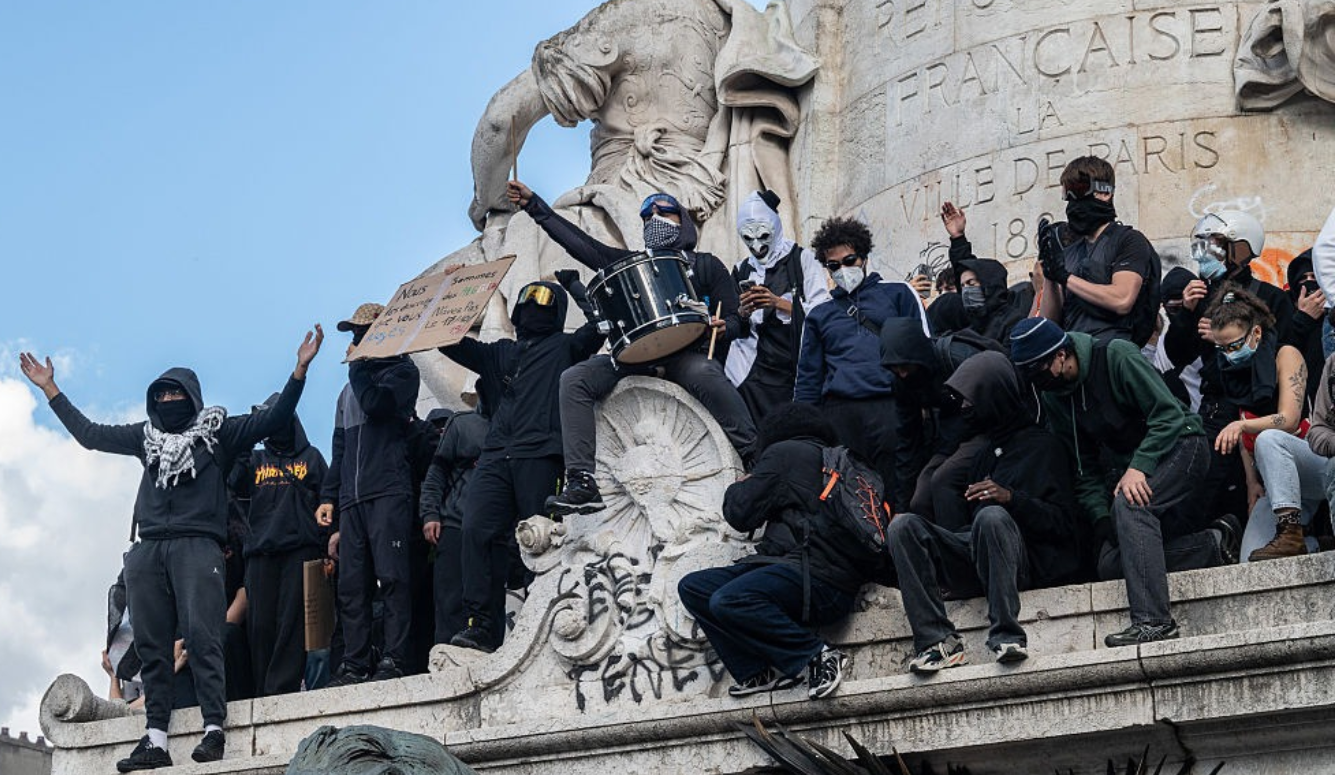
Jihad means struggle, and in one of its iterations it is held to mean struggle against unbelievers, among whom Jews are prominent. The Hamas raid on an Israeli kibbutz and a music festival, which killed around 1,200 people also took place in early October (of 2023). Although it was far smaller, the attack in Manchester nevertheless signals that Jews are not safe from Islamist attack, even in the West.
Jake Wallis Simons’ book fully acknowledges the likelihood of continued Islamist terror in the West. He impresses upon Western democracies that they have lost their will to protect themselves and their cultures. To recover this, would require a spiritual, intellectual, moral, and likely military renaissance for which they are almost all presently unprepared—with the sporadic exception of Donald Trump’s America and the total exception of Israel. Simons’ second main point is to argue that Israel deserves to protect itself against a terror that may currently be in retreat but is not in decline.
Israel’s Western allies in Europe and elsewhere harbour attitudes towards the Jewish state composed of wishful thinking and platitudinous assurances that all will be well, while antisemitism in Western societies has sharply increased. Simons believes that “the betrayal of the Jews” is “symptomatic of how, in recent years, the democracies have incrementally betrayed our own values, bankrupting our inheritance and opening the door to an age of radicalism.” This situation, he claims, has been engineered by a liberal elite. This is not a new claim, but it is more strongly emphasised than usual. This elite, writes Simons, is soft on Islamist extremism, while tolerating no dissent from its orthodoxies on the part of those who speak up against the way in which such extremism is “dismantling what remains of our sense of self.”
 Brett Hall
The Jews are what German Jewish diarist Viktor Klemperer calls a “seismic people,” especially attuned to dangers of this kind because they are most exposed to the threats of radical Islam. For Israelis, this threat is most acute because of the Palestinian cause. Since the creation of Israel in May 1948, the Jewish state has faced continual Arab hostility, which has often taken the form of invasions intended to subdue and conquer the country: in 1948–49, 1956, 1967, 1973, 1982, 2006, and from 2023 to the present day.
So far, these efforts have failed—most notably in 1967, when Israel repelled an attack that had been prepared in Egypt and Syria, and not only won the battle but took control of the Gaza Strip, part of the Sinai desert, the West Bank of the Jordan River, and the city of Jerusalem. As Golda Meir, Prime Minister of Israel from 1969–74, once observed, “If the Arabs put down their weapons today, there would be no more violence. If the Jews put down their weapons today, there would be no more Israel.”
Though Simons does not dwell on this aspect of the ongoing conflict, most of the Arab countries appear to have concluded that a military victory over Israel is not possible, and thus some kind of accommodation must be reached. Even if they have not completely put down their weapons, over the past two decades, most of them have taken major steps towards recognising and working with the Israelis. Israel’s neighbours Egypt and Jordan were early defectors from an Arab boycott of the Jewish state. Together with the African Islamic Republic of Mauritania, they gradually agreed to recognise Israel. (Mauritania, however, withdrew that recognition in 2010 and broke off ties). As part of the 2020 Abraham Accords—a diplomatic breakthrough for which President Donald Trump can reasonably claim some credit—Bahrain, Sudan, Morocco, and the United Arab Emirates all established normalised bilateral ties with Israel. Saudi Arabia was the most important holdout among the Arab states: but the Israelis and Saudis were slowly working towards a rapprochement. Israeli officials meet with the de facto Saudi ruler, Crown Prince Mohammed bin Salman, and various agreements were signed—though they fell short of full recognition.
The outbreak of the Gaza war stopped this process dead in its tracks. Saudi public opinion overwhelmingly called for all links with Israel to be severed and many Saudis did not believe that Hamas had killed civilians during the 7 October 2023 attacks. Bin Salman now insists that he will not recognise Israel unless a two-state solution is reached—a possibility that now seems remote, that has been dismissed by Prime Minister Benjamin Netanyahu, and that is rejected by a large majority of Israelis. Following the 7 October massacre—which was met with rejoicing in some Arab states—many Israelis view agreeing to a Palestinian state on their borders as madness. Support for a two-state solution has dwindled to around twenty percent of Israelis; most young people oppose it. The Israelis have no doubts about the risks such an outcome would pose.
On 11 November 2024, during an Extraordinary Arab and Islamic Summit held in the Saudi capital of Riyadh, Bin Salman called for international action to end Israel’s war against Hamas in Gaza, which he termed a “genocide.” Yet, on 29 September 2025, the Saudi ruler and his cabinet joined other Arab states in endorsing Trump’s “comprehensive” plan to end the Gaza conflict.
Some commentators in the West have offered extenuations for Hamas’s actions over the past two years. Simons spends a number of pages focusing on one of these commentators in particular: the former Conservative politician Rory Stewart. For Simons, Stewart—and his fellow podcaster Alastair Campbell—are what he calls “centrist fundamentalists,” dedicated to looking for the good side of terrorists. Simons excoriates such centrists in general and Stewart in particular for what he calls “the Wykehamist fallacy,” a term borrowed from former UK ambassador to the US Robin Renwick.
A Wykehamist is a present or former pupil of the elite Winchester School: Simons uses it to denote those highly educated liberal elites who cannot accept that Islamists are often determined terrorists, preferring the thought that “even the most bloodthirsty despot had an inner civilised chap as one might find in Winchester College.” The fallacy, Simons believes, courses through the brains of British officials, prompting an over-sophisticated tolerance of those who hold liberal Western values in contempt, while punishing those people who doubt the ability of the Wykehamists to protect them. “The elevation of other cultures,” Simons writes, “was accompanied by heavy social penalties for dissenters, with pride in our way of life condemned as bigoted and any hesitation about the ways of others seen as racist.”
Alan Davison
Many might want to accuse Simons of “Islamophobia”—an offence that some members of the present British government want to combat through legislation that offers unique protection to Muslims, despite the threat to free speech this poses. But in fact, he claims that historically Jews were better off under Muslim rule—even though they were regarded as inferior and forced to pay higher taxes—than they were under Christian masters.
The “demons of Christian imagination were unforgiving and often deadly to the Jews who had killed the son of God,” writes Simons, while classic Islamic literature contains “no equivalent of Protestant theologian Martin Luther’s vicious antisemitic screeds; no Barabbas, no Shylock, no Fagin; no Jew with devil’s horns.” Simons cites Middle East historian Bernard Lewis, who adds that Islamic history “does not contain the Spanish expulsion and Inquisition, the Russian pogroms, nor the Nazi Holocaust.”
But the relative safety of Jews in Muslim lands was to change—and we are living through the aftermath of that change. It changed in part because the Christians taught the Muslims—some of whom, to be sure, were keen to learn—how to hate Jews and to weaponise that hatred.
The blood libel—that Jews require Christian blood to bake their matzos, especially during Passover—was popularised in twelfth-century Norwich, from whence it spread throughout Europe and was taken up by both Muslims and Christians. The libel remained venomous in the 18th and 19th centuries: in 1840, an antisemitic French diplomat spread the libel among Capuchin monks in Damascus; it was invoked at the turn of the 20th century, when the French-Jewish army officer Alfred Dreyfus was accused of selling secrets to Germany, an accusation known to be false but not fully admitted as such until years after the authorities reluctantly released him from prison.
In the early 20th century, Muslim power was weakened by the creation of a number of nation states in the Arab world, in emulation of Europe. The French and British imperialist rearrangement of the Middle East proceeded with no reference to native preferences. Leading Muslim figures saw Germany as an example to emulate. Badly mauled in World War I, the country now seemed to be experiencing a renaissance—and to be working towards a “resolution” of the Jewish question. The Muslim leaders, spearheaded by the Mufti of Jerusalem, Haj Amin al-Husseini, agreed with Hitler that their main enemies were the Jews and the British (Hitler added the Soviet Union to the list). The German defeat, the suicide of their ally Hitler, and the creation of a Jewish state (first proposed by the British in 1917, to attract Jewish support for their war against Germany) left the representatives of Islam bereft and fuelled their hostility.
This sense of grievance and victimhood was to prove very persistent. Simons quotes the Somali-born writer Ayaan Hirsi Ali, whom he interviewed for the book, as saying that,
As you unpack it, you’re going to find that you’ll feel sorry for Muslim populations, because they have been victims of despotism, victims of Islamism, victims of both the Soviet Union and even the American hemisphere. All of this is very hard and has had its impact. But I don’t want any of it to be used as an excuse to say—“they’ll never learn, poor them they’ve been victims, just let them be antisemitic”.... we’ve been waiting for the silent majority of peace-loving Muslims to stand up, to organise, to get out there and say, “the Islamists don’t speak for us.” We haven’t seen that.
Instead, as Simons writes, we have faced the continuing and growing threat of a newly energised Islamism, in whose name terrorists have carried out many successful attacks. France has Europe’s largest Muslim population—and largest Jewish population. Eighty-five attacks, in which at least 334 people were killed, were committed on French soil between 1979 and April 2024. The French Foundation for Political Innovation, Fondapol, claims that over the same period “we recorded 66,872 Islamist attacks worldwide. These attacks caused the deaths of at least 249,941 people.”
Keep reading
What the Navigators Knew

Gemma Tognini on Australia’s Political Revolt
Rubio in Athens
How France Lost Control of Its Streets