Media
Broken Incentives
The media’s incentives may be broken, but we as individuals do not have to be.


I.
In October, a study published in PLOS One provided some fresh insight into how and why American media has become so dysfunctional. Over the past 20 years, the study reported, headlines that convey anger, fear, sadness, and disgust have been increasing, while headlines conveying neutrality or joy have been in decline. These trends have coincided with a massive drop in trust in news journalism, particularly in the US.
According to a new study by David Rozado, there has been a big increase in news headlines suggesting fear, anger, disgust, and sadness since 2000, and especially since about 2010. Journalists are pushing your buttons. pic.twitter.com/Sg3QTNbdSz
— Paul Graham (@paulg) October 20, 2022
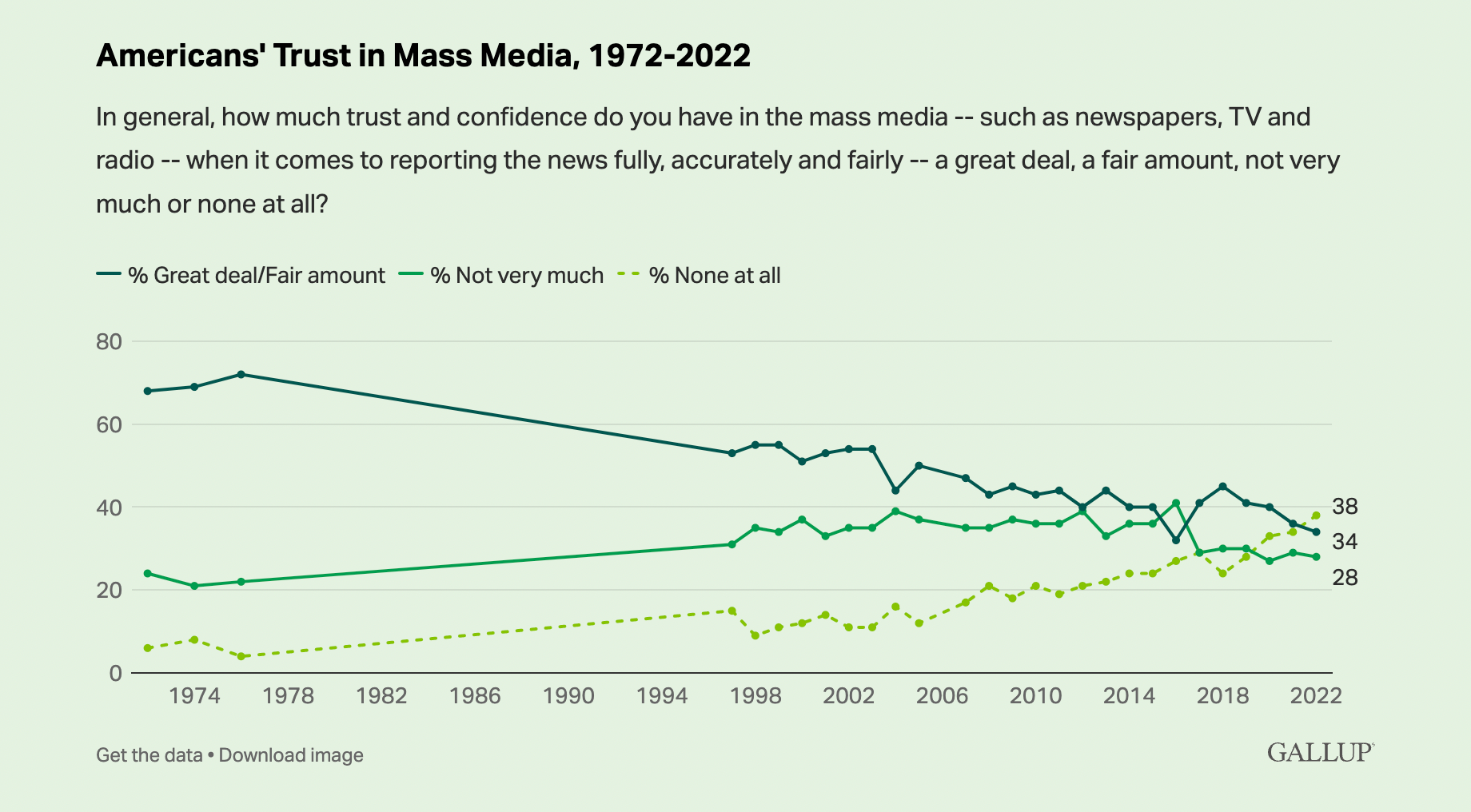
According to Gallop polling, seven percent of Americans say they have “a great deal” of trust in the media, while 38 percent say they have none at all. As angertainment has increased, trust has decreased. As one political tribe provides angertainment for its loyal readers and viewers, the other becomes increasingly alarmed and disgusted. Angertainment may be profitable for journalism in the short-term but over the long-term it trashes the integrity of the profession.
Angertainment is unlikely the sole cause of US political polarisation, but it certainly hasn’t helped. Just as mad cow disease was caused by feeding bovine-meal to cows, angertainment feeds on polarisation which in turn feeds on angertainment. It’s a cannibalistic cycle.
Keep reading
How to Suppress Men’s Writing
Back to the Dark Ages
Prison or Peer Review

France’s Imaginary Austerity

The Limits of Perfectionism