Psychology
Six Great Ideas from Adam Grant's 'Think Again'
Westerners have been reading the works of Aristotle for more than 2,000 years, and his ideas even animated the Islamic Golden Age.
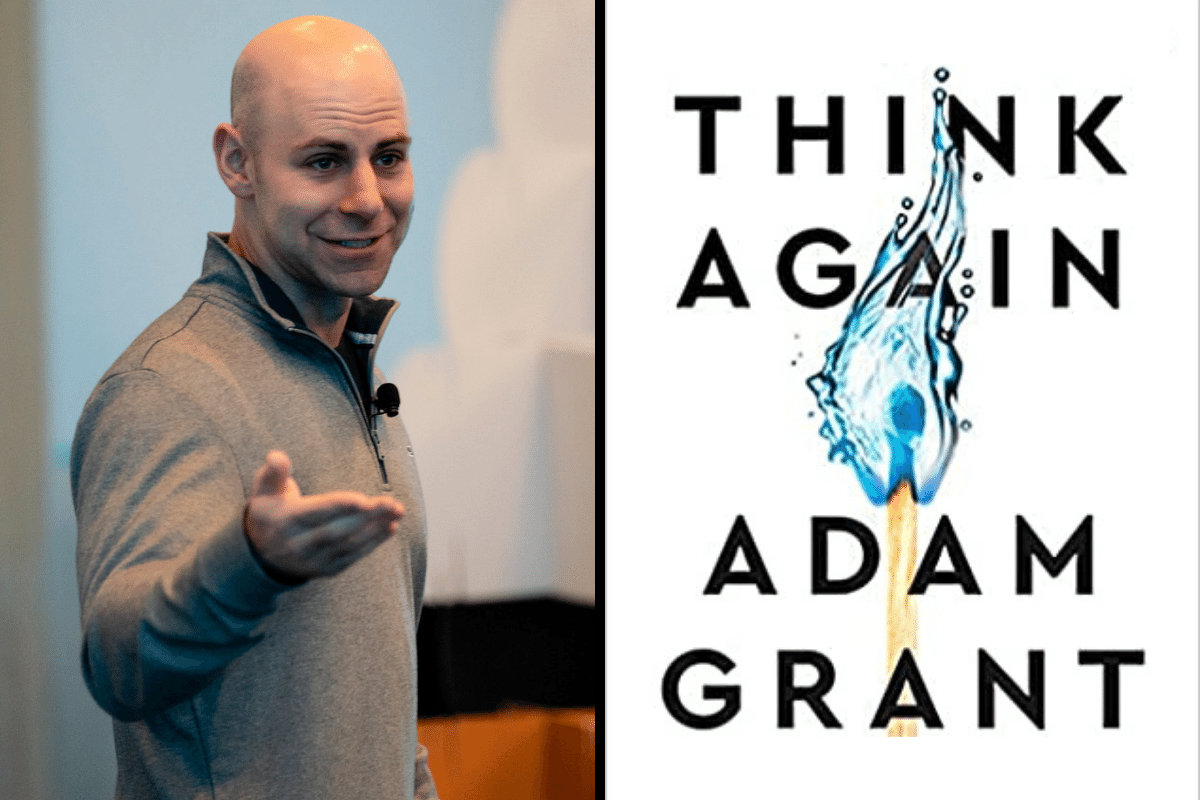

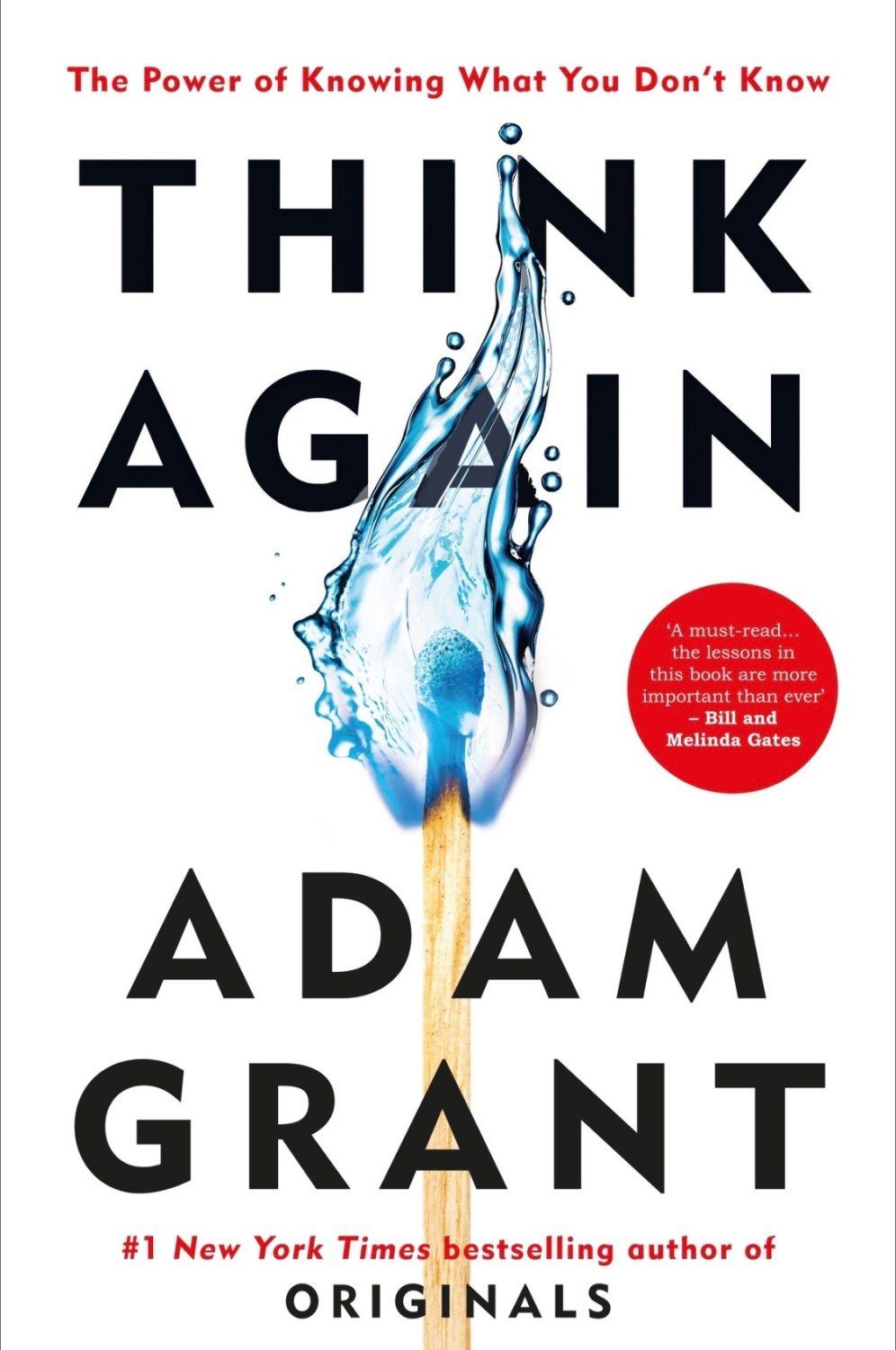
A review of Think Again: The Power of Knowing What You Don’t Know by Adam Grant. Viking Press, 320 pages (February 2021).
Of everything a person must maintain, his mind is most important, and king of all is his connection to reality. Yet, our tether to the world can be tenuous. Our ideas, particularly our most fundamental ones, help us make sense of the world. But if they’re wrong, they completely shift the image, like a turn of the kaleidoscope.
Nature is no child’s toy, though, and to be commanded, it must be obeyed. So, as much as we hate to feel the ground move beneath our feet, we have real incentives to get things right, even if that means upending ideas we’ve held for decades. And, according to Wharton professor Adam Grant, the trait of regularly rethinking one’s beliefs, big and small, is what puts the best thinkers a cut above the rest. In fact, a propensity toward frequent and flexible rethinking in the face of new evidence may even outstrip IQ as an indicator of one’s intellectual trajectory. That’s fortunate, because rethinking and recognizing what we don’t know are skills we can cultivate. Here, from Grant’s Think Again, are some great ideas on how and why to do so.
Recognize the problem
“You must not fool yourself—and you are the easiest person to fool,” said Richard Feynman, Nobel-winning physicist. Laureates of another kind—David Dunning and Justin Kruger, winners of the 2000 Ig Nobel prize—backed this truism with data, showing that we are particularly prone to fooling ourselves when we know just enough to be dangerous, which partly explains why mortality rates spike every summer as fresh residents take up the mantle of medicine.
Grant echoes Phil Tetlock’s claim that overconfidence manifests in our tendency to emulate the behavior of preachers, prosecutors, and politicians: We preach the virtues of our ideas without seeking meaningfully to address conflicting views; we prosecute opposing views with a greater focus on winning than truth; and we politick for support among our constituents instead of engaging in thoughtful dialogue. We might even fall for the “I’m-not-biased” bias, giving ourselves more credit for objectivity than our thinking habits deserve. Realizing, in our cooler moments, that we’re more fallible than we sometimes think opens the growth loop, propelling us from doubt, to curiosity, to investigation, to new learning.
Think more like a scientist
I can’t tell you how much I admire Jason Crawford, creator of the “Roots of Progress” project. When he set out to tell “the story of human progress—and how we can keep it going,” he set aside his prior beliefs to completely re-examine the evidence. He recently posted a quote from a hero of medicine, Louis Pasteur, that captures that scientific spirit:
Keep your early enthusiasm, dear collaborators, but let it ever be regulated by rigorous examinations and tests. Never advance anything which cannot be proved in a simple and decisive fashion.
Worship the spirit of criticism. If reduced to itself, it is not an awakener of ideas or a stimulant to great things, but, without it, everything is fallible; it always has the last word. What I am now asking you, and you will ask of your pupils later on, is what is most difficult to an inventor.
It is indeed a hard task, when you believe you have found an important scientific fact and are feverishly anxious to publish it, to constrain yourself for days, weeks, years sometimes to fight with yourself, to try and ruin your own experiments and only to proclaim your discovery after having exhausted all contrary hypotheses.
But when, after so many efforts, you have at last arrived at a certainty, your joy is one of the greatest which can be felt by a human soul, and the thought that you will have contributed to the honor of your country renders that joy still deeper.1
We can think less like preachers, prosecutors, and politicians—and more like scientists— says Grant, by regularly asking ourselves of any meaty conclusion: What evidence would convince me otherwise? This focuses our own inner debates on causal connections instead of prior commitments, on facts instead of feelings.
If there is a feeling with which we should concern ourselves, it’s what Grant calls “the joy of being wrong”—the recognition that every false belief we overturn makes our mental maps of the world that much more accurate. We turn what, in regard to proper thinking, Leonard Peikoff called “red lights,” which won’t sit squarely with new evidence, into “green lights,” clearing the road for new learning.
We can set ourselves up for more such joys by developing the trait of confident humility: confidence in our abilities alongside active questioning about whether we’ve adopted the right strategy or are even tackling the right projects. Those oh-so-wise Greeks called hubris a sin, and perhaps we can better understand why by grasping, as Grant points out, that humility and its cognates derive from a root meaning “close to the ground.” Humility, he says, is not about chucking our self-confidence, but about ensuring that our thinking is well grounded.
Persuade by listening
Is there anyone who
Ever remembers changing their mind from
The paint on a sign
Is there anyone who really recalls
Ever breaking rank at all
For something someone yelled real loud one time
~“Belief,” John Mayer
If Think Again were a song, it would probably be “Belief” by John Mayer, not just because both are punchy and poignant, but because both reflect on the destructive nature of strongly held but bad ideas and the flat-footed ways in which people often attempt to persuade others. We should take a lesson, says Grant, from people such as Daryl Davis, the black musician who has helped hundreds leave the Ku Klux Klan, and Arnaud Gagneur, the “vaccine whisperer” whose motivational interviewing methods have been used to help thousands of parents see that the MMR and other common vaccines are safe for their kids.
Davis has said that he’s never persuaded anyone. This might be a touch too modest, but his point is that he doesn’t do what Grant admits to having long done; he doesn’t “logic bully” others into corners like a modern Socrates or George Berkeley. He approaches fraught conversations not like a war, but like a dance, emphasizing common ground, listening reflectively, and encouraging others to pause on their own doubts. After all, logic bullying doesn’t work. This was the conclusion, anyway, of the greatest and most consequential ambassador in American history, Benjamin Franklin:
[A]s the chief ends of conversation are to inform or to be informed, to please or to persuade, I wish well-meaning, sensible men would not lessen their power of doing good by a positive, assuming manner, that seldom fails to disgust, tends to create opposition, and to defeat every one of those purposes for which speech was given to us.2
We can be more effective by helping others see the cracks in their own overconfidence and pointing them to the sledgehammer than by attempting the demolition ourselves. An eloquent demonstration of this (though Grant doesn’t discuss it) is the difference between Davis and the vigilantes within the BLM movement, a difference Davis captured in his 2016 documentary, Accidental Courtesy (highly recommended). As with the story of the vaccine whisperer, it shows that you cannot help people change their own minds by trying to deny their autonomy.
Research also suggests that trying to “put yourself in someone else’s shoes” by simply imagining what life is like for others doesn’t break down prejudices or change minds but can actually increase resistance. “Across twenty-five experiments,” Grant writes, “imagining other people’s perspectives failed to elicit more accurate insights—and occasionally made participants more confident of their own inaccurate judgments.” What a shocker—we can’t imagine what we don’t know. If we want to persuade others, we have to understand them, and if we want to understand them, we have to talk to them.
The greater the distance between us and an adversary, the more likely we are to oversimplify their actual motives and invent explanations that stray far from their reality. What works is not perspective-taking but perspective-seeking: actually talking to people to gain insight into the nuances of their views. That’s what good scientists do: instead of drawing conclusions about people based on minimal clues, they test their hypotheses by striking up conversations.
So, too, thought the great Enlightenment thinker and student of John Locke, Shaftesbury, who was fond of pointing out that the truly liberal state (or polis) leaves men free to “polish” one another through conversation and trade, giving rise to polite, civil society.
All Politeness is owing to Liberty. We polish one another, and rub off our Corners and rough Sides by a sort of amicable Collision. To restrain this, is inevitably to bring a Rust upon Mens Understandings. ’Tis a destroying of Civility, Good Breeding and even Charity it-self, under pretence of maintaining it.3
Acknowledge complexity
Westerners have been reading the works of Aristotle for more than 2,000 years, and his ideas even animated the Islamic Golden Age. Despite the fact that what we have are but dry lecture notes, not works Aristotle actually published, they remain a staple of the persuasive arts, and for good reason. Not only did Aristotle’s book on persuasive speaking, Rhetoric, anticipate many of the lessons on persuasion in Think Again, his corpus seems implicitly to commend another of the book’s ideas.
Read a modern political platform or newspaper op-ed and you will likely see what psychologists call “binary bias,” the tendency to abruptly reduce complex debates to two positions. Pick up the Nicomachean Ethics, on the other hand, and you will see Aristotle laying out a whole range of views on various topics. Aristotle acknowledged complexity, and that signals to readers that he was paying attention, that he was looking not just for ideas confirming his own views or convenient foils to them, but for all evidence and contrary opinions. He was in touch with the full range of views—not a mere cherry-picked subset—and he often explained those views clearly alongside his own.
Far from reducing one’s credibility or persuasiveness, acknowledging complexity can attract readers, especially when it’s clear you’ve considered the ideas they actually hold and not some straw-man version of them. “A dose of complexity can disrupt overconfidence cycles and spur rethinking cycles,” says Grant. “It gives us more humility about our knowledge and more doubts about our opinions, and it can make us curious enough to discover information we were lacking.” As John Stuart Mill put it, he who seeks “objections and difficulties, instead of avoiding them, and has shut out no light which can be thrown upon the subject … has a right to think his judgment better than that of any person, or any multitude, who have not gone through a similar process.”4 Could there be a better proof of this than the lasting legacy of Aristotle, known for centuries simply as “the philosopher”?
Find challengers, not followers
Orville and Wilbur Wright were so close they said they “thought together,” but as Grant points out, you could as aptly say they fought together. The brothers enjoyed “scrapping” about ideas, but as heated as their debates got, they never came to blows. That’s because, although they challenged each other to think long and hard about their respective ideas, they didn’t make things personal. They engaged in what psychologists call “task conflict,” not relationship conflict. They prodded one another to think and work smarter and harder, and their results speak for themselves.
Although we’re not all fortunate enough to be born into what Grant calls a “challenge network,” we can and ought to build our own if we want to do extraordinary things. This worked for Brad Bird when he was spearheading projects at Pixar, where even some of the world’s most farsighted and creative executives balked at one of his first proposals. To prove them wrong and get the project done, Bird didn’t go looking for yes-men. He recruited Pixar’s misfits, the disagreeable people he knew would call him on his bad ideas. Their passionate sparring led to The Incredibles, which went on to win the Oscar for best animated feature, grossing more than $631 million. “We learn more from people who challenge our thought process than those who affirm our conclusions,” writes Grant. “Strong leaders engage their critics and make themselves stronger. Weak leaders silence their critics and make themselves weaker.”
It’s easy and comfortable to team up with those who will follow us off any cliff. But to do big things, we need to assemble a challenge network of independent-minded value-creators who will push us to rethink our pet projects and ideas—without undermining morale and cooperation by flinging personal slights.
Lead by transparency
Zooming out, how do we build agile organizations where the rethinking habit and the scientific mindset are baked into the DNA? How, especially, can those leading massive companies do this when they can’t possibly interact with every contributor?
Keep reading
Men Without Meaning

The Rise of Sainte-Marie Among the Hurons


Blood, Progress, and Amnesia
Claire's Weekly Letter: Hormuz and Homer
The Grift at the Gate