History
Quasi-Religious Appeals to the Judgement of History
“People (mostly liberals) tend to say, ‘You’re on the wrong side of history’ about social issues that are breaking their way.

I was outside the Supreme Court the day that equal marriage was legalised in the US. My office at the Library of Congress next door enabled a swift venture to join in the celebrations. That sunny Friday I duly picked up my purple ally flag and wandered around the scenes of jubilation. For months leading up to the judgment, a mom-ish lady had stood out in front of the court, holding a bright red sign emblazoned with a biblical warning for homosexuals and their enablers. Morning and afternoon, she’d fielded the objections of woke kids on school trips, batting back their arguments with assurances that, tolerate this, and one day soon it would be legal for a man to marry his mother.
The day the court upheld equal marriage, I couldn’t see the red sign lady, but I found another clutching a cardboard banner scrawled with warnings that Obama was an undercover Muslim. I am British, but by this point I was used to seeing the infamous American culture wars up close, so I barely blinked. Nonetheless, like any simultaneously politically-minded and self-centred individual in the digital age, I had a sense of the significance of the moment—not just for the people it actually benefited, but for my own moral vanity as a person inhabiting history. Of course it occurred to me that one day I’d be able to tell my grandkids that I was actually there the day this almost impossibly-won thing was achieved by a group long beleaguered in the United States. I took pictures, of course; crying couples, raging culture warriors, smiling allies. But the banner that most caught my attention read: The arc of history bends toward justice. It’s a quote made famous by Martin Luther King Jr, adopted and adapted by Barack Obama (who funnily enough had some ‘evolving’ of his own to do around gay marriage).
However much one agrees or disagrees with this notion, a sense of ourselves as agents inhabiting history is consequential. It relates to our collective and individual projects; the way we interact with each other and the world. Outside the Supreme Court that day, the quote this lady clutched in her hand seemed perfectly fitting; the idea(l) of progress is not only a key Enlightenment tenet but one for which there are a number of empirical evidence markers that some of our sharpest minds have pointed to. And keep in mind, this was the summer of 2015; post-Great Recession but pre-Trump. The blowhard bandwagon had not long got on the move and it was all still something of a joke around the cocktail parties and beer bars of DC; a spectacle at which liberals and many conservatives alike shook their heads as an embarrassing fad that the political kids would soon grow out of. Unaware of what was to come, we were jubilant and confident that day. History is progress. Time pushes us forward. Another sign held by a couple of teenagers read: Unite these States. For a moment it seemed possible.
Perhaps every generation has felt they lived in momentous times. From end-days cultists to cultural innovators and inventors, surely each period has its prophets of doom and discovery. Even so, there would appear to be something about this epoch that is particularly amenable to a sense of historical significance. Most obviously, the technological advancements we are experiencing represent a speed of transformation unseen since the industrial revolutions of the eighteenth and nineteenth centuries. Bound up with and crucial to all this is the frequency with which we receive and produce news; at a quantity and rate unseen before. And because this information is competing with a million other clickables, it is almost all—the genuinely momentous and the entirely frivolous—couched in the language of urgency.
 Michael Shermer
Those who complain about the hyperbole that characterises public discourse these days must remember that it is not merely a cultural trend, but one underpinned by economic necessities. On the internet, heart-warming becomes life-changing, offence becomes trauma. Staring down the ruptures that AI will inevitably bring, contemplating significant climate change and a global population of displaced peoples larger than ever before, would it really be unfair to say we live in strange times? The rapid changes we are experiencing, coupled with the all-present language of urgency, compound a greater sense of the significance of ourselves as actors within history. Is it surprising then, to hear increasing references to ‘history’ wedged into the speech of individuals weighing their own choices?
To those who say it has always been this way, I’m not so sure. Eighteen years ago, the British Prime Minister Tony Blair was mocked mercilessly for commissioning a memo entitled ‘Getting the Right Place in History.’ Back then, such a sense of personal historical importance was considered laughable hubris, even for a head of government. Now though, the desire to ‘be on the right side of history,’ in some quarters is presumed to be a prerequisite for all sound moral reasoning. In Jonah Goldberg’s words: “People (mostly liberals) tend to say, ‘You’re on the wrong side of history’ about social issues that are breaking their way. It’s a handy phrase, loosely translated as, ‘You’re going to lose eventually, so why don’t you give up now?'”
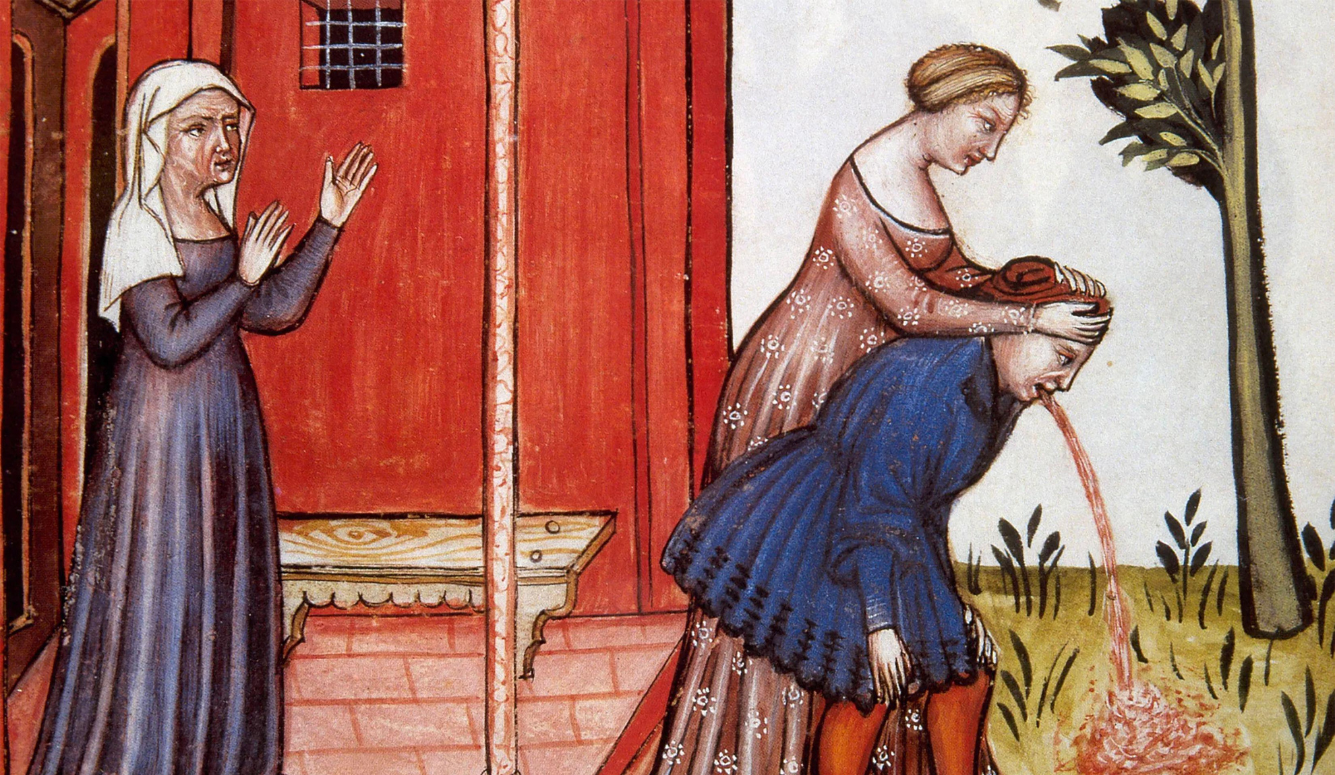
One could go further. In fact, if it is indeed true, as has been argued, that we humans will always worship something, then I wonder if for many secularists, particularly those on the Left, the new god isn’t History herself. Warnings about the indictment of history frequently strike a quasi-religious tone, in diatribes that if one swapped the word ‘history’ for ‘God’, wouldn’t be out of place in a fire and brimstone pulpit. Prominent British leftist Owen Jones declares, after arguments with feminists who fret about some of the possible implications of proposals to institute gender self-identification: “Anti-trans zealots, know this: history will judge you.” Selma Blair speaks of a determination to “be on the right side of history” that clinched her decision to speak up about sexual violence. In these times of constant commentary and panoptical digital reach, history becomes an all-seeing, all-knowing, unforgiving judge.
We are, almost all of us, writers and commentators now; manufacturing opinions, judgments, sending out tweets and posts which live on to be reviewed at some future point at which history may judge us to have been insufficiently woke. The slew of historic-tweet scandals are a testament to this, and both Left and Right wield the past as a weapon. Every time there is a new political appointment on either the Left or Right, staffers or junior journalists are tasked with trawling social media for damning errors of judgment. When our culture simultaneously encourages us to broadcast every thought we have immediately and to leave it to live on for eternity, it is a strange, unforgiving landscape indeed.
It would be easy to say that only the Left wields history, since it is often progressives who use the kinds of phrases that imply a linear march forward. But clearly both conservatives and progressives hold a specific and important relationship to history, crucial enough for it to be implied in their very names. Both sides fear its condemnation, but for different reasons. During the Brexit campaign in Britain, there were pro-Leave memes being circulated that featured huddles of women in burqas, captioned: “Britain 2050: why didn’t you stop them, Grandad?” Conservatives fear a future in which all familiarity has been thrown on a bonfire. Progressives fear being the American southerners who resisted civil rights.
Keep reading
Jerry Kaplan on AI Doomers

Payback Time for Steven Galloway

War Stories

Life in The Grim Old Days