Ancient History
Treachery in the Heart of Rome: The Rise and Fall of Sejanus
In a new book chronicling the lives of ancient figures, historian Guy de la Bédoyère describes the audacious power grab that almost unseated Rome’s second emperor.
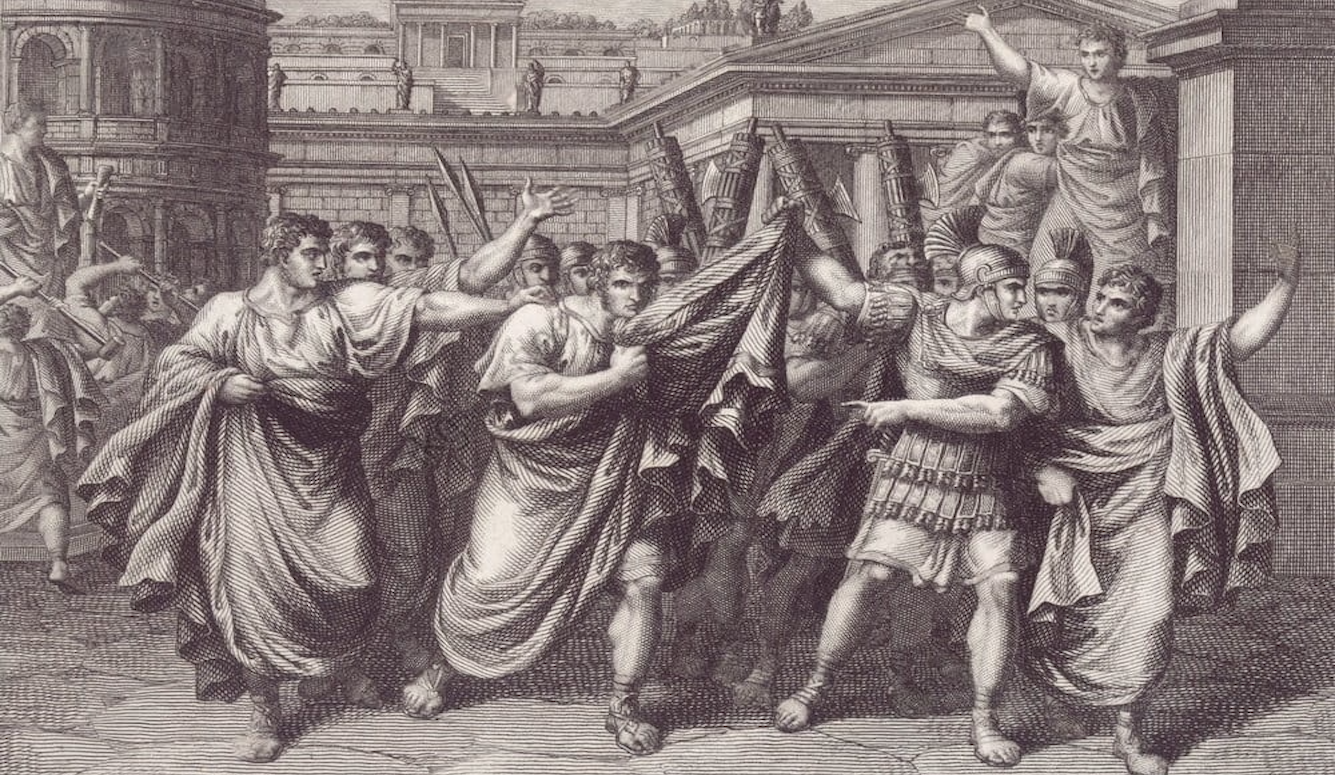

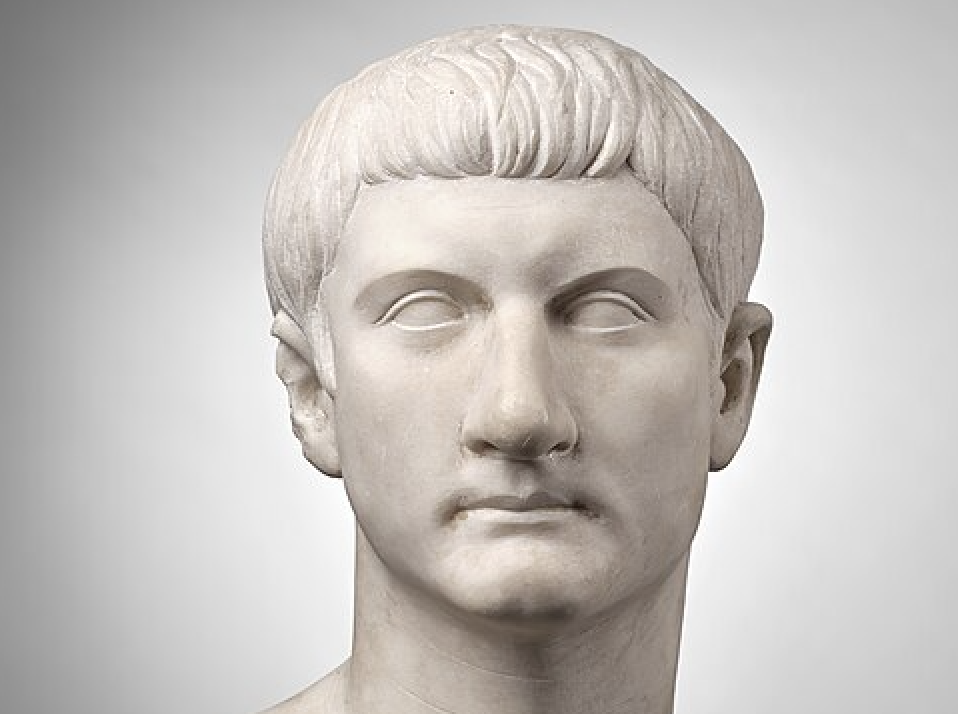
Tiberius (AD 14–37), the second Roman emperor, was Augustus’ stepson (and adoptive son and heir). Under Augustus, Tiberius had been a great military commander who secured the northern borders and stabilised the Empire. His reign consolidated the imperial system introduced by Augustus and saw the transition to a more autocratic style of governance.
However, Tiberius’ personal unpopularity and reclusive nature during his later years overshadowed many of his accomplishments. He had little interest in ruling and delegated much of the everyday business of governance to his ambitious praetorian prefect Sejanus, eventually withdrawing to his villa on the island of Capri. Sejanus took advantage of the trust placed in him and nearly seized supreme power. His fall is one of the most graphic and celebrated examples of retribution in Roman imperial history.
The story of Sejanus is dependent on the accounts of Roman historians, in particular Tacitus, who indulged himself with an unforgettable tale of treachery and dissimulation. His main purpose was to portray Tiberius as a sinister and manipulative tyrant, but he also succeeded in creating an allegory of cynicism at the heart of power.
Shortly after Tiberius’ accession in AD 14, the son of praetorian prefect Seius Strabo—Lucius Aelius Sejanus (born Lucius Seius)—was appointed co-prefect. Like his father, he was an equestrian, Rome’s second aristocratic tier, but had been adopted into the senatorial Aelii clan, hence his name change.
The adoption entitled Sejanus to a senatorial career, but he must have decided that the prefecture of the Praetorian Guard offered him more real power and personal access to the emperor. It also allowed him to avoid the suspicion that surrounded ambitious senators. Tiberius chose a few trusted equestrians to form part of his most intimate circle.
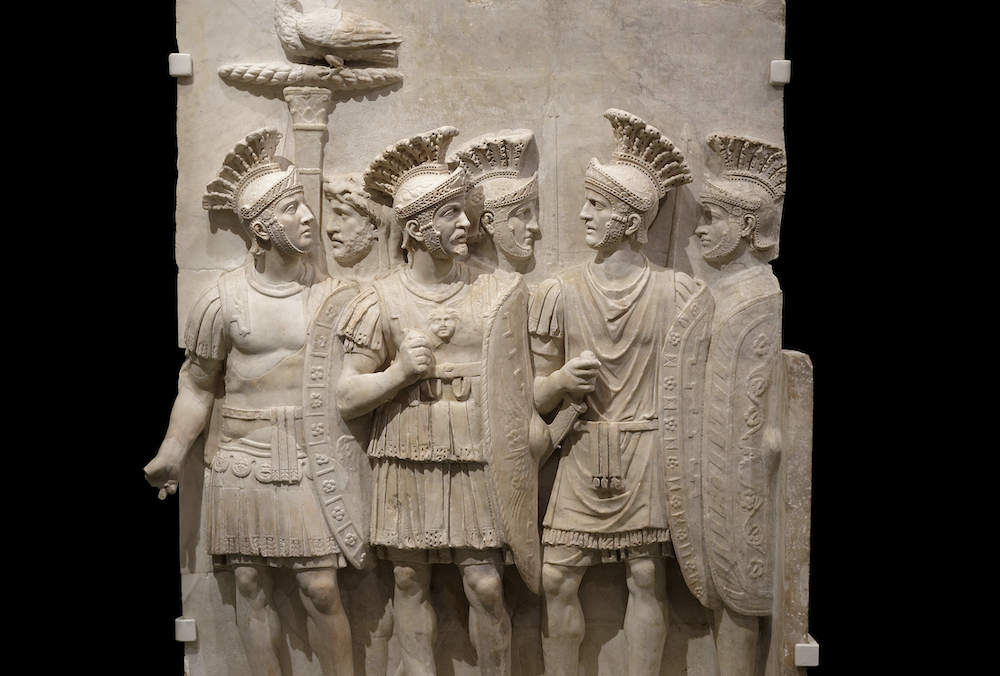
Within a year, Sejanus held the position on his own when his father was promoted to the prefecture of Egypt. Enjoying a trusted pedigree, he quickly inveigled himself into Tiberius’ favour. Sejanus was the first of the praetorian prefects to experiment with the power and influence the position enjoyed, and thereby also with the potential power of the guard as a political force.
Sejanus was helped by chance, so often the principal agent in realising ambition. The huge theatre that had been built in Rome by Pompey Magnus in 55 BC burst into flames in the year AD 22. The fire was contained thanks to quick work by Sejanus, who used his position to tackle the emergency. Tiberius heaped praise on Sejanus for averting a catastrophe. The senate voted that a statue of Sejanus be erected on the grounds of the theatre.
In time, the career of Sejanus would expose how dangerous the commander of the guard could become. Tiberius ignored the signs, preferring to take as little interest as possible in the job of being emperor.
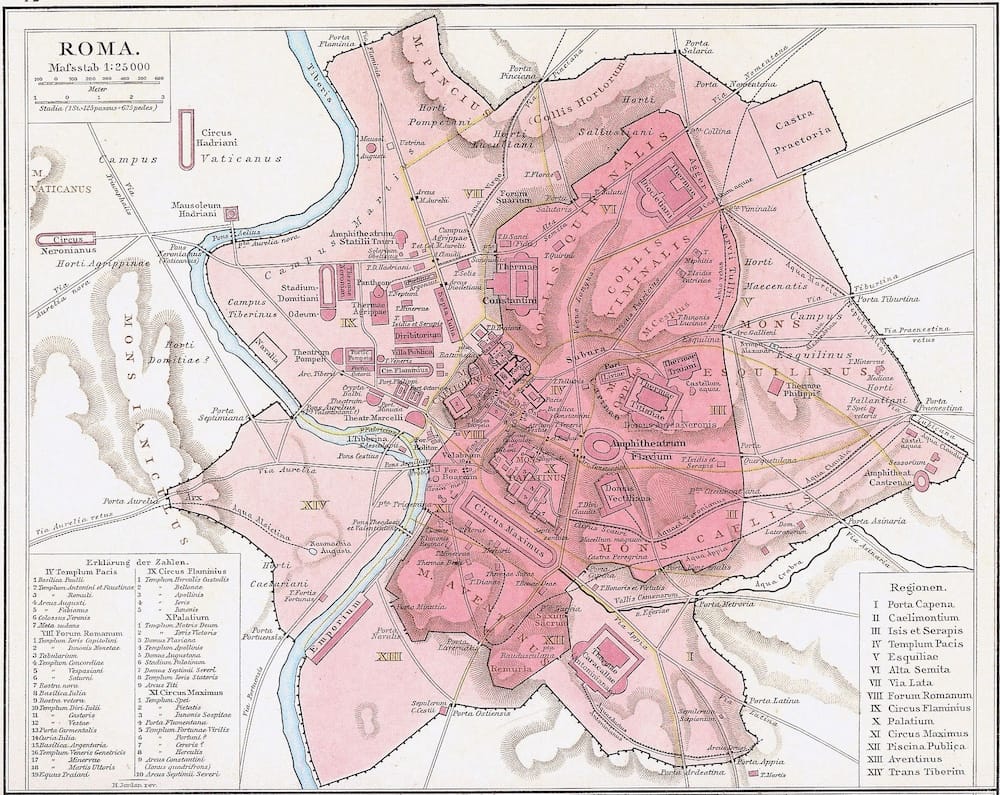
Sejanus made his first significant move in AD 23 when he installed all the praetorian cohorts in the Castra Praetoria, a fortified military camp in the northeastern part of the city. Under Augustus, they had been based at several locations in Italy, safely dispersed away from Rome, but may have already been brought into various barracks around the city under Tiberius. Their new dedicated fortress transformed the significance of the prefecture of the guard. The Castra Praetoria, which would remain a permanent feature until the guard’s disbandment under Constantine almost three centuries later, meant that the men were now directly and immediately under Sejanus’ control.
Sejanus’ ambitions were frustrated by Tiberius having a son (Drusus) and a grandson (Tiberius Gemellus). Moreover, Drusus bitterly resented Sejanus’ status. With breathtaking audacity, Sejanus was already having an affair with Livilla, Drusus’ wife (and granddaughter of Augustus’ empress Livia by her first marriage), while planning to convince her that Drusus’ murder would open the way for the pair of them to seize power. Sejanus would even go on to divorce his wife, Apicata, to encourage Livilla’s belief that his intentions towards her were sincere.
Sejanus decided to assassinate Drusus, using poison to be administered by a eunuch. As the poison took hold, Drusus’ health deteriorated and he died, much to Tiberius’ horror. Drusus’ death was convenient. But Tiberius did not suspect Sejanus’ involvement.
With Drusus dead in AD 23, the way was open for Sejanus. Drusus’ cousin Germanicus had died in AD 19. And Germanicus’ brother Claudius (of future I, Claudius fame) was regarded as an unsuitable heir because of his physical and mental ailments. Germanicus’ sons were still too young. But before too long, the elder two would reach adulthood and present a challenge to Sejanus—as their mother, Germanicus’ widow Agrippina the Elder, was Augustus’ granddaughter.
Agrippina herself presented a further complication because of her popularity with the army. Sejanus convinced Tiberius there was a pro-Agrippina faction. In AD 24, priests offering vows for Tiberius’ preservation decided to add Agrippina’s sons to the vows. This was apparently done to show their loyalty to the imperial house. But Tiberius was infuriated.
Sejanus moved on to prosecuting friends of the dead Germanicus. His confidence grew as he realised that being praetorian prefect gave him the power to destroy whomever he wished.
Meanwhile, Tiberius regarded the praetorians as the physical manifestation of his own power in Rome, and Sejanus as merely the means through which that power was asserted. (In AD 25, Tiberius ordered Sejanus’ praetorian troops to put on an exhibition of their drill for the benefit of senators, to discourage anyone from considering a conspiracy.)
 Joan Smith

Sejanus was becoming over-confident. In a fawning letter to Tiberius, he proposed a marriage to the recently widowed Livilla. But the move backfired. Sejanus was evidently planning to father an heir for Tiberius by Livilla, but he’d exposed his own ambitions. Tiberius had no intention of setting aside his grandson, or the children of Germanicus, in favour of a son of Sejanus.
Tiberius declined the request, telling Sejanus he was of inferior status and that it was inconceivable that Livilla would be content to marry an equestrian. He warned Sejanus that certain senators were already complaining that the prefect had gone too far.
Agrippina also tried to secure permission to remarry, but Tiberius refused. With her stellar dynastic credentials, any new husband might try to become emperor. In 26, Sejanus decided to tell Agrippina that Tiberius was planning to poison her at a banquet. Agrippina refused her food, causing Tiberius to be offended at the suggestion he might be planning to kill her.
Sejanus had successfully increased Tiberius’ and Agrippina’s mutual suspicion. Not long afterwards, Tiberius and Sejanus dined in a seaside grotto. During the meal, a rockfall buried some of the staff, to everyone’s horror. Sejanus leaped to his feet and placed himself on all fours over Tiberius. This conveniently created the impression that he would sacrifice himself for the emperor.
By AD 27, Tiberius had abandoned Rome and moved to the island of Capri. Sejanus’ power in Rome was now unchallenged. He was even approving candidates for the consulship. Sejanus’ birthday was to be publicly celebrated by senatorial decree. Statues of him were commissioned and set up by those who wished to protect themselves. Sejanus was effectively operating a parallel court. Separate representatives of the senate, the equestrians, and ordinary people were sent to both Tiberius and him. It was hard to see where this could lead other than to Sejanus being declared co-emperor or seizing power for himself. Livilla’s mother, Antonia, realised what Sejanus was up to and informed Tiberius.
On Capri, the penny finally dropped. When Tiberius heard reports of the way Sejanus was operating in Rome, he realised that there was a genuine risk of the senate turning against him and declaring Sejanus emperor. Tiberius was smart enough to see that he could not thwart Sejanus by openly confronting him. Instead, he made Sejanus a consul (normally an impossibility for an equestrian) and started calling him “partner in my labours,” possibly to put Sejanus off his guard.
Sejanus had been awarded the same honours and deference as the emperor. It was agreed that the two would share the consulship every five years and, even more extraordinarily, that Sejanus’ image would be sacrificed to as part of the imperial cult.
Sejanus apparently had no idea he was to be accused of treason himself. Around the beginning of AD 31, Sejanus and the senate became the bewildered recipients of a series of increasingly bizarre and contradictory letters from Tiberius, fired off with the reckless zeal of someone with unrestrained access to a social media account. The letters included those that praised the prefect, while others were denunciations. Sejanus played for time by posing as a guardian and protector of both Tiberius’ grandson Gemellus and Agrippina’s youngest son, Caligula (yes, that Caligula), Tiberius’ great-nephew. (By AD 31, Agrippina had been pushed into exile. By AD 33, both her eldest sons had been killed.)
Tiberius put it about that Sejanus was to be given the powers of a tribune of the plebs, the very privilege that Augustus had arranged for himself, and which Tiberius had been granted to mark him out as the successor. But Tiberius also secretly offered the prefecture of the Praetorian Guard to Naevius Sutorius Macro, a former commander of the night watch (the vigiles), and gave him instructions.
Macro entered Rome at night. On the morning of 18 October, AD 31, Macro found Sejanus and told him that he brought news of the award of tribunician power. A delighted Sejanus smugly entered the senate. Outside, Macro instructed the praetorians who’d been guarding Sejanus and the senate to return to the camp, showing them a letter from Tiberius granting Macro the emperor’s authority.
Sejanus was about to be hoisted by his own petard. By bringing all the praetorians into Rome, he’d also made it possible for the loyalty of the entire guard to be transferred to someone else in one stroke.
The night-watch troops were left to guard the senate while Macro headed off to the praetorian camp to take control before news of Sejanus’ fall reached them. Tiberius’ letter was read out in front of the senators and Sejanus. The letter ran him down with a litany of minor criticisms, which led finally to the senate itself denouncing him. When it became apparent that Sejanus was not to be offered the tribunician power, his supporters abandoned him, and some senators restrained him from leaving.
Sejanus was arrested. Those who’ve watched the television dramatisation of Robert Graves’ aforementioned novel I, Claudius will never forget the wry and ironic smile on the face of the actor Patrick Stewart, playing Sejanus, as he was led out to his grisly fate.
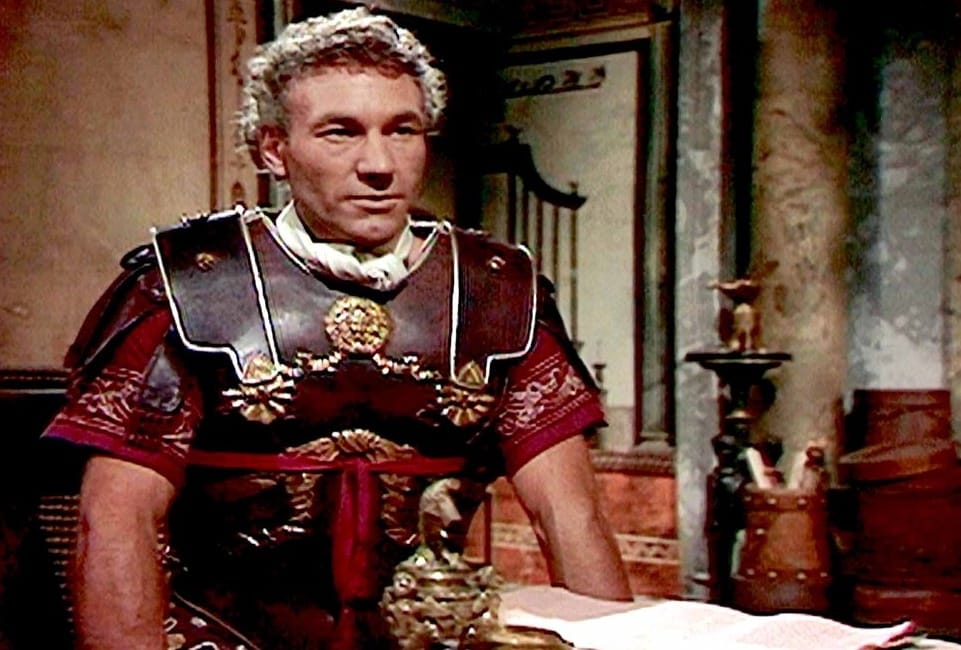
Some of the senators were delighted by the chance for revenge. Sejanus was assaulted by them and by the mob outside, which had followed the proceedings. The senators assembled in the Temple of Concord and condemned Sejanus to death. He was executed and his body cast down the Gemonian Stairs, which led from the Capitoline Hill to the Roman Forum, a location that could not have been more prominent or public.
Anyone believed to have collaborated with Sejanus was attacked. A few days later, Sejanus’ former wife, Apicata, committed suicide, having told Tiberius that Sejanus had murdered Tiberius’ son, Drusus, in conspiracy with Livilla. Sejanus’ children were also killed, his daughter Junilla being raped by a soldier to avoid the prohibition against executing a virgin. Livilla was subsequently either murdered on Tiberius’ orders or starved to death by her disgusted mother, Antonia. The fall of Sejanus was a vicious act of revenge that reflected the damage to the political system established by Augustus, which Sejanus had come so close to overturning.
Sejanus’ failure meant that ultimately the succession passed to Tiberius’ great-nephew Caligula. His brief and disastrous reign nearly resulted in the failure of the whole imperial system and the return of the Republic. Instead, it was Germanicus’ brother, Caligula’s uncle Claudius, whom the Praetorian Guard placed on the throne.
Adapted, with permission, from Brief Lives of the Ancient World, by Guy de la Bédoyère, newly published by Yale University Press. Copyright © 2026 Guy de la Bédoyère. All rights reserved.
Quillette invites thoughtful responses to its essays.
Selected responses are published once per week as part of a curated Letters to the Editor feature. If selected, letters appear under the contributor’s real name and may be edited for clarity and length.
To submit a letter for consideration, please email [email protected].
Keep reading
A Clockwork Filmmaker

The Insight Trap
Cornell and Consent

Robert Lynch on Status, Humour and the Apes We Pretend Not to Be | Quillette Cetera Episode 74