
I.
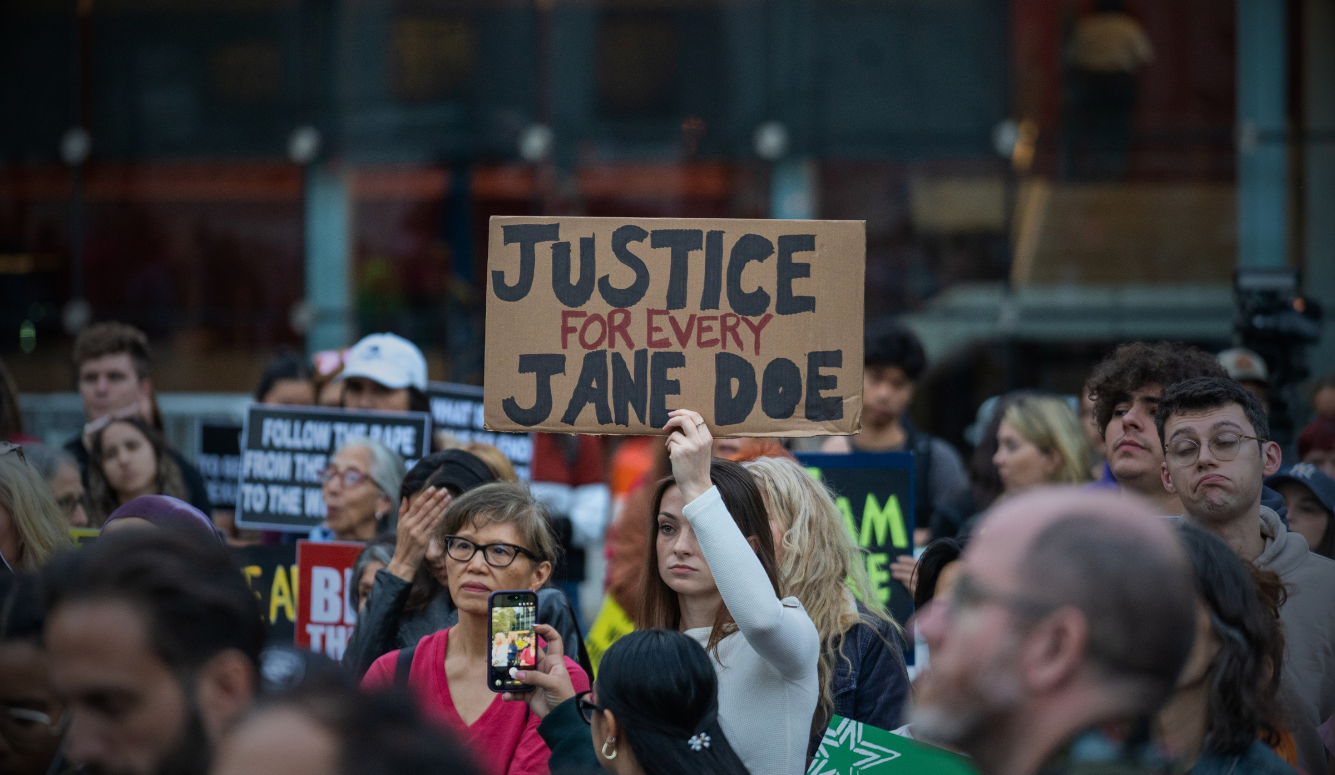
We are sometimes told that Western societies incubate a “rape culture,” in which sexual violence is tolerated, normalised, and even encouraged. The public outcry over the Cornell gang-rape allegations suggests that the opposite is true. When the story emerged in the national press, the alleged rapists were widely condemned and their accuser was showered with support and protected by the pseudonym “Jane Doe.” Or is this description of contemporary sexual mores complacent? Critics will argue that the Cornell incident occurred in 2024, and that the accused skipped away from it without suffering any legal consequences while Jane Doe was left to cope with life-altering trauma. A young woman was violated, and a patriarchal system protected her attackers. Public outcry notwithstanding, surely this is evidence of a kind of institutional rape culture?
Except things are not quite that simple. Like the trial last year of five young men accused of sexually assaulting a young woman in an Ontario hotel room, an apparently clear picture starts to become opaque once one wades into the details. In the Ontario case, Jane Doe was twice filmed during the night clearly stating that she consented to everything that was happening. In neither video, we are told, did she exhibit signs of duress or coercion (no one outside of the court has been allowed to see the videos because of a publication ban on the accuser’s identity). It took four years for Ontario Jane to file her civil lawsuit against Hockey Canada, at which point the London Police Service reopened their criminal investigation and charged the five defendants with sexual assault. All five were acquitted at the end of a bench trial, and Justice Maria Carroccia found that the accuser had been the instigator of the sexual activity at issue.
 Marilyn Simon
The Cornell case is remarkably similar to the Ontario case in a number of ways. On 19 October 2024, Jane Doe attended a party at the Chi Phi fraternity house at Cornell University. There, she engaged in a series of sex acts with overlapping partners over the course of a night fuelled by copious alcohol and ketamine consumption. Around three weeks later, she went to Cornell University police and accused seven members of the fraternity of drugging and raping her. The Chi Phi fraternity house was closed before the end of 2024, the university conducted its own Title IX investigation, and two of the students were expelled. The Tompkins County district attorney declined to bring criminal charges against the accused. Then, on 16 September this year, Doe filed a civil suit against Cornell University, the seven accused men and their fraternity chapter, her own sorority, a local bar, and several unnamed others, all of whom she alleges were culpable in her gang-rape. “What happened to me was horrific and deeply disturbing,” Doe told the university’s student paper. “Almost two years later, I still carry the weight of its impact every day and night.”
The problem with all this is that Doe’s public account of what happened that night flatly contradicts her statements and behaviour after the fraternity-house party. In a text message exchange between Doe and one of the accused a few days later, she reassured him that “non [sic] of the sexual stuff was illegal and honestly I really liked being w u and matt. so anything anyone has to say about the gamgbang [sic] is out of their jurisdiction. i don’t think we should feel any shame for the part [sic]. our body our choice asf.” Her attitude seemed to change after she suffered reputational and social costs when word got around, and particularly after she was disinvited from the fraternity’s Halloween party, which she had wanted to attend.
It has since emerged that she said, “I can say with 100% confidence I was raped” during her interview with Cornell police on 14–15 November 2024. But her six-page sworn statement reportedly makes no allegation of assault or rape and acknowledges that the drinking and drug use was all voluntary. What was the district attorney in Tompkins County supposed to do with this information in 2024? “My office obviously did not and could not have based our November 2024 decision on the allegations in a civil lawsuit that would not be filed until nearly two years later,” the DA pointed out in a statement last month. “Furthermore, I have never been contacted by Jane Doe’s attorneys.” Following the public outcry, the investigation has now been reopened by the DA’s office and will now go before a grand jury. On 1 October, New York governor Kathy Hochul appointed attorney general Letitia James as special prosecutor.
So, what changed between the days after the fraternity party when Doe defended her behaviour and her visit to campus police three weeks later when she accused the young men she’d slept with of drugging and raping her? Neither the Ontario nor the Cornell case is only—or mainly—a matter of he said/she said. These are she said/she said cases in which the plaintiff in a civil suit demonstrably contradicted her own version of events at different times. Legally, prosecutors, administrators, police, and civil courts have to decide if a crime has been committed. Young women may feel ashamed of a sexual encounter or humiliated by the rejection that followed it, and this may deserve compassion and understanding. But it does not necessarily justify sexual-assault accusations and charges, particularly if the young man or men involved had every reason to believe that their partner was an enthusiastically consenting participant. Men cannot be expected to be mind readers and young women cannot be expected to know how they might feel about all of their choices until after the fact. If consent is the only metric we have to decide whether something is assault or not, we have to take each other at our word, which means giving it or withholding it in real time.
Part of the problem here is that cultural forces are channelling female sexual self-understanding in unhelpful ways. Young women are told that they should not only be free to explore and gratify their sexual desires, but they are encouraged and directed to do so. They are told that consent is the bedrock of healthy sexual behaviour, but also that consent can be withdrawn weeks, months, or even years after a sexual encounter has taken place. They are assured that a woman’s feelings about what took place are enough to determine that an assault has taken place, even if those feelings weren’t communicated to the men involved, and even if those feelings only emerged retroactively.
There is seldom any acknowledgement in the cultural accounting of sexual behaviour that encouraging sex without shame might not work in all situations and for all people. Nor is there an acknowledgement that regret can arise after sex, even if consent was unambiguously granted at the time. In short, current discourse surrounding “healthy sex” treats sex as an issue of will and sanitation. Sexual health treats the body clinically, like a mechanical object: here are its erogenous zones; these are symptoms of arousal; your body is something you should “experiment” with. The many complexities of sex are almost entirely absent from expert guidance on sexual health—that one’s will is disordered, that desire and shame might be entangled, that embarrassment over one’s actions might be a cause of great unhappiness, and that love for another might be the wellspring of erotic joy rather than the simple stimulus-response of physical arousal.
Consider Cornell University’s advice to its students. “Sexual pleasure is a worthy pursuit,” the university’s official “Sexual Pleasure” pamphlet begins. “Enjoying sex and experiencing sexual pleasure starts with understanding what makes you feel good. This discovery could happen with a partner, but you can also try things out on your own. […] In addition to exploring alone, consider exploring with a partner.” Elsewhere it offers this advice: “A great option for exploration with someone else is to utilize foreplay.” And: “Sex drive varies between people, time of day, and year. Learn when you and your partner are most likely to be aroused and work with this knowledge rather than against it.” Work with the knowledge of when I feel aroused? Who on earth are they writing this pamphlet for? Aliens? Robots? Fourth-grade homeschooled kids who have never heard of foreplay or masturbation? If someone needs an administrator’s advice to figure these things out then they are not ready for sex. The expert prescription for sex is anti-love and anti-human. I can’t imagine what it would be like to take Cornell’s guide as it was intended: as a guide to sex for the well-adjusted, correct-thinking, and ethical modern student.
I am a mother to a daughter in college and another in high school. The issues raised by the Cornell case are not abstract to me. I know these female students, and I love them. I want to protect them, empower them, and make them feel free and joyful. I also know the young men they hang out with. I want to protect and empower them, and see them filled with joy too. I dearly want to help them avoid becoming entangled in situations like those described above. I want them to have a way of reframing their sexual self-understanding in a way that is more human and vibrant and liberating than the familiar cultural narrative. A perspective that encompasses their whole lives, and especially the parts of their lives they have not yet lived: their futures. What follows is a loving, if exasperated, mother’s guide to sex.
Keep reading
Cornell and Consent
Robert Lynch on Status, Humour and the Apes We Pretend Not to Be | Quillette Cetera Episode 74
The Radicalisation of Tucker Carlson

A Pop Fiction Master and Monster

Australia’s Coming Censorship Machine