Politics
A Dishonest (and Dangerous) Nobel Laureate
Navi Pillay’s appalling treatment of Hamas’s sexual violence provides ample reason to deny her any prestigious honours. But she is also dangerous to the very international legal system that she pretends to uphold.
%20Nobel%20Laureate)
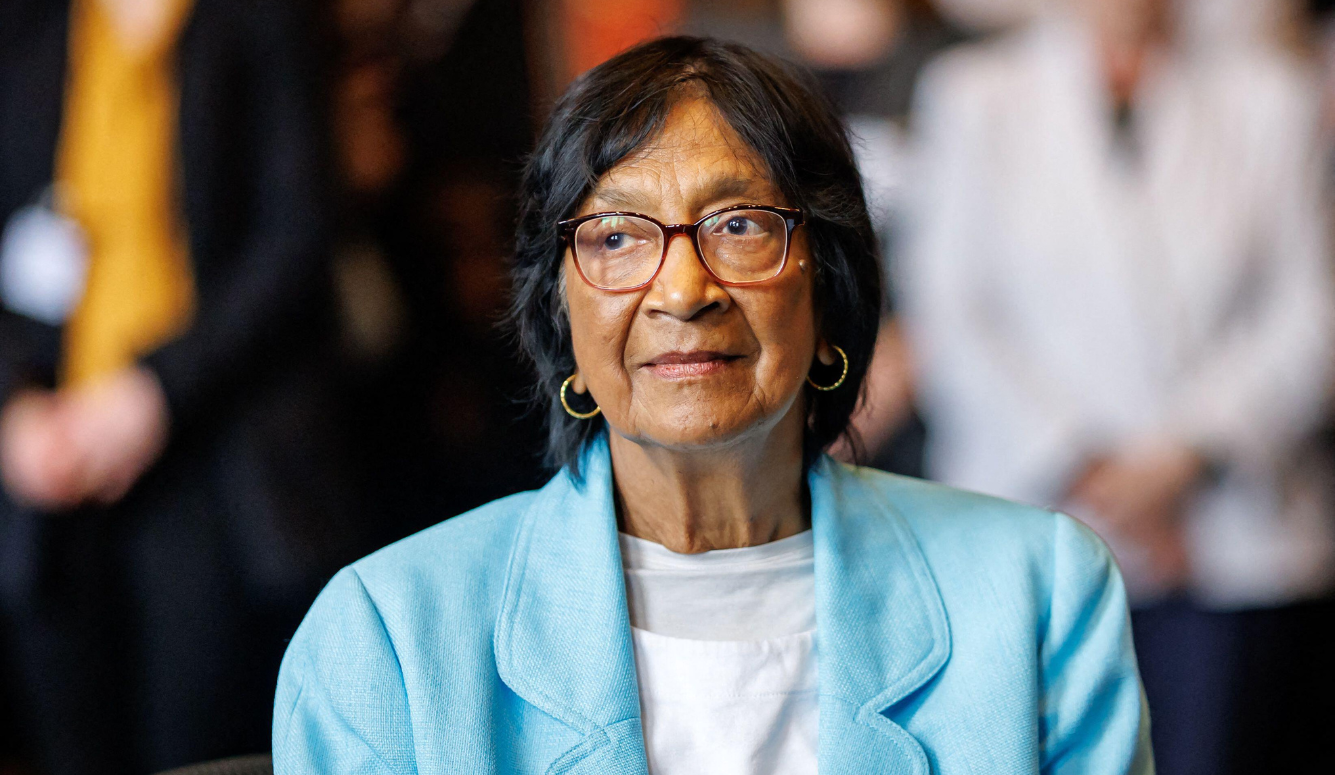
On 9 October, some 48 hours after the commemoration of the Hamas massacres in Israel, South African jurist Navanethem (Navi) Pillay was awarded the Nobel Peace Prize. Pillay has enjoyed a long juridical career that has included the struggle against apartheid in South Africa and adjudicating the Rwandan genocide. But more recently, Pillay has served as the chair of the UN Human Rights Council’s Independent International Commission of Inquiry on the Occupied Palestinian Territory between 2021 and 2025. The commission’s 16 September 2025 report accused Israel of committing four of the five acts qualifying as genocide under the 1948 Genocide Convention, including the deliberate mass killing of Palestinian civilians, the imposition of deliberate starvation, and the calculated prevention of Palestinian births. In its official statement, the Nobel committee notes that “the system of international law is under tremendous pressure, and its institutions are under attack.” Pillay, it adds, “is one of the great defenders of international legal principles in our time.” Informally, committee chair Jørgen Watne Frydnes also noted that Pillay’s work on the commission was “an important part of the reasoning why she received the prize.”
The Independent International Commission of Inquiry was established by a May 2021 Human Rights Council (HRC) resolution shortly after the brief war that month between Israel and Hamas. Its charge was to investigate all abuses of international humanitarian and human-rights law, and to collect evidence that could be used in subsequent legal proceedings. It was never clear why the commission was needed. In 1993, the UN Commission on Human Rights had already established a special rapporteur for the occupied Palestinian territories to report on Israeli human-rights violations (but not those of Palestinian terror groups), and that office has produced a steady stream of reports for the HRC about alleged Israeli villainy. The HRC also appointed a fact-finding mission after the brief war between Israel and Hamas in 2008–9 and it established a commission of inquiry after the war in 2014.
Despite the word “independent” in its title, the new commission remains fully dependent on the same presuppositions and skewed methodology of other HRC-charged bodies that study Israel. Per its charge, it consults conclusions from the same UN agencies that have aligned against Israel for decades. It uses documentation from “civil society” organisations, meaning the numerous anti-Israel “human rights” NGOs that have opposed Israel’s existence for at least the past quarter-century, as well as the media sources to which the very same NGOs provide distorted narratives of the conflict. The commission’s conclusions, meanwhile, are based on a standard of proof by which an “objective and ordinary prudent observer would have reasonable grounds to conclude that the facts took place as described.” But the dependence on flawed sources means that even this relaxed standard of proof is also flawed.
Keep reading
A Dishonest (and Dangerous) Nobel Laureate
Common People

How Genetics Rewrote History
Equal Pay, Unequal Work

The Genetics of Crime and Punishment