Art & Culture
Trauma and Terror
If you’re not already familiar with the casus belli that ignited the Gaza war, watching the fifth season of ‘Fauda’ will be good for you, but it will also be bad for you.
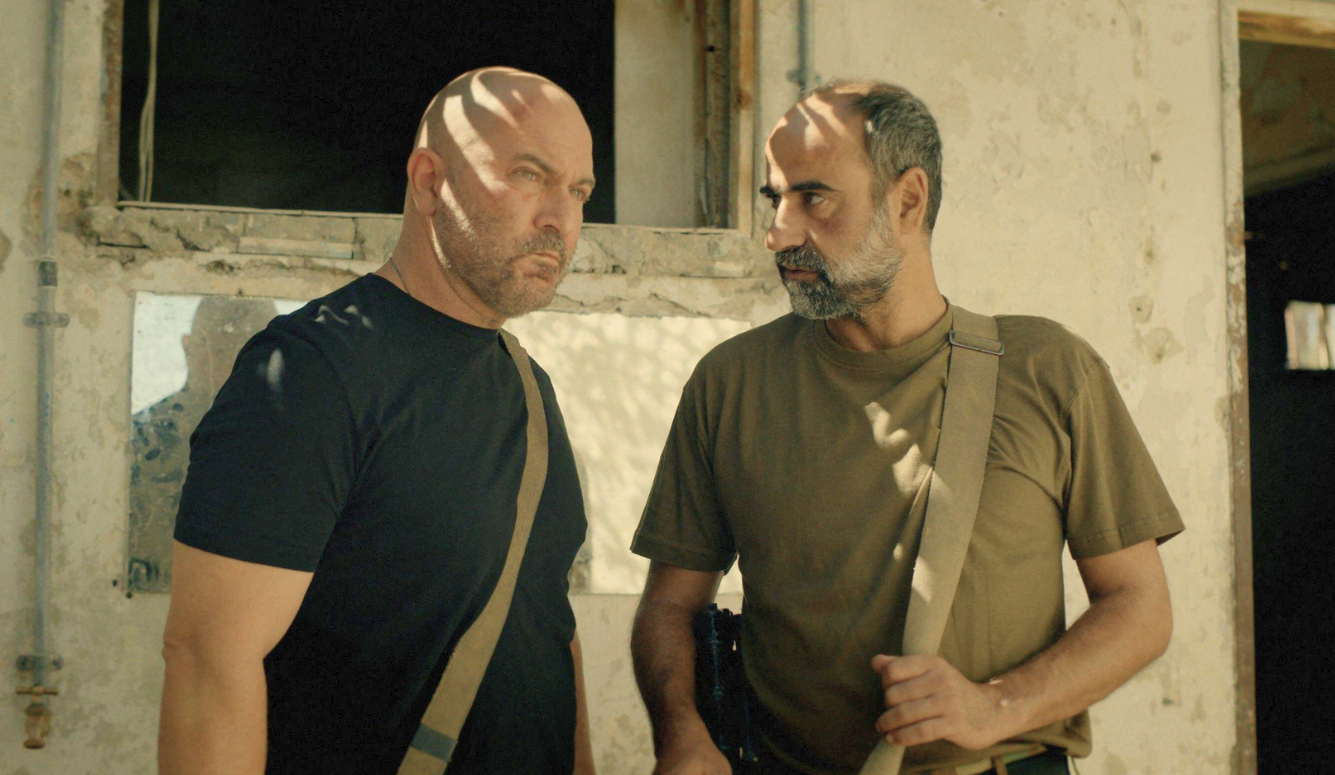

One of the most surprising things about the fifth season of Fauda, the Israeli counter-terrorist thriller created by journalist Avi Issacharoff and actor Lior Raz, is that it is extremely popular in Muslim-majority countries like Jordan, Turkey, and Morocco. It even debuted this month as the #1 streaming hit in Lebanon, which has officially been at war with Israel since 1948. It’s still a crime for Lebanese citizens to engage with Israelis in any way, even on social media or if they bump into each other on holiday in a third country like Cyprus or France. So it’s hardly a given that a long-running Hebrew-language television series about Shin Bet agents would rise higher on Lebanon’s Netflix charts than anything else.
The writers and producers are aware that they’ve acquired a global audience, and with this latest season, they’ve taken the opportunity to ensure that as many people as possible—especially, perhaps, viewers in hostile countries—see exactly what Hamas did to Israel on 7 October 2023. In an attack that Human Rights Watch called a crime against humanity, Hamas killed at least 1,195 people in a day, wounded 3,400, and took 251 people hostage, including foreign nationals from countries as diverse as the United States, France, Thailand, and Nepal. At a joyous outdoor music festival, at least 260 people—Israelis and foreign nationals—were gunned down in the largest mass shooting in recent memory.
This season’s plot unfolds two years after those atrocities, but the principal characters are all, in their different ways, still recovering from the trauma of that day. The events of 7 October are finally dramatised in episodes seven and eight, and watching the murder spree unfold is harrowing. The morning begins with a barrage of thousands of rockets from Gaza followed by the invasion of the towns and kibbutzim near the Gaza border. Hamas operatives murder everyone they encounter: men, women, children, Jews, and Arabs, mostly with automatic weapons but also with rocket-propelled grenades and by trapping civilians in their homes and burning them to the ground. In Fauda, these horrors are not allotted one shocking extended scene, like the opening sequence of Saving Private Ryan on Omaha Beach. The 7 October massacre lasts ninety consecutive minutes.
If you’re not already familiar with the casus belli that ignited the Gaza war, watching this will be good for you, but it will also be bad for you. I have visited multiple war zones over the course of my career in journalism, on Israel’s border with Gaza, on Israel’s border with Lebanon, in Baghdad and Fallujah during the Iraq war, and in Georgia when the Russians invaded, but I never witnessed anything as monstrous as what Hamas did to southern Israel that day. Hamas’s victims were innocent, of course, but it’s also important to understand that the Israelis who live near Gaza disproportionately belonged to Israel’s peace movement at the time of the attack. They were on the opposite end of the political spectrum as the rogue hilltop settlers in the West Bank who menace Palestinian villagers, who thrive on armed conflict, and who would happily annex the West Bank and either expel its Arab population or reduce them to second-class non-citizens.
What may surprise viewers about Fauda Season 5 is that there’s no mention of the war that followed 7 October—not even a passing reference in dialogue. Omitting that war is about production timelines as much as anything else. Long-form television doesn’t move at the speed of journalism, which can be published within hours or even aired live. Issacharoff and Raz were already working on a different script for season five when Hamas ignited the Gaza war, and they scrapped it and started over, without knowing how events would unfold. It takes years to outline a new story, write it, film it, edit it, and release it. “When Avi and I started writing,” Raz told the Jewish Chronicle, “there were still hostages in the tunnels. We needed to try to imagine what life would be like two years from then, as that’s when the show is set.”
Issacharoff and Raz could not have known that by the time the season was ready for Netflix, huge swathes of Gaza would be in ruins, that the war would have expanded into Lebanon, that Sinwar and Nasrallah and Khamenei would all be dead, that the Assad regime in Syria would have finally collapsed, or that Israeli prime minister Benjamin Netanyahu (along with US president Donald Trump) would start and almost immediately lose a war with Iran and enshrine Hamas’s patron and armourer as the regional hegemon. So Fauda unfortunately but necessarily elides everything that happened after 7 October. Besides which, the writers may not have wanted to cover that ground even if they’d had the time. “We want to show our story,” Raz continued in the Jewish Chronicle interview. “We’re not coming to do hasbara [public outreach] or PR. We’re showing what happened to the characters who millions of people around the world have come to love and care for.”
Keep reading
The Radicalisation of Tucker Carlson
A Pop Fiction Master and Monster
Australia’s Coming Censorship Machine
Anatomy of a Book Promotion

They Walked in Line