Politics
The Naivety of Well-Meaning Christian Leaders
The Church of England and the failures of interfaith politics.

My boss Lord Singh of Wimbledon was one of the founders of the Inter Faith Network for the UK (IFN) in 1987. In February 2024, the IFN had its funding withdrawn by Michael Gove, who was then the government’s communities secretary. The organisation had done some good work during its 37 years, but Gove objected to the appointment of a member of the Muslim Council of Britain (MCB) as a trustee. A previous Labour government had suspended engagement with the MCB in 2009 after one of its senior officials signed a declaration that seemed to condone violence against Israel. As a result of the IFN’s MCB appointment, around £150,000 worth of government funding was withheld by Gove, and the organisation folded.
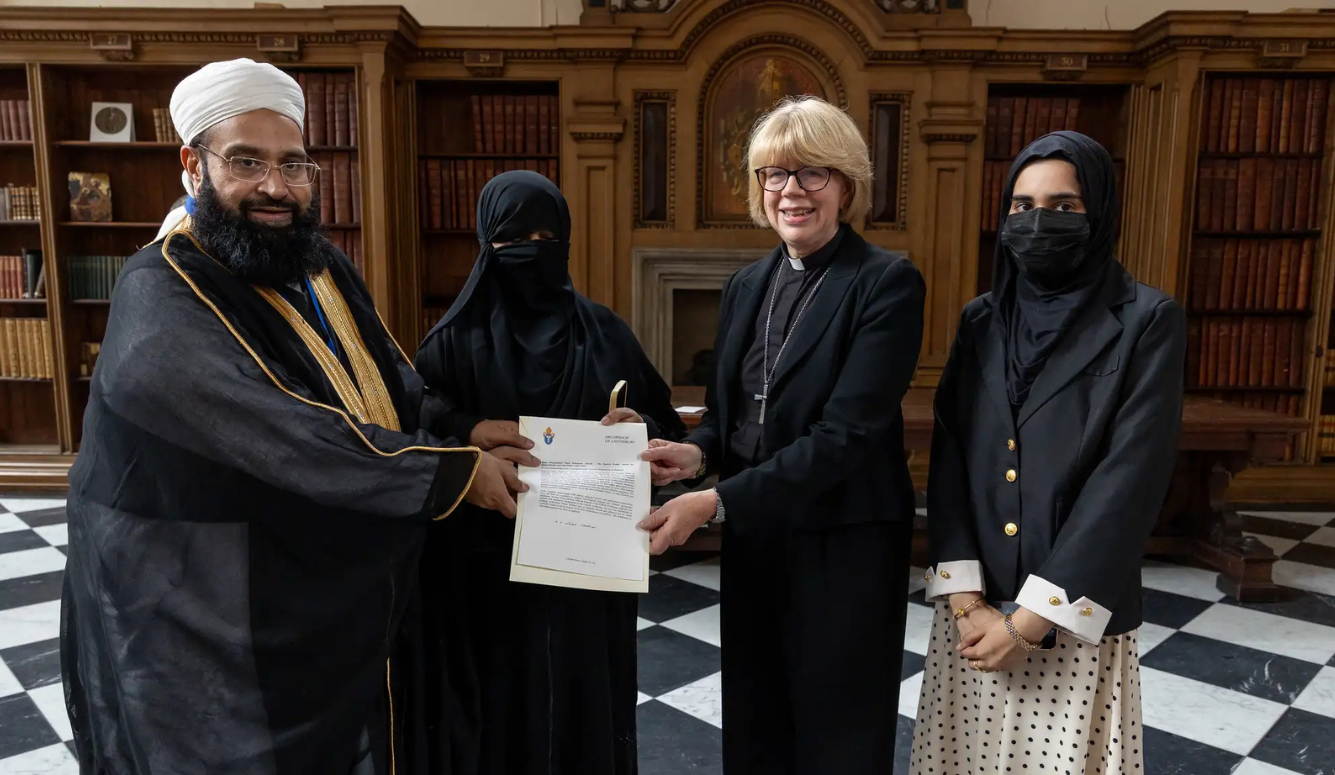
There was a lesson in that episode, but it is not one that the Church of England has been in a hurry to learn. Earlier this month, the Archbishop of Canterbury, Dame Sarah Mullally, blundered into a mortifying interfaith debacle of her own. Lambeth Palace was forced to withdraw a prestigious award—the Hubert Walter Award for “Reconciliation and Interfaith Cooperation”—from a Pakistani Muslim cleric named Hafiz Muhammad Tahir Mehmood Ashrafi, after it emerged that Ashrafi had previously praised Osama bin Laden. To make matters worse, the award was presented on the 25th anniversary of the 9/11 attacks, which claimed the lives of nearly 3,000 people, including 67 British citizens.
A few days after the award was presented, Dr Paul Stott, head of security and extremism at the Policy Exchange think-tank, posted the now-infamous image of Mullally, Ashrafi, and Ashrafi’s heavily veiled wife. Stott had obtained the image from a Pakistani government website, but he observed that it was “curiously missing” from the Archbishop’s website. He did find some pictures on Lambeth Palace’s Flickr account, but they have since been removed. Stott’s post attracted nearly 300,000 impressions, triggering scrutiny of Ashrafi by those keen to discover the views of the man honoured for his contributions to “reconciliation” and “interfaith cooperation.”
I know the debate about the burqa goes to and fro, but this was a new one on me. The Archbishop of Canterbury seems to have given an #Interfaith award on 11 September to a Pakistani cleric accompanied by a woman in a ski mask?https://t.co/WGXQTChQ8e pic.twitter.com/g2kufRVARS
— Dr Paul Stott (@MrPaulStott) September 15, 2026
Martin Beckford, the Daily Mail’s policy editor, was among those who promptly discovered that, in 2007, the Pakistan Ulema Council, which is chaired by Ashrafi, had bestowed the honorific religious title Saifullah (Sword of Allah) on al-Qaeda’s late leader Osama bin Laden. Beckford reports that, upon learning of the knighthood awarded to Salman Rushdie, Ashrafi said, “We are pleased to award the title of Saifullah to Osama bin Laden after the British government’s decision to bestow the title of ‘Sir’ on blasphemer Rushdie. This is the highest title for a Muslim warrior.” In response to this revelation, a spokesperson for Ashrafi released a statement which explained:
Keep reading
They Walked in Line
Anti-Catholic Social Panics, Then and Now
A Dishonest (and Dangerous) Nobel Laureate
Common People

How Genetics Rewrote History