Art & Culture
‘The Battle of Algiers’ at Sixty
Watching Gillo Pontecorvo’s film six decades after its release permits a nuanced understanding of the events that it portrays, which was unavailable when it first came out.
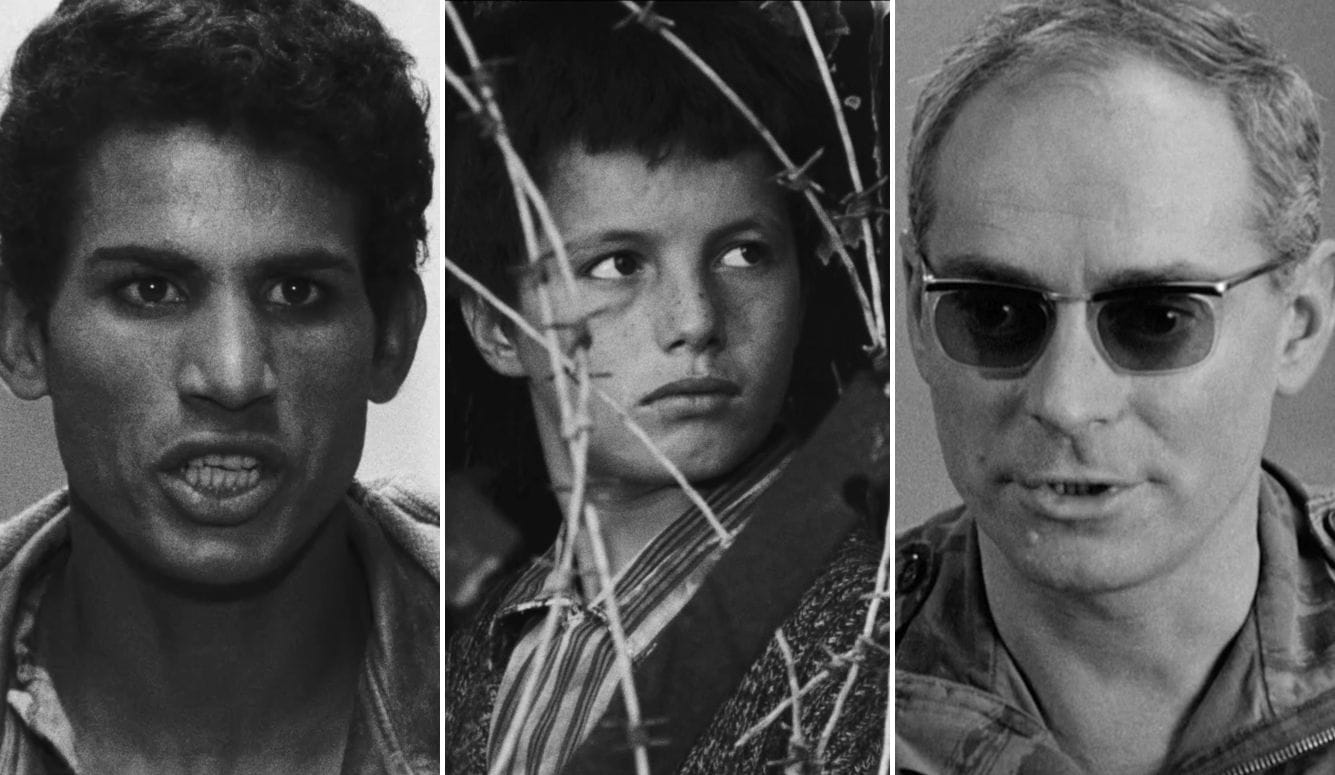

Gillo Pontecorvo’s film The Battle of Algiers was first screened at the Venice Film Festival on 31 August 1966. I saw it several months after it was released in North America in September 1967 while I was an undergraduate at York University in Toronto. The political and cultural turmoil of the late 1960s was in full swing, and the film made a deep impression on my friends and me. We immediately understood that this was a seminal piece of cinema—a compelling work of art about a compelling historical event—and it quickly became an iconic exploration of the revolutionary anticolonialism that was roiling that era. Algeria had been independent since 1962, but the Vietnam War was raging, and the civil rights struggle in America was becoming militant. Pontecorvo’s film connected directly with the spirit of the age.
Revisiting the film 59 years later offers a transformed perspective. A range of subtleties inform Pontecorvo’s presentation of the National Liberation Front (FLN) protagonists and the French counter-insurgency forces that had passed me by on the first viewing. The history of the FLN’s war of independence from 1954 to 1962 is also better known in the West today than it was in the mid-1960s. Most significantly, it is now possible to consider the film in light of Algeria’s post-colonial development over the past sixty years. This distance permits a nuanced understanding of the events that the film portrays, which was unavailable when it first came out.
The Battle of Algiers was loosely based on actual people and events, so Pontecorvo employed a documentary style and grainy black and white stock to produce a striking immediacy. The insurrection in the city begins as a series of sporadic assassinations of police officers. But after extremist French Algerians detonate a bomb in a densely packed Arab neighbourhood in the Casbah, the FLN strategy evolves into a full-blown terrorist campaign. Bombs planted in the cafes and bars frequented by the French Algerian (pied-noirs) civilian population produce a series of mass-casualty events. The French government responds by sending the military in to crush the insurgency, and the rising carnage claims the lives of a growing numbers of civilians on both sides.
Pontecorvo is careful not to dehumanise either the FLN combatants or the French soldiers attempting to suppress their violent revolt. The FLN leaders, some of whom started out as petty criminals and victims of poverty, like Ali La Pointe, are struggling to end an oppressive system of colonial rule. Colonel Philippe Mathieu, the French military commander charged by Paris with directing the counter-insurgency operation in Algiers, uses a ruthless but methodical military strategy rather than brute force to dismantle the leadership structure of the independence movement in the city.
The film frankly depicts the French military’s systematic use of torture to extract information, a practice that the French authorities refused to acknowledge until Macron’s statement on the matter in 2018. When journalists question Mathieu’s methods, he replies, “We aren't madmen or sadists, gentlemen. Those who call us fascists today forget the contribution that many of us made to the Resistance. Those who call us Nazis don't know that among us there are survivors of Dachau and Buchenwald. We are soldiers and our only duty is to win.” The similarity of this experience to the struggle of the FLN itself helps Mathieu to respect and understand the enemy he is fighting.
Mathieu’s exchange with the press also includes a small but revealing note of humour in an otherwise grim sequence of scenes. After the colonel explains the importance of political will and fair press coverage to military victory, he asks what Paris is saying about his operation. “Sartre wrote another article,” one replies. Mathieu grimaces and wonders why the Sartres are always on the other side. “You don’t like Sartre?” the reporter asks. “No,” the colonel answers decisively, “but I’d like him even less if he was an enemy.” I had missed this exchange as a student, but it is an amusing comment on both the predictability of Sartre’s (invariably literary) protest, and the inability of the different factions of the French Left to agree on a coherent approach to the Algerian conflict.
Both sides understand the limitations of violence. “You don’t win wars with outrages,” an FLN leader tells Ali La Point after the latter objects to a peaceful general strike. “Neither wars nor revolutions. Terrorism serves to begin with. But later the people themselves must move.” Colonel Mathieu’s relentless operation eventually succeeds in breaking the FLN cell in Algiers in the late 1950s by systematically eliminating each branch of its chain of command. But the war continues in the countryside, and after mass protests re-erupt in Algiers, the film’s postscript shows the city’s jubilant street celebration after independence is finally secured with the signing of the Evian Accords on 18 March 1962. Despite the tactical successes of French counter-insurgency operations, they lost Algeria without a political strategy that offered the native population a viable future.
Keep reading
Jerry Kaplan on AI Doomers
Payback Time for Steven Galloway
War Stories
Life in The Grim Old Days