Science / Tech
The Autism Epidemic That Wasn’t
The Trump administration’s scientific illiteracy about rates of autism is going to have catastrophic results.
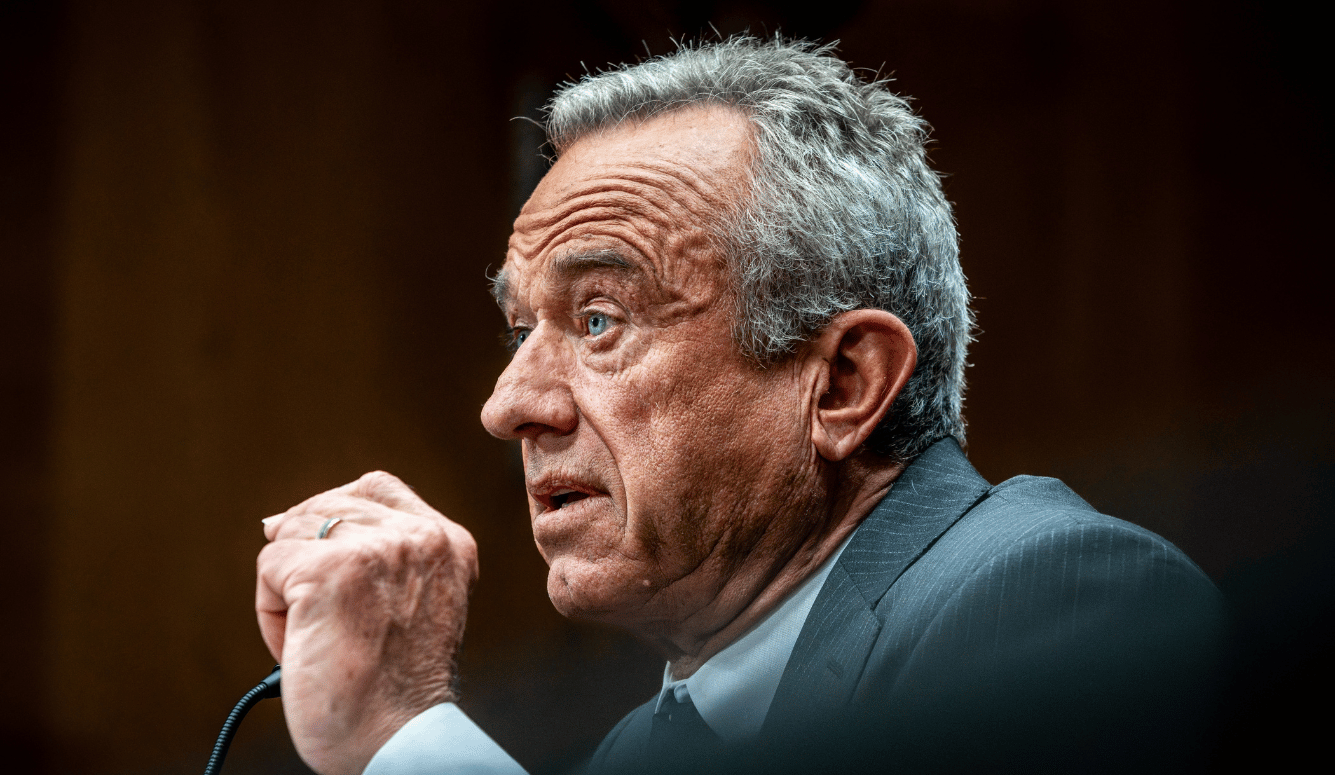

At an Oval Office ceremony on 10 August, President Trump signed an executive order recommending an overhaul of the childhood-immunisation schedule that has been in place since the mid-1980s. The proposed changes will reduce the number of childhood diseases combatted by vaccination from seventeen to eleven. During the press conference, Trump and his Health and Human Services secretary Robert F. Kennedy Jr. both spoke at length about the vaccine schedule. Inoculations, they said, should be spaced out and the number of childhood vaccinations recommended by the government would now be reduced.
Both men repeatedly referred to potential links between childhood vaccines and increasing rates of autism diagnosis. Under the new directive, the measles, mumps, and rubella (MMR) vaccine (which has been administered in the US for 55 years) would be split into three separate vaccines, in order to diminish the burden that, according to Trump, the combined vaccine places on young children. (As the phrase “once such products are domestically available” in the executive order acknowledges, separate vaccines are not currently obtainable for these three diseases in the US.)
“And I saw this early on, and I've seen proof of it,” Trump declared, “where they have a vaccination thing, looks like the size of a bottle of soda poured into a little child's body. And bad things happen, in many cases—in too many cases—because this is an explosion. This is an epidemic. So at year one, you should have five separate visits for vaccines rather than giving them all in the same day.” He went on to say:
Decades ago, children received only a small fraction of the vaccines required today. In those times, people were much healthier and of course, the high rates of autism now observed did not exist. So there’s a reason for such epidemic rates of autism and we're going to bring it back to much closer to where it was.
[...]
Because I came in and I said, I want to find what’s going on with autism. It’s many, many times what it used to be years ago, and it gets progressively worse. And we had progressively more and more vaccines. So in a nutshell, and you can see it through this, we’re breaking up the vaccines and we’re breaking them up into two time periods. OK? Not so complicated. And we think we’re going to have a tremendous result from doing that. Very simply, large amounts of vaccine, large amounts of like vats of vaccine are currently pumped into your child’s body, and we’re doing twenty percent of that at each visit.
This all follows the events of last summer, when the Advisory Committee on Immunization Practices (ACIP) was dismantled, the newly installed CDC head Susan Monarez was fired, and senior CDC officials responsible for vaccines departed. The administration’s current theatrics are taking place during the largest surge in childhood measles cases since the US declared that it had eliminated the disease in 2000. The kindergarten coverage rate for measles has fallen to 92.5 percent, below the 95 percent necessary to achieve herd immunity, and non-medical vaccine exemptions have risen to a record four percent. Now, the administration has removed vaccines for influenza, COVID-19, RSV, rotavirus, hepatitis A and B, and meningococcal meningitis from the list of recommended childhood inoculations.
 Henry I. Miller
If enacted, the changes prescribed in the executive order will make obtaining vaccinations more cumbersome for parents and deepen already widespread confusion and distrust regarding vaccines. And as Melody Schreiber noted in the Guardian, “Trump’s rhetoric also increases the stigma around autism and may encourage families to seek out dangerous treatments.” In 1998, the Lancet published a now-retracted study by Andrew Wakefield and colleagues linking the MMR vaccine to neurodevelopmental disorders, including autism. Since then, decades of high-quality scientific evidence has been published showing no such association (see here and here). Two major societies that promote high-quality research into autism and support families dealing with the condition have forcefully opposed claims of a causal link between vaccination and autism (here and here).
The twisted logic employed by Trump and RFK Jr., however, forms a closed loop of interlocking misrepresentations. They insist there is a link between vaccines and autism because they rely on a few discredited studies and ignore the mountain of contrary evidence, thereby undermining public confidence in vaccines. At the same time, they point to “rising rates of autism” as evidence that vaccines are the cause, while misrepresenting the actual reason that rates are rising.
A recent article from Sweden in Psychiatry Research adds important historical context to our understanding of autism and the factors affecting diagnosis of the condition. Using data from multiple health registries in Sweden, the study examined diagnoses of autism-spectrum disorder and diagnoses of co-occurring intellectual disability to determine if this correlation had changed over nearly two decades (2001–20). Data on over three million individuals were included in the study, of whom 81,286 were given a diagnosis of autism during the study period.
In the 1960s and ’70s, roughly seventy percent of individuals with an autism diagnosis also had a diagnosis of intellectual disability. The proportion has been declining ever since. Between 2001 and 2020, while the prevalence of autism increased by 800 percent, the proportion of autism patients diagnosed with intellectual disability decreased from 55.8 percent to 6.7 percent. Although the authors focus on the proportion of autism cases with intellectual disability, which showed a sharp, monotonic decline, the number of autism cases with intellectual disability showed little evidence of an increase over the twenty-year study period. The decrease in the proportion of autism cases with intellectual disability is due to very large increases in the number of cases without intellectual disability (i.e., less severe disease).
I win again!
— Crémieux (@cremieuxrecueil) August 26, 2026
Newly-released Swedish data shows that the rise in autism between 2001 and 2020 was...
ENTIRELY attributable to an increase in cases WITHOUT intellectual disability—less severe cases than used to be the norm!
The autism epidemic is not real: we just diagnose more. pic.twitter.com/EIIn8bLLmd
The authors write:
The results of this study indicate less congruity between the autism phenotype observed today and earlier conceptualizations of autism, which often included intellectual disability. The findings suggest that changes in diagnostic criteria during this period contributed to a broadening of the ways in which individuals could meet criteria for autism, encompassing a wider range of cognitive abilities.
The authors argue that three factors are likely to have contributed to this change. First, the “downstream effects” of administrative and secular changes, such as the broadening of diagnostic criteria, increased public and professional awareness, the use of diagnosis as a prerequisite for accommodations and support, and the increasing recognition of autism in individuals with average intelligence.
Second, in some cases, the increase in autism prevalence has been accompanied by a decrease in other conditions (e.g., Developmental Language Disorder and intellectual disability), a phenomenon referred to as “diagnostic substitution.” This can occur when two conditions share phenotypic features, such as delayed speech and social development but can also be affected by the zeitgeist in clinical practice and follow-up procedures.
Geoffrey C. Kabat
Finally, the paper highlights how the diagnosis of autism has changed from a narrowly defined and uncommon condition that was heavily associated with intellectual disability to a much more heterogeneous group of conditions that are defined by “social and communicative hardship on all levels of functioning.”
Trump and RFK Jr. are perpetuating the misunderstanding that cases of autism have been increasing in the population at an alarming rate, whereas what has happened is that diagnoses of autism are increasing in people who, in the past, would have been diagnosed with other conditions or missed altogether. They are now using this misunderstanding to scare people about vaccines, asserting that the artifactual increase in autism rates constitutes evidence of an epidemic produced by the harmful effects of vaccines. The results of this scientific illiteracy could be catastrophic.
Quillette invites thoughtful responses to its essays.
Selected responses are published once per week as part of a curated Letters to the Editor feature. If selected, letters appear under the contributor’s real name and may be edited for clarity and length.
To submit a letter for consideration, please email [email protected].
Keep reading

Payback Time for Steven Galloway

War Stories

Life in The Grim Old Days
In Defence of Academic Standards