French Literature
André Gide versus George Orwell: Two Paths to Truth
More than a century after it was first published, ‘If It Die’—Gide’s shockingly candid account of his childhood and sexual awakening—remains a gripping read.

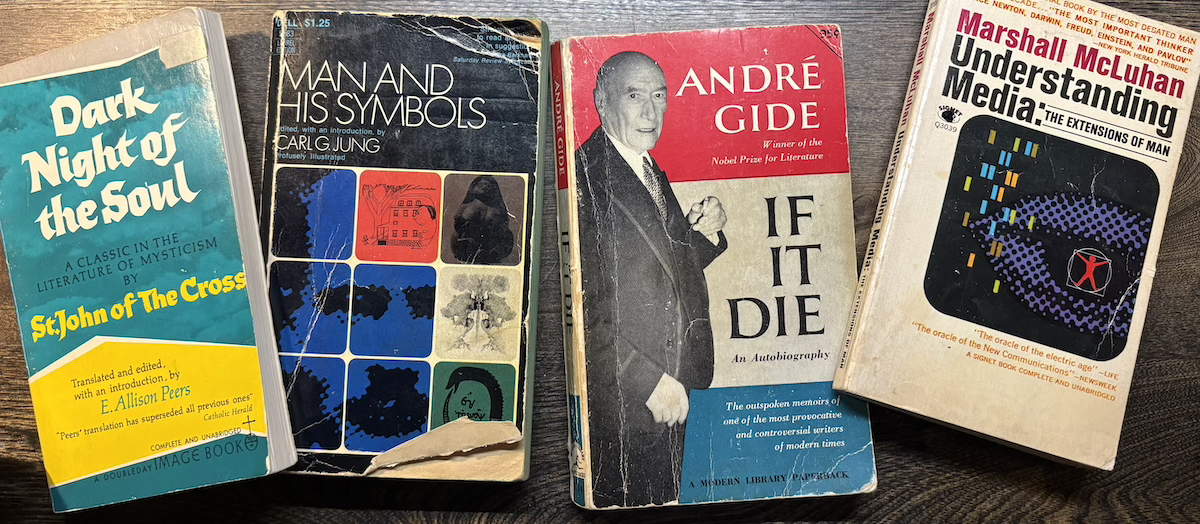
There’s a certain kind of book that doesn’t excite my interest in newly published form, but which I will hungrily snatch up when a beaten-in paperback edition gets tossed to the curb. My Toronto neighbourhood, being well-populated by empty nesters with a view toward downsizing, regularly surrenders such treasures by the boxload—alongside old puzzles, CD holders, underused exercise equipment, and half-collapsed street-hockey nets.
My favourite specimens are non-fiction blockbusters from the Cold War period, when these greying neighbours were still starry-eyed undergraduates, eager for the mind-expanding revelations of new-age prophets and ancient mystics. My latest haul included Understanding Media by Marshall McLuhan (“The most important thinker since Newton, Darwin, Freud, Einstein, and Pavlov”); Dark Night of the Soul by St. John of The Cross (“The most grandiose and the most melodious spiritual canticle to which any one man has ever given utterance”); and Man and His Symbols, in which acolytes of Carl Jung lay bare their master’s wisdom so that all might (finally!) “lead full, rich, and happy lives.”
But the pick of this litter, it turned out, was an older book that I’d never heard of: If It Die: An Autobiography, by French Nobel laureate André Gide (originally, Si le grain ne meurt, a phrase adapted from the Gospel of John 12:24–25).
The delightfully garish cover of this 1957 edition, featuring an aging, crudely close-cropped image of Gide staring magnetically out at the reader, testifies to the advantages of my (uniquely economical) means of literary curation. Had I been gifted If It Die in some finely rendered modern anniversary edition, it would become nothing more than a background bookcase adornment aimed at alerting Zoom callers to my refined literary tastes. The tattered, thumb-worn version that I rescued from recycling oblivion, by contrast, was ravished, cover-to-cover, in a single day. And its fascinating contents helped educate me as to why Gide—whose work is now mostly forgotten—once ranked as France’s most famous intellectual.
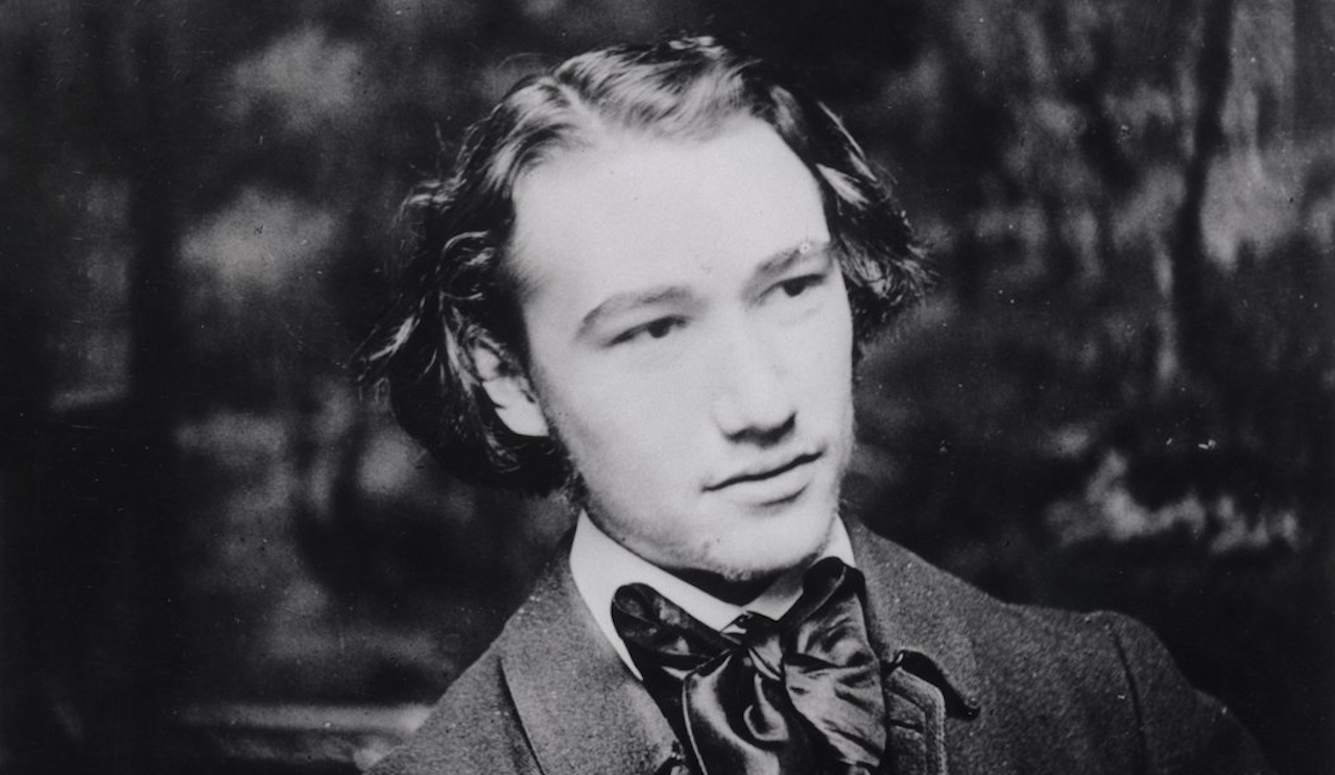
André Gide (1869–1951) possessed a vast and versatile intellect that took expression in more than fifty books. His first, The Notebooks of André Walter, appeared in 1891, when he was just 21 years old. Like much of his fiction, it was adapted directly from Gide’s own self-lacerating journals, which he would later describe as his most important literary legacy.
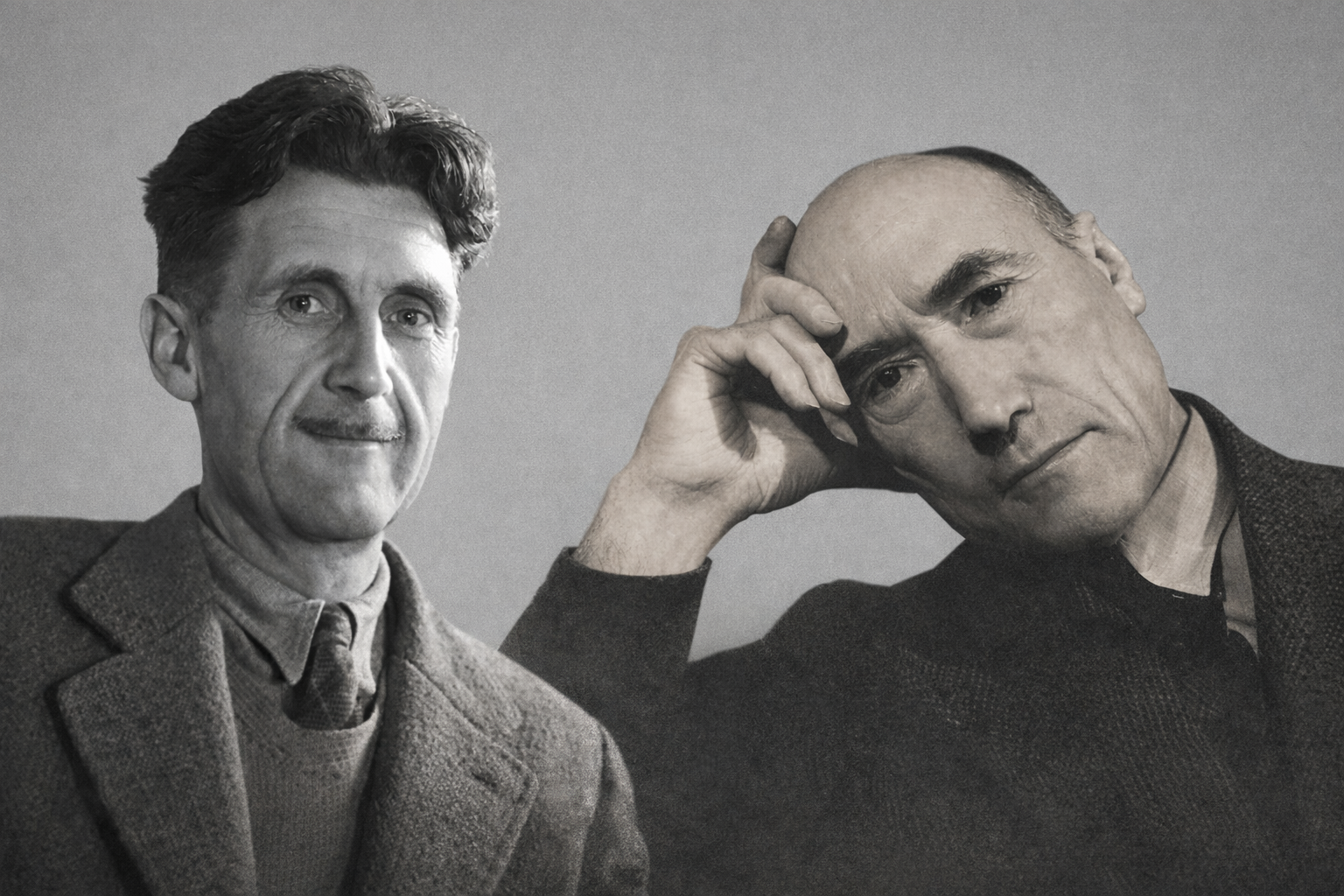
Before discovering If It Die, I’d known Gide primarily for the brave political postures he adopted later in life. Like George Orwell (who died a year earlier than Gide, although at a much younger age), the Parisian writer spent the interwar years immersed in a cultish literary milieu, whose ideological enforcers exalted communism as mankind’s path to salvation, and ruthlessly excommunicated fellow travellers who criticised the Soviet Union. Orwell learned hard truths about the communist movement while fighting for the Republican side in Spain’s Civil War, at a time when his work was still relatively obscure. Gide, on the other hand, had the scales lifted from his eyes when he was already a great homme de lettres. But both writers got to roughly the same place, and at roughly the same point in history. As Gide put it upon his return from the USSR in 1936:
What is desired and demanded is approval of all that is done in the USSR; and an attempt is being made to obtain an approval that is not mere resignation, but a sincere, an enthusiastic approval. What is most astounding is that this attempt is successful. On the other hand, the smallest protest, the least criticism, is liable to the severest penalties, and in fact is immediately stifled. And I doubt whether in any other country in the world, even Hitler’s Germany, thought to be less free, more bowed down, more fearful, more vassalized.
The first copies of Si le grain ne meurt were circulated privately in 1929—fifteen years before the original publication of the Random House “Modern Library” English translation I’d stumbled upon. Its narrative, produced when the author was already well into middle age, is limited to Gide’s early life, ending abruptly with his marriage to an older cousin named Madeleine Rondeaux (rendered in the book as Emmanuèle, which is the name I will use) when he was just shy of 26 years old.
It is an intensely inward-looking book, offering only scattered and insubstantial references to the wider world of arts and ideas. To the extent Gide had any political convictions during his youth, he confesses, they were the lazily adopted anti-bourgeois postures expected of salon habitués during the Belle Époque.
While Orwell and Gide are both justly remembered as great truth-tellers of the totalitarian age, they came to this mission with very different personalities and literary styles. (They are not known to have ever met—though Orwell was certainly influenced by Gide’s writing on the Soviet Union. In particular, Gide’s description of the personality cult surrounding Stalin helped inspire the notion of “Big Brother” in Nineteen Eighty-Four.)
Orwell, the deep introvert, generally wrote in an emotionally detached manner that bordered on the anthropological—even when documenting social environments in which he’d thoroughly immersed himself. Down and Out in Paris and London (1933), The Road to Wigan Pier (1937), and Homage to Catalonia (1938) are all penetrating studies that have much to say about, respectively, urban destitution, the industrial working class, and the typology of Spanish anti-fascists. But Orwell rarely engaged at emotional close quarters with the characters he documented—even if the evocative case studies contained in his work tend to linger in readers’ minds thanks to his artful use of scene detail and quotation.
To the extent Gide had any political convictions during his youth, he confesses, they were the lazily adopted anti-bourgeois postures expected of salon habitués during the Belle Époque.
Gide, by contrast, was socially hyperactive. And his worldview could be turned on a dime by a single emotionally intense encounter with someone he held dear—especially if his conscience were pricked by the words that were spoken. For Orwell, the act of truth-telling was journalistic. For the youthful Gide, it was penitential.
How did Gide shed his early embrace of pacifism? He describes a conversation with his beloved older cousin Albert Démarest, a broken soul who’d become trapped in a tragic and disreputable love affair worthy of Thomas Hardy. When the young Gide airily announces he would never have taken up arms to defend France in the War of 1870, Albert—who fought in that conflict, and seems to have emerged from it with a condition we would now call PTSD—gently reproaches him. As Gide recalls,
He did it without protestations or fine phrases, but simply by telling me about the invasion and his own recollections as a soldier. He told me that his horror of the power that provokes was as great as mine, but for that very reason, he admired the power that defends, and that the beauty of the soldier’s life came from the fact that it was not himself he was defending, but those weaker than himself whom he knew to be in danger. And as he spoke, his voice trembled and grew grave.
“Then you think one can coolly allow one’s parents to be insulted, one’s sisters raped, one’s goods plundered?…”
And no doubt an image of the war he had been through passed before his eyes, for I saw them fill with tears, though his face was in the shadow…After he had finished, I took his big hand in both of mine and remained silent, more moved, I know, by the beauty of his nature than convinced by his arguments. But I was to remember his words later on, when I was better fitted to understand them.
Even fleeting encounters with complete strangers could upend Gide’s thinking. In one memorable passage, he describes a simple farmer who took him in for the night when he was wandering through the French countryside, having missed his train connection. (Gide had lost track of time during his travels, he explains, due to his immersion in Le Cousin Pons: “Of all Balzac’s many masterpieces, it is perhaps my favourite.”) At first, he feels ill at ease amidst these taciturn peasants. But as they bond over food and prayer, a spirit of gratitude washes over him—and he comes to realise “how much unselfishness and kindness may lie under the roughest exterior.”
 Jonathan Kay
Gide shared Orwell’s talent for skewering the hypocrisies of class snobbery, even if the two men came at the issue (like much else) from different angles. On this score, consider the following anecdote, plucked from one of the many As I Please columns that Orwell wrote for the Tribune newspaper in the mid-1940s:
Years ago, I lodged for a while in [London’s] Portobello Road. This is hardly a fashionable quarter, but the landlady had been lady’s maid to some woman of title, and had a good opinion of herself. One day something went wrong with the front door and my landlady, her husband, and myself were all locked out of the house. It was evident that we should have to get in by an upper window, and as there was a [handyman living] next door, I suggested borrowing a ladder from him. My landlady looked somewhat uncomfortable. “I wouldn’t like to do that,” she said finally. “You see, we don’t know him. We’ve been here fourteen years, and we’ve always taken care not to know the people on either side of us. It wouldn’t do, not in a neighbourhood like this. If you once begin talking to them, they get familiar, you see.” So we had to borrow a ladder from a relative of her husband’s, and carry it nearly a mile with great labour and discomfort.
(I’ll pause here to pay homage to that wonderful phrase, “and had a good opinion of herself.” Gide and Orwell shared a love of Charles Dickens. And both writers exhibited—or perhaps borrowed—Dickens’s signature skill at summing up minor characters, and introducing major ones, with just a few telling words. This is not a skill one will find catalogued in Orwell’s famous essays on clear writing, but it is certainly one that I would recommend to young students of the craft.)
By contrast to the downwardly mobile Orwell, Gide was born into considerable wealth, and knew nothing of “great labour and discomfort.” (There’s an aside in which he laments that one of his family’s beloved servants inhabited an apartment on Rue de Vaugirard that had only “four poky rooms.”) Nevertheless, he developed a precocious understanding of what today might be called “unearned privilege”—a sensibility expressed in If It Die by send-ups of his snobbish aunt Claire, who comes off (in the book’s lighter moments) as a French version of P.G. Wodehouse’s Aunt Agatha.
“My [maternal] grandmother was assuredly not a hard-hearted woman; but though not exactly over-proud of her position, she had a very lively sense of social hierarchies,” Gide writes. “Her daughter Claire had this same sense. She had, indeed, very little other.”
Gide could be scathing in his judgments of relatives, educators, and childhood friends. And his treatment of Claire is gentle compared to the more savage skewerings inflicted on other targets—as illustrated by this recollection of a grade-school trip to a Parisian educational attraction known as the Géorama:
It consisted of a wretched garden, which the owner, a weird individual dressed in alpaca, had arranged so as to represent a geographical map. The mountains were figured by rockeries; the lakes, in spite of being cemented, had run dry, and a few melancholy goldfish swam about in the basin of the Mediterranean, as if to show up the exiguous proportions of the Italian boot. Our master would tell us to point out where the Carpathians were, while the weird one, with a long stick in his hand, underlined the frontiers, named the towns, pointed out a quantity of grotesque devices, enlarged on the magnificence of his achievement and expatiated on the time it had taken him to carry it out; and when, on going away, our master complimented him on his patience, he answered pompously, “Patience is nothing without ideas.”
Comedy rarely survives the journey from one language to another. And it is a tribute to the great skill of Gide’s English translator, the novelist Dorothy Bussy (1865–1960), that so many passages in this book (including the one quoted above) made me laugh out loud.
“The outspoken memoirs of one of the most provocative and controversial writers of modern times” was how Random House copy writers describe If It Die on the cover of my edition. By the standards of the 1950s paperback trade, this is stock marketing-department puffery. Yet these clichés are followed, on the book’s first page, by something more substantial and noteworthy—what in today’s idiom might be called a trigger warning.
“The notoriety achieved for this book by its homosexual passages has been exceedingly great; it has also been exceedingly disproportionate,” acknowledges esteemed literary critic Louis Kronenberger (1904–80). He continues:
The sexual episodes recorded here had, it is true, a most significant role in Gide’s moral development; it is no less true that they are described with the utmost frankness. But the book is for all that much less the confession of an invert than the story of a writer’s early life—his school and family relationships, his adolescent growth in thinking and taste, his first attempts at authorship and his first encounters with authors. For the most part, indeed, these memoirs wear rather a normal than a special air.
Here we may observe another advantage of reading classics in their early mass-market paperback editions, wherein such dated disclaimers may be found. With just these few short sentences (excerpted from Kronenberger’s 1935 New York Times review of If It Die), a modern reader can glimpse the social universe into which If It Die was launched.
Kronenberger was on point with his reassurance to straight-laced churchgoing American readers that, whatever their prejudices regarding “inverts” (as gay men were then sometimes called), “these memoirs wear rather a normal than a special air.” Put another way, one doesn’t have to be gay (or French, or an intellectual, or born in the nineteenth century) to feel emotionally connected to Gide’s younger self; and even to gain painful flashes of self-recognition upon reading his candid descriptions of ugly thoughts and private disgraces that few of us would have the courage to admit to others, let alone commit to print.
Gide was suspended from elementary school, we learn, after he was discovered fondling himself in class. (When his concerned mother sought medical counsel, the doctor threatened to torture her child with Touareg spearheads if he did not forsake his autoeroticism.) At age four or five (Gide can’t remember which), he became so passionately enraptured by the sight of a cousin’s fair-skinned shoulder that he sunk his teeth into it like a vampire. When his father died of tuberculosis, Gide, then eleven years old, secretly delighted in the extra attention paid to him by sympathetic classmates and teachers. For a long time, he pretended to have a neurological disorder that caused him to collapse and flail about on the floor—for no other reason than that he loved the attention. “One would like to believe that in that age of innocence, the soul is all sweetness, light, and purity,” Gide writes. “But I can remember nothing in [my childhood] that was not ugly, dark, and deceitful.”
All these admissions are contained in the first half of If It Die, well before Gide begins explicitly describing his gay awakening during his early twenties. Gide does drop early hints about what is to come, however—mostly by reference to platonic schoolboy crushes; and to the conflict between Christian doctrine and his true (euphemistically termed) “nature.” He also confesses to being thoroughly repulsed by the idea of female nudity, and is consumed by something resembling a clinical panic attack when his mother warns him off the prostitutes who loiter near the Passage du Havre.
“My lack of curiosity about the other sex was absolute,” he reports. “If I could have discovered the whole mystery of womankind with a single gesture, it was a gesture I should not have made.”
Contrary to his “nature,” Gide did become romantically smitten with a melancholy female cousin—the aforementioned Emmanuèle—and was distressed when she initially refused his offer of marriage. But this love (if that is the right word) was abstract and sexless. Indeed, his lyrically overwrought descriptions of Emmanuèle suggest she existed in his mind not as a true flesh-and-blood human, but rather as the tragic heroine from some Gothic fable of his own composition.
The book’s second half presents the reader with something of a jarring tone shift, with the formerly virginal author travelling to North Africa, thereupon plunging headlong into a series of debauched sexual encounters with teenage boys. If a visitor had money, there were plenty to choose from, apparently: Based on Gide’s descriptions, which include an extended social melodrama involving his friend Oscar Wilde, it would appear that French Algeria then operated as a sexual playground for European men, gay and otherwise.
In one particularly blue passage (omitted in some editions), Gide describes his liaison with a “marvellous youth” named Mohammed, procured for him by Wilde:
What name then am I to give the rapture I felt as I clasped in my naked arms that perfect little body, so wild, so ardent, so sombrely lascivious? For a long time after Mohammed had left me, I remained in a state of passionate jubilation, and though I had already achieved pleasure five times with him, I renewed my ecstasy again and again, and when I got back to my room in the hotel, I prolonged its echoes until morning.
These portions of the book are guaranteed to elicit conflicted reactions among modern readers. On one hand, Gide’s decision to go public with his gay identity (to apply anachronistic terminology) was courageous; the early twentieth century being a period when homosexuality was deeply stigmatised (though, in France, not illegal). There is no hint that Gide was trying to create a sensation for the sake of it. Rather, he seems to have written If It Die (like many of his other works) as a means of public-facing psychotherapy (another term he wouldn’t have used), doing his best to reconcile his sexuality with his mother’s austere nineteenth-century Protestant morality. That project was doomed to failure from the start, of course. But it is fascinating to observe one of the great literary intellects of the twentieth century attempt it.
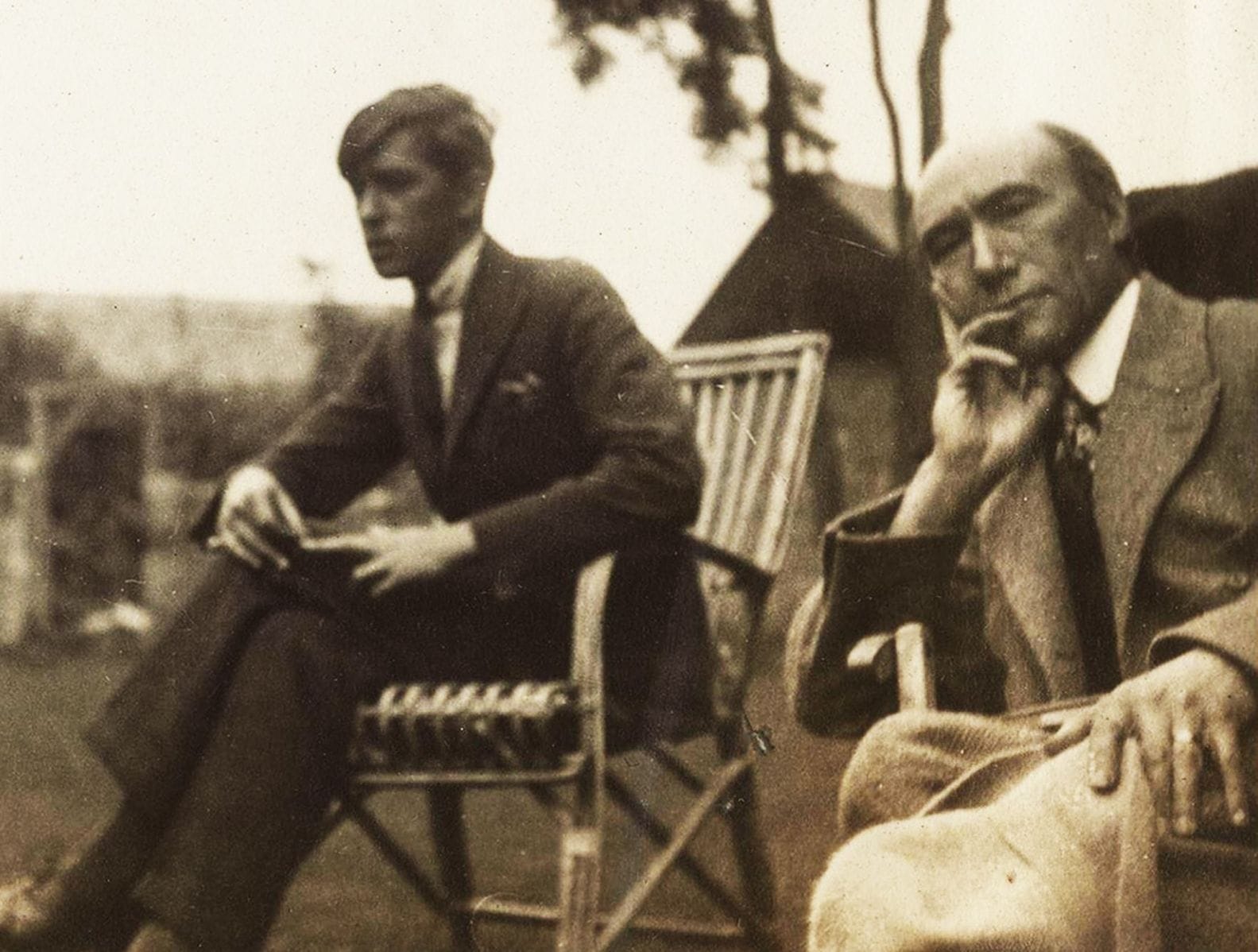
On the other side of the moral ledger, the lovers whom Gide describes were at least several years shy of adulthood. (Mohammed’s age is unspecified, but another youth, Athman, is identified as being “not more than fourteen.” And the only African girl he bedded was sixteen.) These teenagers would have cleared the French age of consent at the time, which was just thirteen. And Gide maintains that the services rendered to “pederasts” such as himself (yes, that is the self-descriptor he uses) were not only consensual, but also condoned by the boys’ (presumably impoverished) kin as a means of sustenance. But of course, by today’s lights, what he describes is indistinguishable from child prostitution—layered over with the added sin of colonial exploitation.
“Choisir, c’était renoncer,” Gide once wrote. Adapted to the present tense (the epigram’s more popular form), it means that choosing one path requires that we forsake others. In both the private and public spheres, Gide chose the path of authenticité. That single word became his mantra. And his choices cost him friendships, earned him disgrace in many circles, and even resulted in his books being banned by the Catholic Church, on the basis that “M. Gide’s idea of ‘sincerity’ [is to] roll over deeper in filth and to defile what is purest in the life of men.”
While in my twenties, I went on an Orwell binge, tearing through a four-volume Penguin set of his essays, journalism, and letters from end to end. This chronologically arranged collection, published in 1971, begins with a 1920 letter to historian Steven Runciman (“My dear Runciman, I have a little spare time, & I feel I must tell you about my first adventure as an amateur tramp…”), written when Eric Blair (Orwell’s real name) was just seventeen years old; and ended with Extracts from a Manuscript Note-book, which follows Orwell’s work up to 1949, shortly before his death from tuberculosis at age 46.
The contents range from famous essays such as Politics and the English Language and A Hanging, to obscure columns and routine correspondence. Yet throughout it all, one can easily trace the arc of the author’s intellectual development in a comprehensible, almost geometric fashion—as a journalist, socialist, anti-communist, and political satirist. By Orwell’s own description, his intellectual mission was to report “what is in front of one’s nose” without bias or self-deception. He always showed his work, and never laid claim to sacred truths that escaped empirical scrutiny.
Gide was a very different literary creature. While the religious fervour of his youth would dissipate amid the sexual ecstasies of adulthood, he never stopped viewing life as a spiritual adventure, full of new aesthetic and psychological epiphanies. As one interwar reviewer once put it, “the mere fact of anything possessing the throb of life is such a wonder to [Gide]. [He is] bent on looking upon each moment, each action, each sensation in life as of supreme importance, to be lived and experienced as though they were the only ones granted one in life, as though they were ultimate realities, and not means to a higher end.”
Throughout Orwell’s career, one can easily trace the arc of his intellectual development in a comprehensible, almost geometric fashion—as a journalist, socialist, anti-communist, and political satirist. Gide was a very different literary creature.
The unpredictable, flamboyantly self-indulgent quality of Gide’s writing helps explain why If It Die remains such an entertaining read. But that same tendency also inhibited Gide from developing a consistent, objectively defensible worldview that might survive his own lifetime—since the “authentic” self that he chased would always remain a moving target. Thus did the author once described by The New York Times as “the greatest French writer of [the twentieth] century” begin lapsing into obscurity shortly after his death, while Orwell’s literary star continues to shine bright to this day.
By way of epilogue, I will return briefly to Louis Kronenberger, the author of the above-quoted introductory text contained in my paperback edition of If It Die. As the cited commentary attests, Kronenberger was a man ahead of his time when it came to gay acceptance (as we would now call it). Nevertheless, he remained beholden to many then-common myths about society’s “inverts”—including the idea that homosexuality was a treatable neurosis brought on by trauma.
Of Emmanuèle, Kronenberger writes in his Times review, “it was perhaps her refusal to marry [Gide] which made his sexual life, later on, the prey of abnormal instincts.”
But, thankfully, he adds in upbeat fashion, “it was finally their betrothal which culminated his cure.”
However, in a posthumously published follow-up memoir, Et nunc manet in te (published in English as Madeleine), Gide confirms that his “abnormal instincts” very much survived the altar. Indeed, his union with “Emmanuèle” would forever remain, as the French call it, un mariage blanc.
Of all the scandalous confessions contained in Gide’s autobiographical oeuvre, this one may well be the least surprising.
Quillette invites thoughtful responses to its essays.
Selected responses are published once per week as part of a curated Letters to the Editor feature. If selected, letters appear under the contributor’s real name and may be edited for clarity and length.
To submit a letter for consideration, please email [email protected].
Keep reading
A Costly Misconception

Addressing the Academic Skew

Letters to the Editor
Podcast #332: The Historical Case for Israel

The IOC Is Protecting Female Athletics. Canada’s Secretary of State for Sport Isn’t Happy About It