Putin
Stalin, Putin, and the Corruption of History
The history of Soviet totalitarianism is now being rewritten.

Editor’s Note: This article was first published in Areo Magazine in May 2023.
Patriotism corrupts history.—Johann Wolfgang von Goethe (1817)
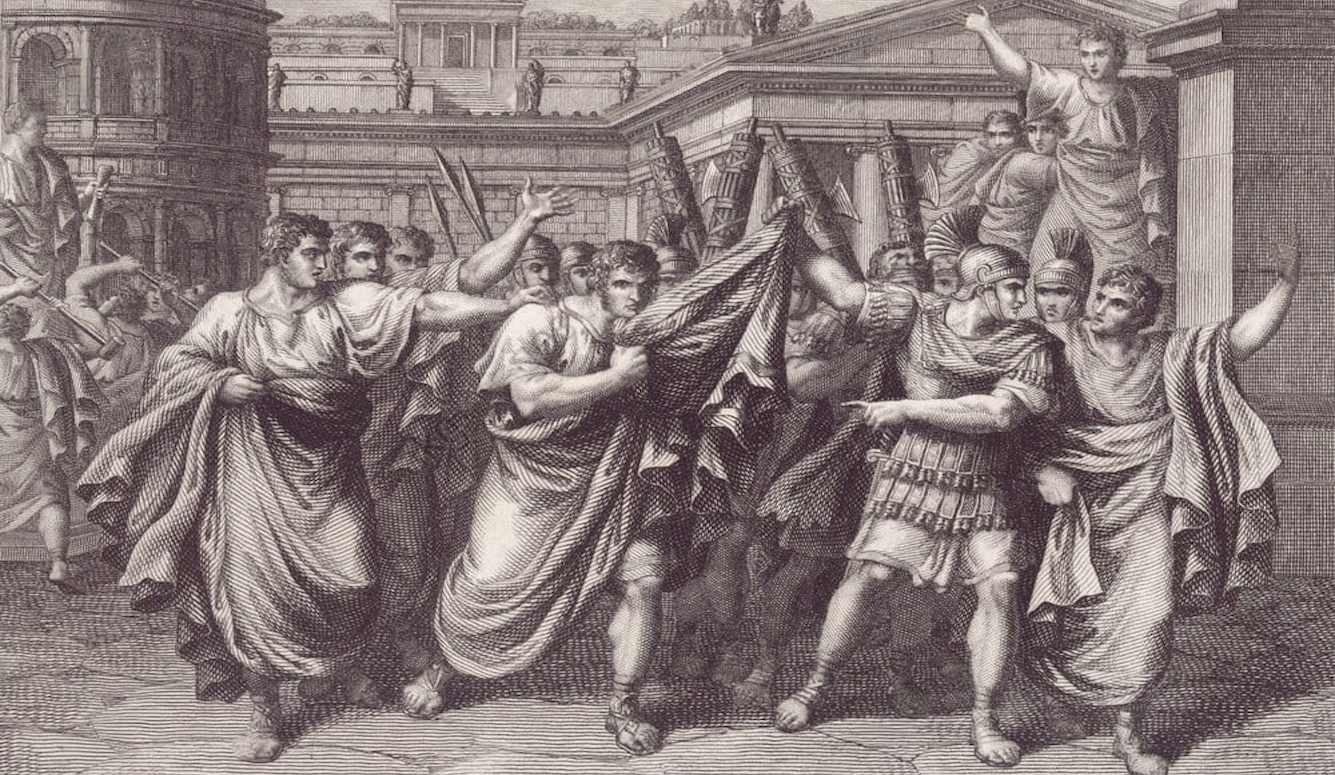
Long before the latest iteration of cancel culture, there was a punishment known as damnatio memoriae (the condemnation of a person’s memory). First explicitly defined in the statute books of seventeenth-century Leipzig, it involved erasing the person concerned from the official record—which could entail the destruction of paintings and statues, the removal of their name from inscriptions and documents, and even the rewriting of historical accounts. According to the old saying, you die twice: once when you take your last breath and once again on the final occasion on which someone speaks your name. Damnatio memoriae is designed to hasten the second death.
In fourteenth-century BC Egypt, Pharaoh Akhenaten made worship of the sun god Aten the state religion and endeavoured to have all references to the previous god Amun-Ra chipped away from stone columns and inscriptions. After his reign, the emperor’s heretical behaviour was itself punished with a form of damnatio memoriae: images of Akhenaten were effaced, his name was erased from the record, and images of and references to Amun-Ra reinstated.
On the death of Roman emperor Lucius Septimius Severus in AD 211, he bequeathed the empire to his two sons, to reign jointly. But Marcus Aurelius Antoninus (known as Caracalla) had his brother Publius Septimius Geta brutally murdered, in order to avoid sharing power. To silence criticism, he ordered the damnatio memoriae of his victim. All images of Geta were destroyed, over 20,000 of his followers were massacred, and the mention of his name was declared punishable by death.
The practice of eradicating individuals from the historical record reached its apogee in Stalin’s Russia, where those who fell out of favour were killed twice: first bodily and a second time when all trace of them was erased, rendering them non-persons. In his quest to erase his brother’s memory, the biggest issue Caracalla faced was the existence of mass-produced coins bearing Geta’s effigy, in circulation across the empire. It took several years to gather them all in. By the time Stalin unleashed the Great Terror on the Russian people in the 1930s there had been a different technological advance that hindered damnatio memoriae: the photograph. The physical eradication of Stalin’s political opponents at the hands of the secret police was swiftly followed by their removal from the visual record by teams of snippers and retouchers. Printed photographs were edited with airbrushes and scalpels to make the once famous vanish. Paintings were taken down so that faces in group portraits could be painted over. Entire editions of works by those out of favour with the regime were banished to the restricted sections of the state archives or destroyed.
Stalin expelled Leon Trotsky from Russia in 1929. Six years later, the Central Committee of the Communist Party ordered the removal of Trotsky’s works from libraries throughout the Soviet Union. This ban was later extended to cover anti-Trotsky material, as even a negative reference would show that Trotsky had existed—and any evidence of his existence could not be tolerated. In 1940, he was finally assassinated by the NKVD in Mexico City. Following his death, his memory was written out of Soviet history books.
The names of those who had been arrested or disappeared could no longer be openly mentioned. Children were encouraged to remove the denounced from their textbooks. To avoid guilt by association, many Soviet citizens lacerated their own copies of books and photographs with knives and scissors or smeared them with India ink, to remove all evidence that the unpersons they featured had ever existed—thus killing them for a second time. There is hardly an archive or publication from the Stalinist period that does not bear the scars of this vandalism. The obliterations were not just carried out against public figures: images of loved ones who had fallen foul of the state were scratched out of photographs or destroyed by husbands, wives, sisters, brothers, lovers, and friends, who were trying to avoid accusations of disloyalty to the state.
In the 1970s, British artist David King began to collect the visual evidence of Stalin’s falsifications, placing the original images alongside their doctored progeny in his book The Commissar Vanishes. His collection includes Ten Years of Uzbekistan by the artist Alexander Rodchenko, a work containing photographs of Uzbek bureaucrats, commissioned by the state in 1934 to celebrate a decade of Soviet rule in the republic. During Stalin’s purges many of those featured in Rodchenko’s book were murdered or disappeared, and the book itself was outlawed. Rodchenko was forced to deface his own work. King reproduces the brutal and macabre results of Rodchenko’s self-editing: page after page of sinister black squares atop uniformed shoulders, where faces used to be. In the last few pages, the blackness has expanded to almost fill entire photographs, as if they were being eaten away from within. King also includes a series of photographs of Lenin playing chess in Capri. In these photos, the spectators of the chess games have been gradually removed one by one. One of them has been replaced by a ghostly stone pillar.
In more recent times we have seen the damnatio memoriae of Lenin and other Soviet leaders. After gaining independence, Ukraine successfully dismantled all 1,320 statues of Lenin, as well as renaming roads and structures. After the Russian invasion, further statues were removed and names changed. Hungary’s Memento Park is an open-air museum on the outskirts of Budapest, dedicated to monumental statues and plaques from the country’s Communist period. After the fall of the regime in 1989, many of the statues and monuments were removed. There were calls to have them all destroyed, like the statues of Akhenaten and Geta, but the Hungarian government decided to keep them.
 Tomislav Kardum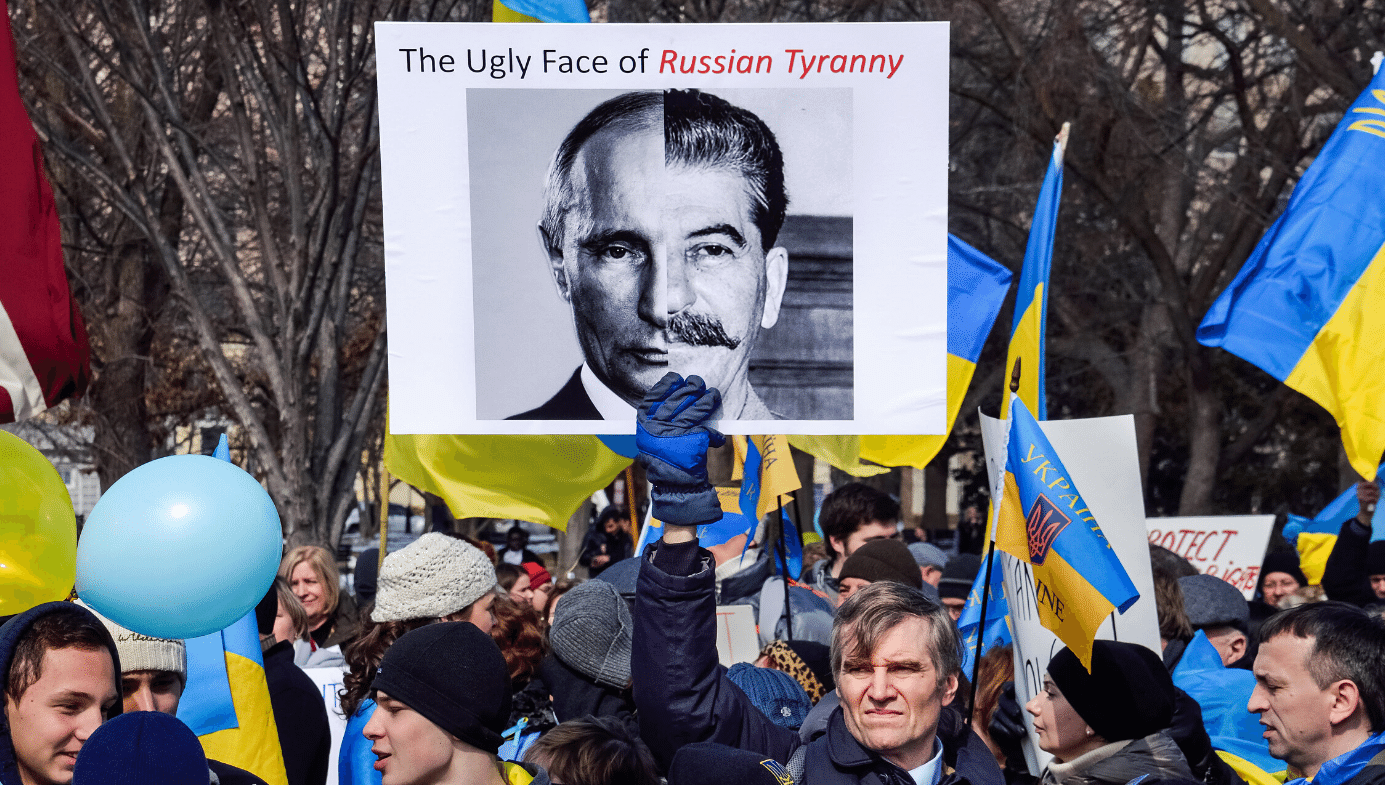
On 29 June 1993, the second anniversary of the withdrawal of the Soviet troops, the park was reopened in a grand ceremony as an outdoor public museum. The park’s designer Ákos Eleőd commented:
This park is about dictatorship. And at the same time, because it can be talked about, described, built, this park is about democracy. After all, only democracy is able to give the opportunity to let us think freely about dictatorship.
When you walk around the park’s concentric pathways, set on an exposed hillside overlooking the Danube, the statues of Lenin, Marx, and Engels tower above you—but now that they have been taken down from their positions of prominence in the city below, they are no longer symbols of power, but relics and curiosities. The past has not been forgotten but it has been recontextualised.
Every country has elements of its past it would rather forget. No country gives equal billing in classrooms, textbooks, and within its wider culture to both its darkest and its finest hours. Debates rage over how the visible symbols of darker times should be handled. In the US, some people see the act of tearing down statues of Confederate Civil War leaders as a form of damnatio memoriae, while those campaigning for the statues’ removal argue that they are not forgetting the past or striking individuals from the record but are recontextualising them. Here in the UK, there have been similar debates about figures from our colonial past, such as Edward Colston, whose statue was torn down by protestors and thrown into Bristol harbour. The UK Home Office has also committed its own version of damnatio memoriae against the Windrush generation: the group of Commonwealth citizens, many of them from the Caribbean, who responded to the call to help fill post-war UK labour shortages. The government kept no record of those granted leave to remain and issued no paperwork to those who arrived before the 1971 Immigration Act. Successive governments made changes to immigration legislation throughout the 2000s, and in 2010 the destruction of the Windrush landing cards—like the records of Akhenaten and Geta centuries before—led to the wrongful detention, loss of employment, denial of legal rights and medical treatment, and in at least 83 cases deportation of British subjects. In a society in which almost our every moment is tracked, there was no official trace of them. Like the character K in Franz Kafka’s The Castle, they were trapped in a surreal bureaucratic nightmare, dealing with an authority unable to admit error.
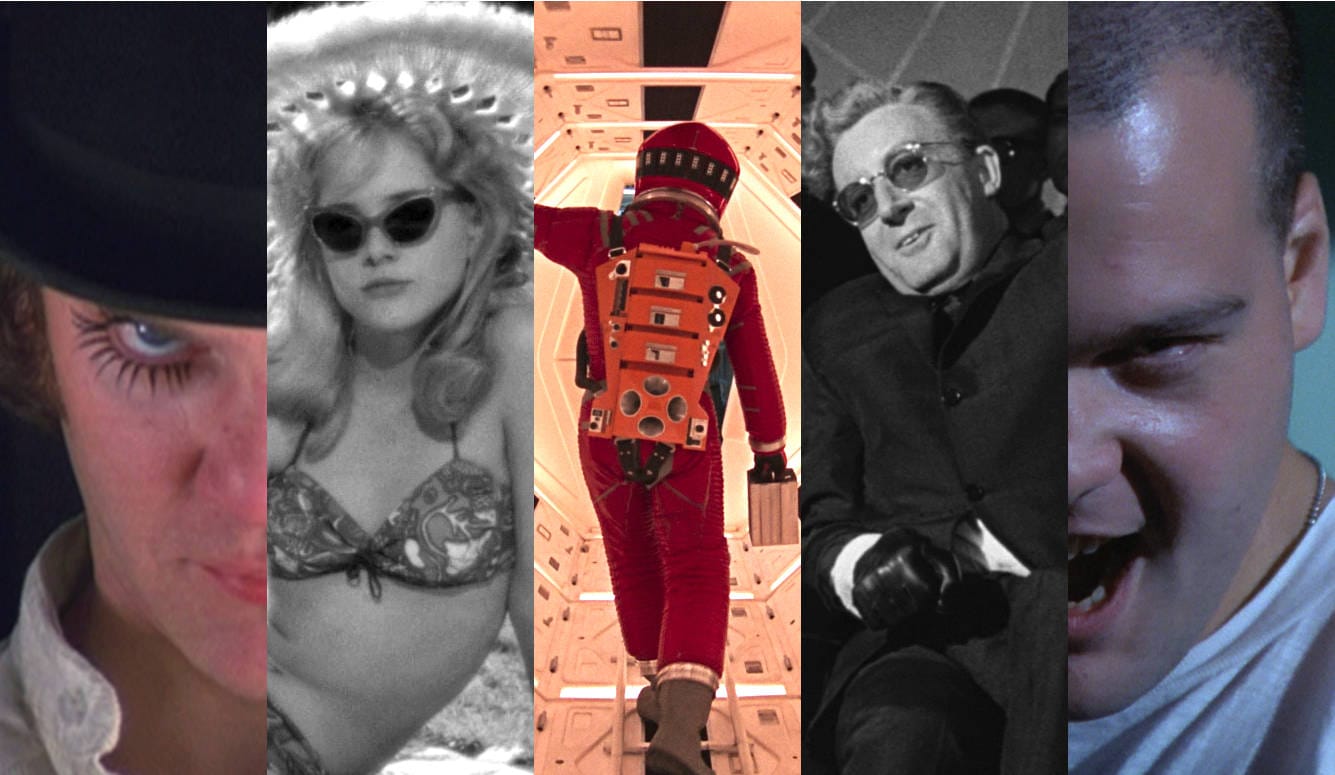
There is an old Soviet saying: Russia is a country with a certain future; it is only the past that is unpredictable. In post-Stalinist Russia, the battle over history continues. Vladimir Putin has recently been adopting some of the same tactics as Stalin. History is once more being defaced as, in essays and speeches, Putin repeatedly attempts to write a country of 40 million out of existence, with his claims that an independent Ukraine simply does not exist.
It has become harder, of course, to write individual people out of history. After Stalin ordered the murder of senior Red Army commander Grigory Kulik’s wife, Kira Kulik-Simonich, all images of the woman disappeared, and historians have no idea what she looked like. While the digital age presents more opportunities to falsify history, the Internet has made complete erasure of this kind impossible. But that has not stopped Putin from erasing his enemies in a more conventional way. In Putin’s Russia, those who fall out of favour fall out of windows. Executives, oligarchs, and doctors critical of the Kremlin’s Covid response have fallen off cliffs, balconies, and boats, down flights of stairs and over railings. Some of these killings may be the result of economic competition between elites, as the pressure of sanctions squeezes their profit margins—but most are probably the acts of a state that does not tolerate dissent.
Since the invasion of Ukraine, the Russian government has been accelerating longstanding plans to develop RuNet, a Russian internet shut off from the rest of the world, which will make manipulating the public record more feasible. In pursuit of this aim, they have been using legislation first introduced in 2016 to block websites within Russia, thus restricting the information citizens can access. Since the start of the Ukraine War, more than 2,384 such sites have been blocked. These range from independent Russian news websites and Ukrainian domains to Big Tech and foreign news sites.
Putin has also been attempting to rewrite the history of Stalin’s repressions. Under Mikhail Gorbachev and Boris Yeltsin, there was increased openness about the horrors of Stalinism. That continued into the early Putin years, during which the Russian premier attended ceremonies to mark some of the worst atrocities and seemed ready to admit that mistakes had been made. In the early years of his reign of power, Putin was ambivalent about Stalin. But that soon changed.
The history of Soviet totalitarianism is now being rewritten. In 2008, masked men from the General Prosecutor’s Office forced their way into the offices of Memorial, a Moscow-based NGO that aimed to preserve the public memory of Stalin-era repression. They confiscated hard drives containing information on more than 50,000 victims. In early 2022, just before the invasion of Ukraine, the Russian government had Memorial shut down completely. In 2023 authorities raided the homes of former Memorial employees in a move described by the EU as “another step in the ongoing intimidation and persecution of independent and critical voices in the Russian society.”
The Perm 36 Gulag Museum in Siberia was founded in 1992, on the site of an abandoned prison camp. Its purpose was to commemorate the sufferings of millions of citizens, who were sent to hard labour camps by Stalin’s regime. In 2015, it was closed by the authorities. When it reopened in 2016, there were no more mentions of political prisoners or forced labour—instead, there are now exhibits celebrating the role of the camps in the Soviet war effort against the Nazis.
Putin regularly distorts the history of the Second World War in this way, in order to stoke Russian ethnonationalism, the dominant political force of recent years. His version of events conveniently omits Stalin’s two-year collaboration with the Nazis. As part of the effort to imbue schoolchildren with patriotic spirit, they are often asked to write letters either to or from the Eastern Front, as if the war were still taking place. The daughter of journalist Andrei Kolesnikov was told to write a letter in the voice of her grandfather—even though, like most current schoolchildren, she does not have a grandparent who would have been old enough to have served in the war. Kolesnikov suggested that she write a letter from her great-grandfather, David Traub, instead, dated from the gulag in Russia’s far north where he had been sent for “counterrevolutionary activity.”
Keep reading
How to Suppress Men’s Writing
Back to the Dark Ages
Prison or Peer Review
France’s Imaginary Austerity
The Limits of Perfectionism