Top Stories
How Boardgames Teach the Limits of Rationalism
The drive to deal with other players is embedded in the scoring rules, which emphasize economies of scale.
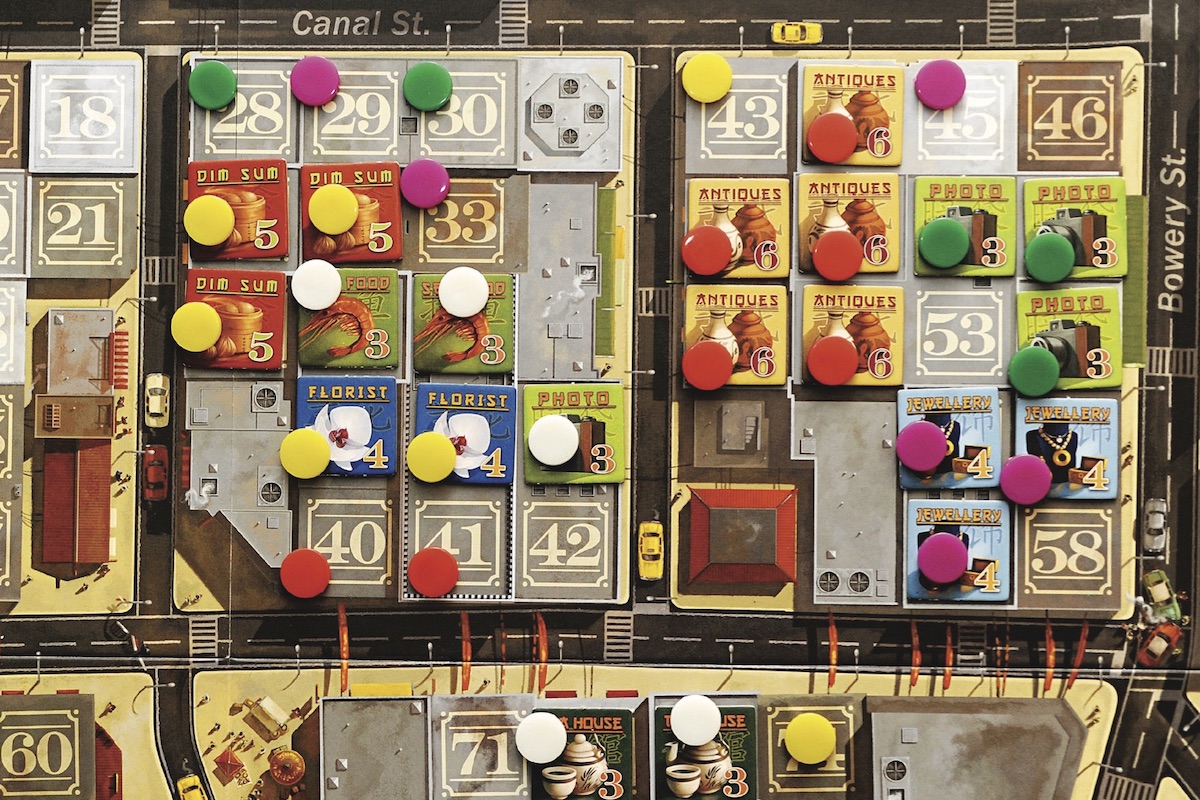

For gamers who love the art of the deal, but don’t want to waste precious gaming time rolling dice and pushing tokens around a Monopoly board, Chinatown is the perfect choice. In this real-estate-themed game, created in the late 1990s by German designer Karsten Hartwig, properties are distributed to players randomly at the beginning of every turn. The bulk of the game consists of pure negotiation.
While the properties in Monopoly are named after streets in Atlantic City, Chinatown takes its inspiration from the early days of New York City’s Chinese commercial area near Canal Street. The Chinatown playing surface looks something like a giant chessboard, and each player (the fun is maximized with five people) use assigned chessboard squares to erect little cardboard flower shops, restaurants, tea houses, laundromats and other street-level retail businesses.
The drive to deal with other players is embedded in the scoring rules, which emphasize economies of scale. Tiny businesses that cover only one or two board squares don’t earn a lot of points (even when calculated on a per-square basis), while big bonuses are awarded for expanded businesses that sprawl over four, five or six contiguous squares. Players typically start the game with scattered, isolated properties, then consolidate their holdings into big, connected blocs in order to maximize scoring.