Psychology
The Insight Trap
Self-knowledge is cheap and satisfying, but changing what we do takes years of tedious practice.
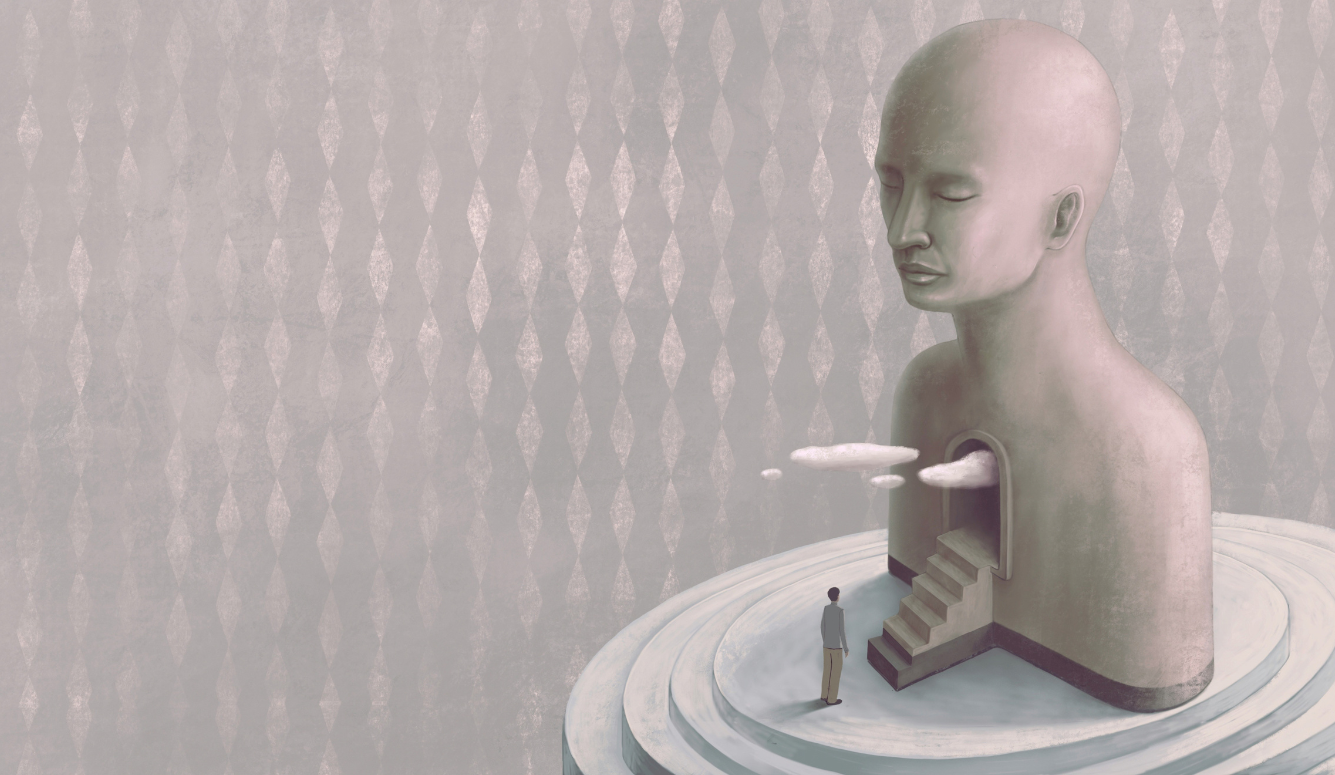

The hardest thing I’ve ever done was nothing. In February 2020, I spent ten days at a silent meditation retreat at Suan Mokkh in southern Thailand. We gave up our phones, books, notebooks, pens—anything that might distract us—and spent ten hours a day in complete silence, meditating. At night, I slept alone on the floor of a small cell, on a straw mat with a wooden pillow. It was harder than any backpacking trip I’d ever done, including several treks of over a hundred miles and more than 30,000 vertical feet with a sixty-pound pack on my back. The instructions at Suan Mokkh were simple. Sit, watch your breath, notice when your mind wanders, and come back. Again and again.

There wasn’t anything to figure out, no secret technique or puzzle I needed to solve. I understood what I was supposed to do right away. I just couldn’t do it. The problem wasn’t understanding. It was doing. Meditation wasn’t something you mastered by thinking about it. It was something you practised.
We tend to assume that understanding leads to action. If you figure out why you drink too much or get angry, or understand what you’re doing wrong when you hit your forehand, your behaviour will change. But the solutions to most of our problems don’t come from more information. I already know that exercise is good for me, that I need more sleep, that I should spend less time on TikTok and be more patient with my wife and kids. I know that I should gossip less, care less about what others think of me, and mind my own business more. I know all of this. Doing it is something else entirely.
We routinely mistake understanding for change. Someone can understand that their fear of intimacy comes from being abandoned by their parents and still never commit to a relationship. Why is it that understanding our behaviour, knowing what we ought to do, and even sincerely intending to do it so rarely result in our actually doing it? Because knowing can be easy, and insight can arrive in a moment. Real change is hard. It’s often tedious, boring, and repetitive. It requires doing something differently, again and again.
Keep reading
The Insight Trap
Cornell and Consent

Robert Lynch on Status, Humour and the Apes We Pretend Not to Be | Quillette Cetera Episode 74
The Radicalisation of Tucker Carlson

A Pop Fiction Master and Monster