Books
Pathology and Politics
British author Josh Ireland’s new book about the murder of Leon Trotsky tells the gripping story of a rivalry between two very different men.
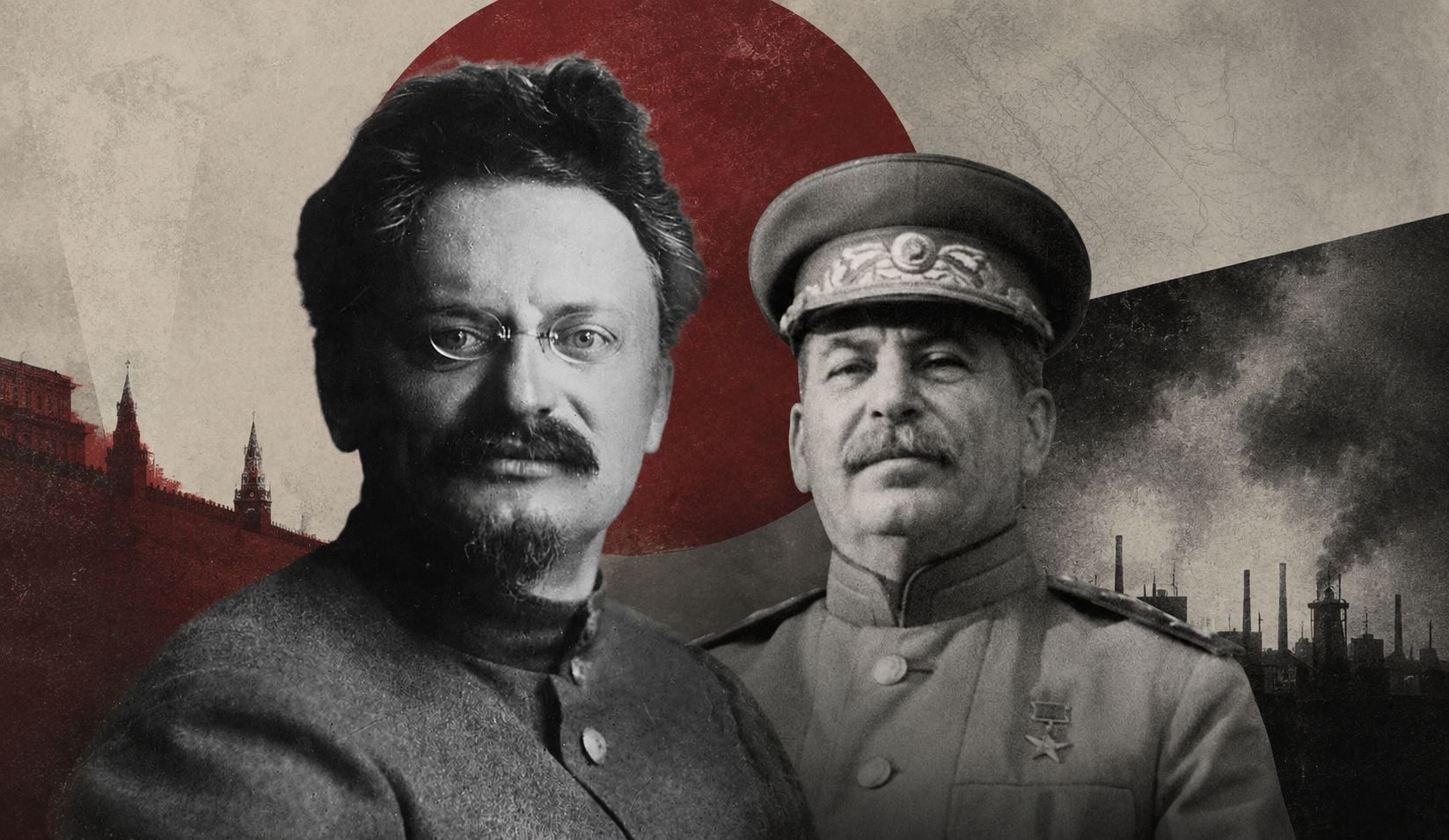

A review of The Death of Trotsky: The True Story of the Plot to Kill Stalin’s Greatest Enemy by Josh Ireland; 384 pages; Dutton (February 2026)
British author Josh Ireland’s account of Josef Stalin’s quest to liquidate Leon Trotsky is a story of pathology and politics. Ireland doesn’t spend much time on Lenin, who makes only spectral appearances, or on the ideological quarrels between Mensheviks, Leninists, Stalinists, and Trotskyists. He is preoccupied with the two personalities at the centre of his story: Stalin the obsessive hater and the hapless and suicidally negligent Trotsky.
Ireland explores the nightmare years in the Soviet Union when Stalin grappled for and eventually secured power, but he doesn’t attempt to locate any pivotal moment (beatings by his mother, the death of his first wife etc) that might explain what made Stalin the man he became. Ireland’s Stalin is simply a monster who “destroyed every intimate relationship he entered,” and “despised pity, sympathy, mercy.” Nikita Khrushchev, who miraculously survived the Stalin years and denounced him in his 1956 “Secret Speech,” considered him “sickly suspicious.” (In Peter Duncan’s clever 1996 film Children of the Revolution, a ghostly Stalin tells a true believer “Maybe I was just born this way”—a refreshingly non-Marxist and quite possibly accurate explanation.)
Trotsky and Stalin first met in London in 1907, at the Fifth Party Congress of the Russian Social Democratic Labor Party, years before the two men would become part of the Bolsheviks’ Soviet regime. Trotsky—a leader of the failed revolution in Russia two years earlier—was vain, theatrical, and determined to upstage everyone around him. Stalin was melodramatic, moody, and capricious. According to Ireland, their mutual dislike was immediate and visceral:
The two felt an immediate and almost physical revulsion for each other. Stalin hated Trotsky’s delicately-balanced pince-nez and sweep of dark glossy hair, his self-confidence, eloquence and authority. Trotsky was repulsed by the Georgian’s pockmarked face, his coarse manners, his provincialism.
At the time, Trotsky was a Menshevik and Stalin was a Bolshevik. But by 1917, Trotsky had joined Lenin’s ruling party and was hyper-agitating for the regime, writing and soldiering on its behalf. His behaviour, especially in his role as the head of the Red Army, had become Stalinist avant la lettre. He was willing, he told a biographer, to “burn several thousand Russians to a cinder to create a true Revolutionary movement.” He traveled the countryside in a train filled with weapons, a printing press, and a twelve-man bodyguard detail. One of its carriages was designed to hold tribunals, and Trotsky had those deemed insufficiently revolutionary shot. “We must rid ourselves once and for all,” he announced, “of the Quaker-Papist babble about the sanctity of life.”
Keep reading
Australia's Coming Censorship Machine
Anatomy of a Book Promotion

They Walked in Line
Anti-Catholic Social Panics, Then and Now
A Dishonest (and Dangerous) Nobel Laureate