Israel
A Perfect Storm
How Muslim and Christian antisemitism have converged with anti-Israel sentiment—some of it justified—to fuel the Free Palestine protests across the West.
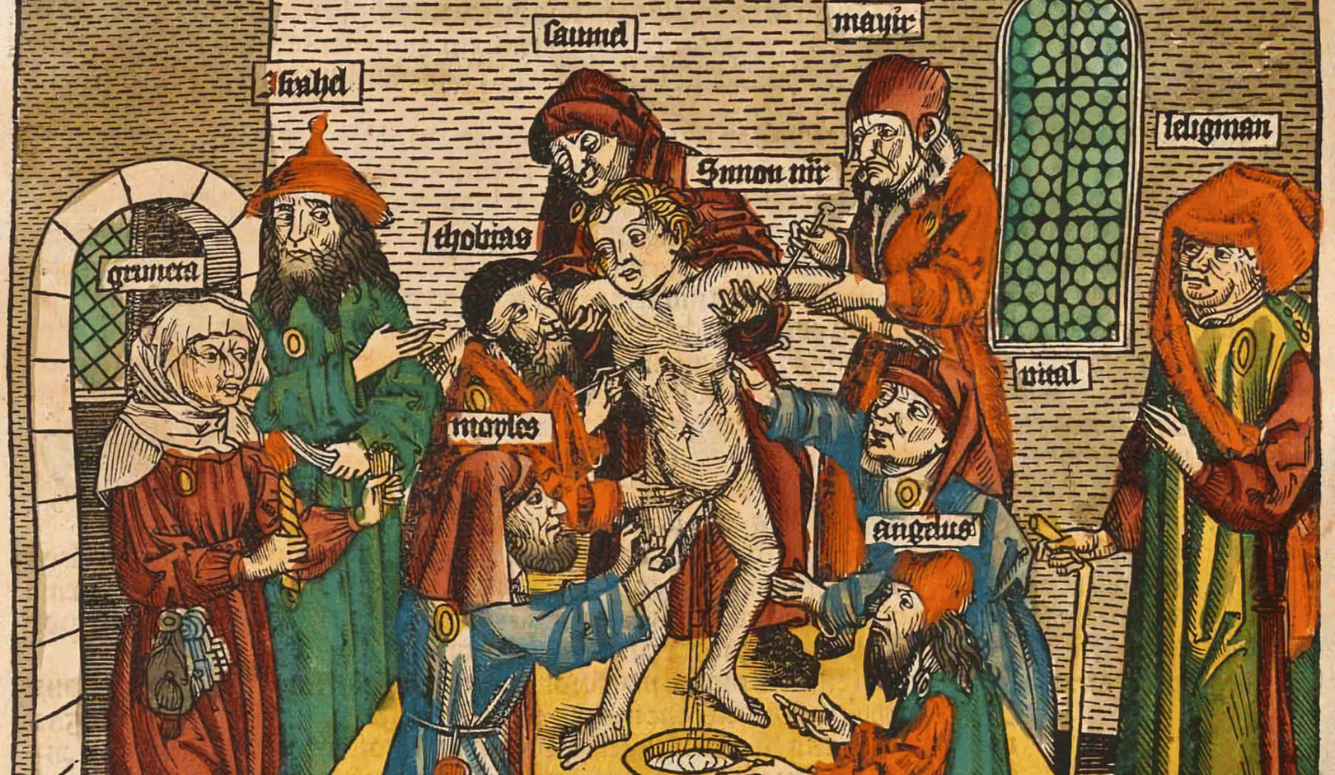

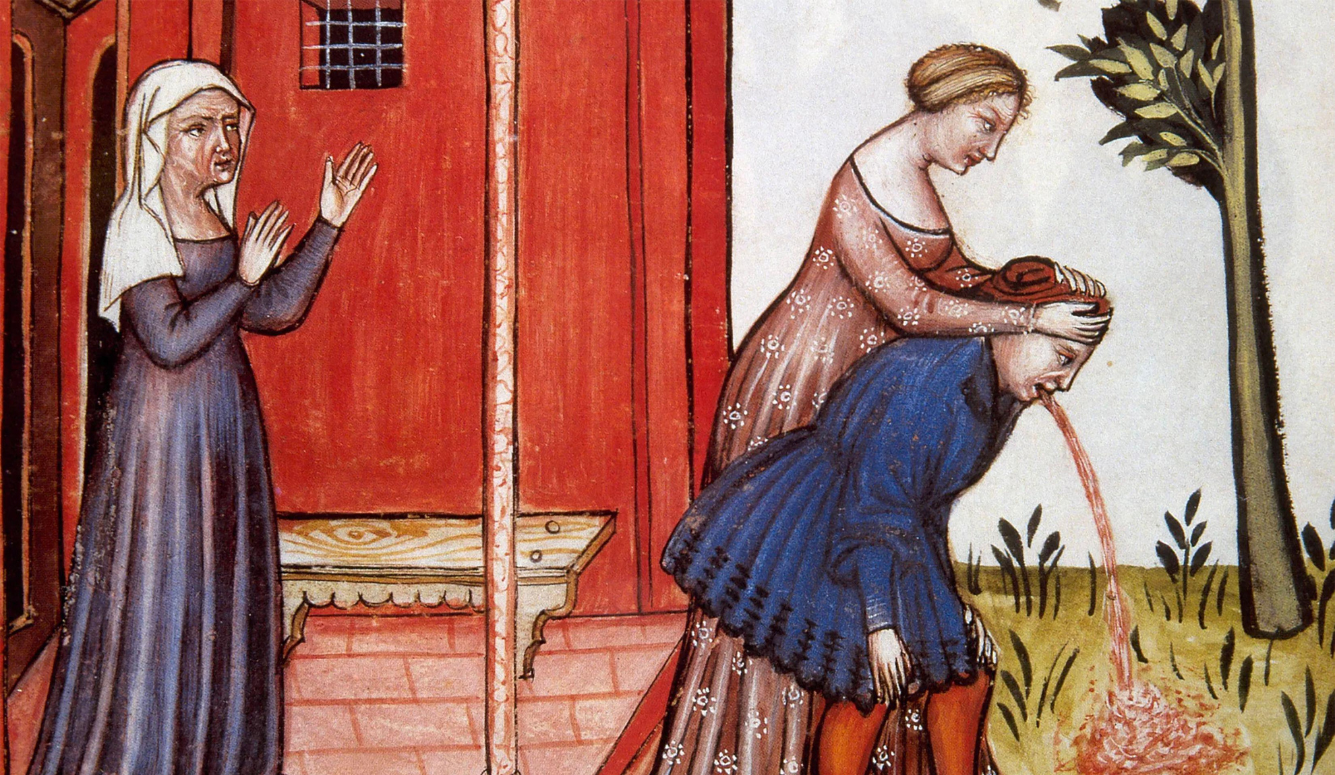
To visit Paris’s medieval art museum, the Musée de Cluny, is to be overwhelmed by images of Christ lugging the cross up Calvary; of Jesus suffering, bleeding, and dying on that cross; and of his corpse being lowered to the ground. I cannot help wondering how these images, and the accompanying Gospel texts blaming “the Jews” of that time and their descendants for Christ’s fate, affected the psyches of Christians over the following twenty centuries. (Why, incidentally, does little to no blame attach to the Roman governor who ordered Christ’s death or to the Roman soldiers who carried out the execution and their descendants? This is surely one of the divine mysteries—why are the Jews held responsible, while the Italians are completely exonerated?)
Every child in Christian Europe and the Americas was nurtured on such images and their accompanying texts for twenty centuries and every adult was incessantly regaled with the story from church pulpits. True, fewer and fewer people have been attending church over the past 150 years. But still, many must have had the same experience as Mikis Theodorakis, the 20th-century Greek composer, who once told an interviewer that he imbibed antisemitism with his mother’s milk.
By the 7th century, merchants and travellers had brought Christian antisemitism to Hejaz, the region on the Arabian peninsula that encompasses Medina and Mecca, Islam’s two most sacred sites, and thus Islam’s sacred text, the Quran, calls the Jews “killers of prophets,” alluding to their involvement in the death of Christ. The phrase also references Islam’s prophet and founder, Mohammed. According to the Quran, the Jews rejected him and his message, refused to convert, and even repeatedly attempted to poison him. So Mohammed exterminated the region’s Jewish tribes, slaughtering their men and enslaving and forcibly converting their women and children. Henceforth the Quran was to brand the Jews “enemies of Islam” and “sons of pigs and apes.” Antisemitism has informed Muslim Arab culture and society ever since, occasionally triggering pogroms and always engendering contempt, humiliation, and oppression—especially at times of civil discord or geopolitical threat.
In her autobiography, Infidel, the conservative thinker Ayaan Hirsi Ali, the Somali-born one-time Dutch parliamentarian, writes about her years as a child in Saudi Arabia. She recalls that one day she heard a couple of Arab women cursing the Jews, while hanging out laundry. But there were no Jews in the vicinity—or, indeed, anywhere in Saudi Arabia; the women had never set eyes on a Jew, Jews had never attacked the kingdom, yet the women were offhandedly cursing “the Jews.”
 Brett Hall
I write of Muslim antisemitism because it is crucial to acknowledge it if we want to understand the phenomenon that has ignited America’s campuses and Europe’s city streets over these past two years, against the backdrop of the Israel–Hamas war in Gaza. Muslims—whether born in the United States or Europe or recently arrived as students, immigrants, or asylum-seekers—have been at the forefront of the protests and demonstrations, organising and inciting, chanting “Death to Israel,” “Death to the West,” and, occasionally, “Death to the Jews.” In many European cities, Muslims feel empowered and, with their growing numbers, are able to cow politicians, businessmen, university presidents, and journalists.
But it is not only the Quran with its tales of the 7th century that is responsible for modern Muslim antisemitism. The 19th century saw a resurgence of antisemitism as an offshoot of the traditional Christian Jew-hatred in various parts of Europe, alongside the flowering of nationalist movements that generally castigated “the Other.” And there was no more prominent “Other” than the Jew. European nationalist and antisemitic tropes gradually penetrated the Ottoman-ruled Middle East, generating Arab nationalism while adding a new European layer to the existing base of Muslim detestation of and contempt for the Jews. The 1840 Damascus Affair, in which Jews were falsely blamed—and tortured and a number of them were killed—for murdering two Christians to obtain blood for ritual purposes, exemplifies this importation of European antisemitic tropes to the Muslim Arab world.
Generally, as long as Islam’s Jews were submissive and obedient nothing much happened. The rise of Zionism and the movement’s gradual empowerment in Palestine changed all that. The Jews living in the Arab lands increasingly came to be seen by their Muslim neighbours and rulers as actual or potential allies of Zionism; in June 1941, Muslim mobs rampaged through Baghdad, killing and raping hundreds, and six to seven years later similar mobs converged on Jews in Morocco, Aleppo, Aden, and other sites around the Arab world.
During the Second World War—to the extent that it is possible to gauge public opinion in the non-democratic Arab world—it seems that most Muslims supported an Axis victory, partly out of antisemitism, partly because Britain and France were seen as the imperialist suppressors of Arab nationalist goals. The Zionist victory in the war of 1948, the devastation of Palestinian Arab society, the creation of the refugee problem, and the emergence of the State of Israel also contributed to the growing fear and hatred of the Jews around the Arab world, and in the course of the late 1940s, the 1950s, and 1960s, all the Middle Eastern and North African Jewish communities were intimidated into flight, most settling in Israel with a small minority ending up in Britain and France.
The dramatic events of the 1940s had the opposite effect in the West. Hitler’s destruction of European Jewry and the West’s defeat of expansionist Nazism stanched antisemitism in Western Europe and the United States; and for a time antisemitism became politically taboo and was sequestered underground, far from sight. The Arab–Israeli war of 1948 did little to dent this taboo, despite the tragedy that befell the Arabs of Palestine. Indeed, even America’s Ivy League universities, which had long curtailed the admission of Jews, now switched tack and Jewish students and professors flooded the best campuses.
But by the 2020s, the memory and impact of the Holocaust had faded and the Gaza war witnessed a convergence of Western and Muslim antisemitism. Against the backdrop of the war in Gaza, old-style Muslim antisemitism now washed across Europe, persuading ignorant Europeans that their fathers’ antisemitism had actually been legitimate.
Gerfried Ambrosch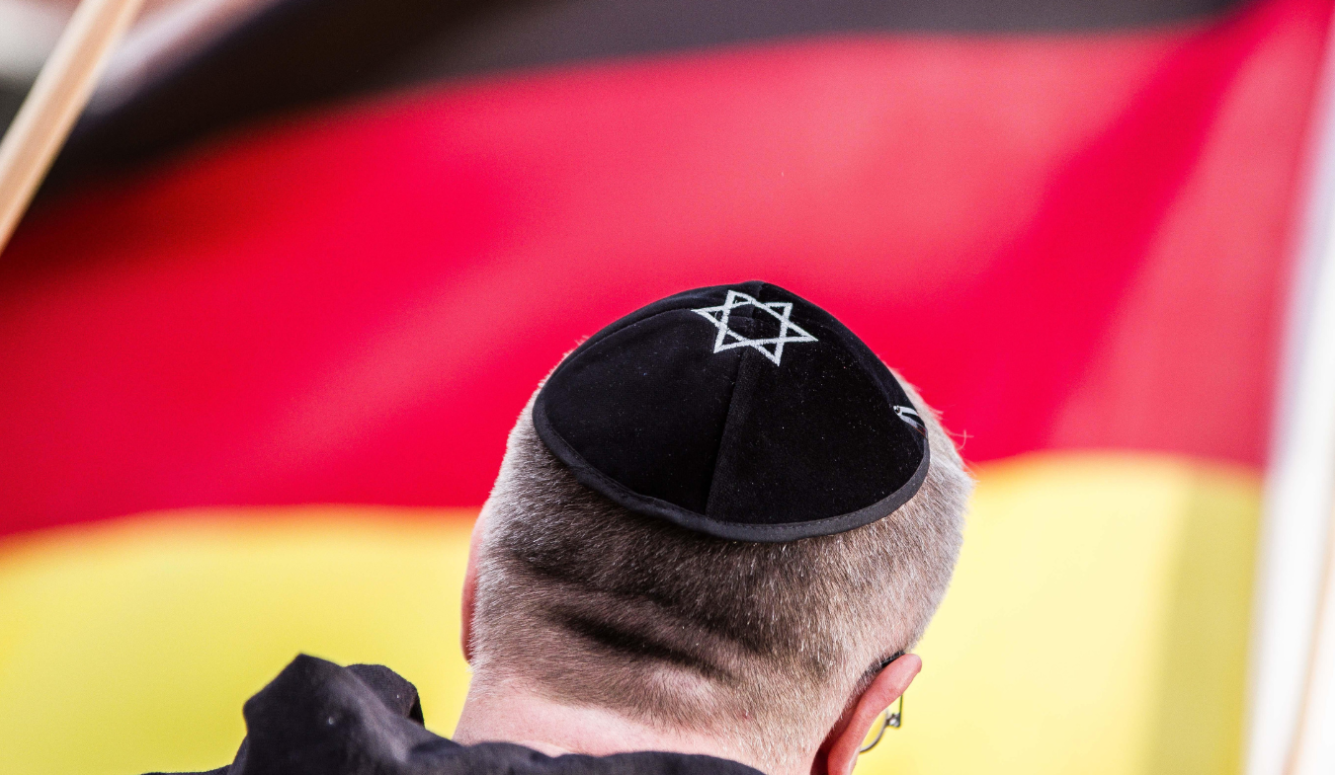
Of course, the pro-Palestine marches weren’t entirely—or perhaps even mainly—motivated by antisemitism. There was and is also genuine anti-Israeli sentiment, caused by Israel’s brutal occupation of the West Bank and Gaza Strip since the 1967 Six-Day War and encouraged by the way the country has constantly been depicted in the Western media. And, of course, there is the current devastation and the suffering of Gaza’s civilian population as Israel pounds the Strip every day, in retaliation and revenge for what Hamas did on 7 October 2023 and in its effort to crush Hamas.
Today, it is all but impossible to disentangle anti-Israeli passion from antisemitism when attempting to establish the driving force of the protests, especially among the West’s largely ignorant young people. All or almost all they see and know are images of dead and wounded Arab babies and women—never, incidentally, of jihadi fighters—broadcast on TV screens. I say “ignorant” because these young people know nothing about the history of the 140-year-old conflict in Palestine/the Land of Israel. When challenged, few of those chanting the slogan “From the River to the Sea” are actually able to name the river or the sea. They know nothing about the Arab terrorism that stalked the Zionist effort to settle in the Jews’ ancient patrimony, the Promised Land. They know nothing about the wars Palestinians and Arab states have waged against the Jewish state, nor do they know that the Palestinians consistently rejected the periodic peace offers made by the Zionists/Israel and the international community for a two-state compromise—by the British Peel Commission in 1937, by the UN General Assembly in November 1947, by US President Bill Clinton and Israeli Prime Minister Ehud Barak in 2000, and by Israeli Prime Minister Ehud Olmert in 2007–08. These young people are probably even unaware of the treaties Israel signed with Egypt and Jordan, in which land was traded for durable peace, to those countries’ mutual satisfaction.
These peace-offerings and accomplishments were routinely denounced by the region’s Islamists: Hamas, Lebanon’s Hezbollah, Yemen’s Houthis, and the Islamic Republic of Iran. These Islamists are not exactly Nazis, as Israel’s corrupt and incompetent prime minister, Benjamin Netanyahu, would have it. But, yes, Hamas are close cousins of ISIS and though they have had the public relations smarts not to broadcast the slitting of hostages’ throats, they have been just as murderous. And Hamas is a misogynistic, homophobic, anti-democratic organisation, which is antisemitic to its core. Hamas kindergartens and schools in the Gaza Strip, the territory ruled by the organisation since 2007, systematically inculcated—and still inculcate—hatred of Jews and Israel, in line with Hamas’s foundational Charter or Covenant of 1988.
That charter bluntly promises the believers that “Islam will destroy Israel.” And it is not only anti-Israel but explicitly antisemitic, their goal being the destruction of the Jews. The charter—which has never been revoked or annulled, though in 2017 the organisation published a watered-down version for the consumption of Western naïfs—states: “Our struggle against the Jews is very great and very serious … The Day of Judgement will not come about until Muslims fight the Jews (killing the Jews), when the Jew will hide behind stones and trees. The stones and trees will say ‘O Muslims, O Abdullah [i.e., servant of Allah], there is a Jew behind me, come and kill him.’” The charter goes on to assert that the “Jews were behind World War I … [and] World War II through which they made huge financial gains” and it blames the Jews for the French and Russian revolutions—and indeed for creating the United Nations.
So the mass slaughter of Israelis by Hamas on 7 October, with its accompanying rapes and beheadings, and hostage-takings of people ranging in age from babies to octogenarians, was prophesied and prefigured by Hamas’s documents and ideology long before any blood was actually shed on that day. Why the keffiyeh-wearing Christian students and professors marching through America’s campuses and Europe’s capitals don’t recognise Hamas’s homophobia, misogyny, totalitarianism—and, yes, their anti-Christian/anti-Western core beliefs—is beyond comprehension.
Keep reading
Jerry Kaplan on AI Doomers

Payback Time for Steven Galloway

War Stories

Life in The Grim Old Days