Books
Charlie Is My Darling
Claudia Verhoeven’s new book is a valuable contribution to the crowded library of Mansonia.
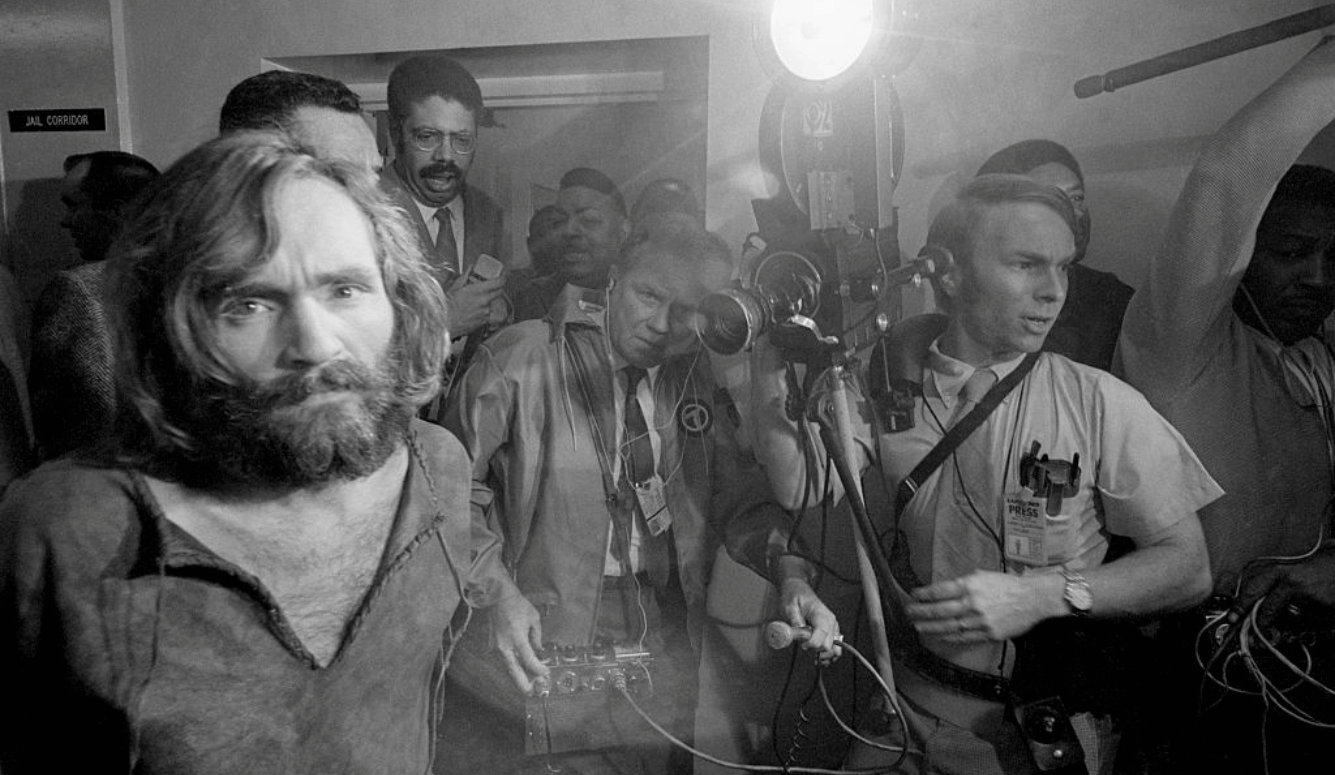

A review of Love and Terror: The Helter-Skelter History of the Manson Murders by Claudia Verhoeven; 384 pages; Verso (May 2026)
Although the True Crime genre of publishing and documentary television is replete with accounts of murderous spouses, serial killers, Mafia wars, and financial scams, rarely do the subjects transcend the headline immediacy of police procedurals to deliver the long-term import of critical analysis. The Victorian predator Jack the Ripper and the Depression-era exploits of Bonnie and Clyde are two such exceptions; a third is the countercultural carnage wrought by the Manson family. As such, Claudia Verhoeven’s new book Love and Terror: The Helter-Skelter History of the Manson Murders might be better filed under Cultural Studies than True Crime. A handful of athletes and entertainers have made a similar passage from ephemeral news to academic specialty, but only the most notorious criminals merit the same treatment. And for almost six decades, no criminal has been more notorious than Charles Manson.
Indeed, since the 1969 slayings he orchestrated, the 1970 trial that convicted him, and his death in prison in 2017, Manson is now arguably second only to Adolf Hitler as Western society’s universally recognised personification of irredeemable wickedness. Verhoeven’s work begins by acknowledging the so-called “Manson-industrial complex” of nonfiction and fiction books, movies, video series, websites, music, and art focused on him, including the canonical 1974 bestseller Helter Skelter: The True Story of the Manson Murders by prosecutor Vincent Bugliosi and Curt Gentry. She goes on to balance the various investigative and speculative reckonings with contemporary journalism and court transcripts from 1969 to craft an updated perspective. This considers not just the original climate from which Manson and his acolytes emerged, but also their ongoing significance in our time of white nationalism, #MeToo, and environmental extremism. The result, in Love and Terror, is a blend of sociology, psychology, and postmodern theory. It’s not always successful and it presents few fresh facts. But it also offers some provocative interpretations of known data, and it turns out to be a valuable contribution to the crowded library of Mansonia.
So, why do the Manson murders continue to fascinate us? First of all, they were not perpetrated by a lone Norman Bates-type psychotic, but by a collective, which made them closer to a form of terrorism than the multiple rapes and killings committed by someone like Ted Bundy. Nor were the murders indiscriminate mass shootings like those wrought by two students at Colorado’s Columbine High School in 1999. That some of the killers were young, sexually active women, rather than alienated and isolated men, is also an anomaly among famous crimes. The Tate-LaBianca casualties were not dispatched in back alleys or dark woods, either, but in their own well-appointed residences in exclusive neighbourhoods.
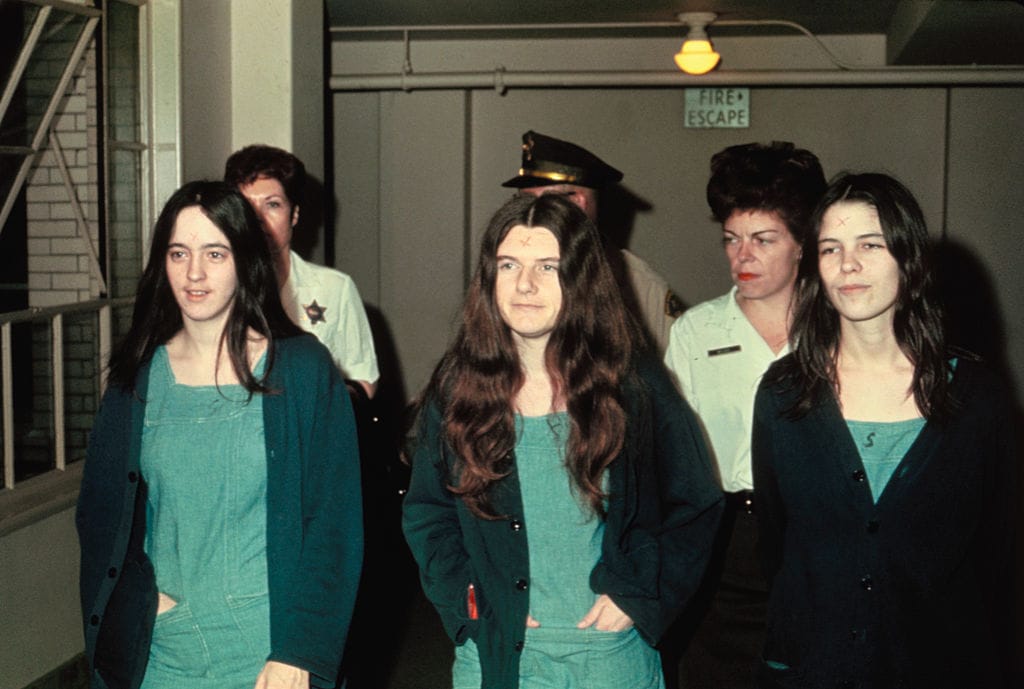
Behind bars, Charles Manson, Charles “Tex” Watson, Susan Atkins, Patricia Krenwinkel, Leslie Van Houten, Lynette “Squeaky” Fromme, and Bobby Beausoleil all lived long lives, giving occasional interviews, writing memoirs, and sitting for publicised parole hearings. Their mystique would surely not have lasted as long had their original sentences of capital punishment been carried out (Atkins, who wrote “Pig” in Sharon Tate’s blood at 10050 Cielo Drive, died incarcerated in 2009, and Van Houten was quietly paroled in 2023). Most striking of all, the motive behind the Manson trauma was a vaguely—very vaguely, as Love and Terror reminds us—spiritual-political philosophy, sourced from a single guru figure, instead of the unfathomable private sadism that informs so many other atrocities. Psychedelic drugs, free love, antiestablishment rhetoric, the Beatles and the Beach Boys, Roman Polanski, The White Album, Rosemary’s Baby, the entertainment and media capital of the world during an already transformative epoch, and horrific violence—all of this combined to make the murders reverberate well into our own century.
Keep reading
How France Lost Control of Its Streets
How to Suppress Men’s Writing
Back to the Dark Ages
Prison or Peer Review

France’s Imaginary Austerity