Politics
The Good War No More
Jon Lee Anderson’s powerful new book on Afghanistan reminds us that the justness of a cause is no guarantee of its success.
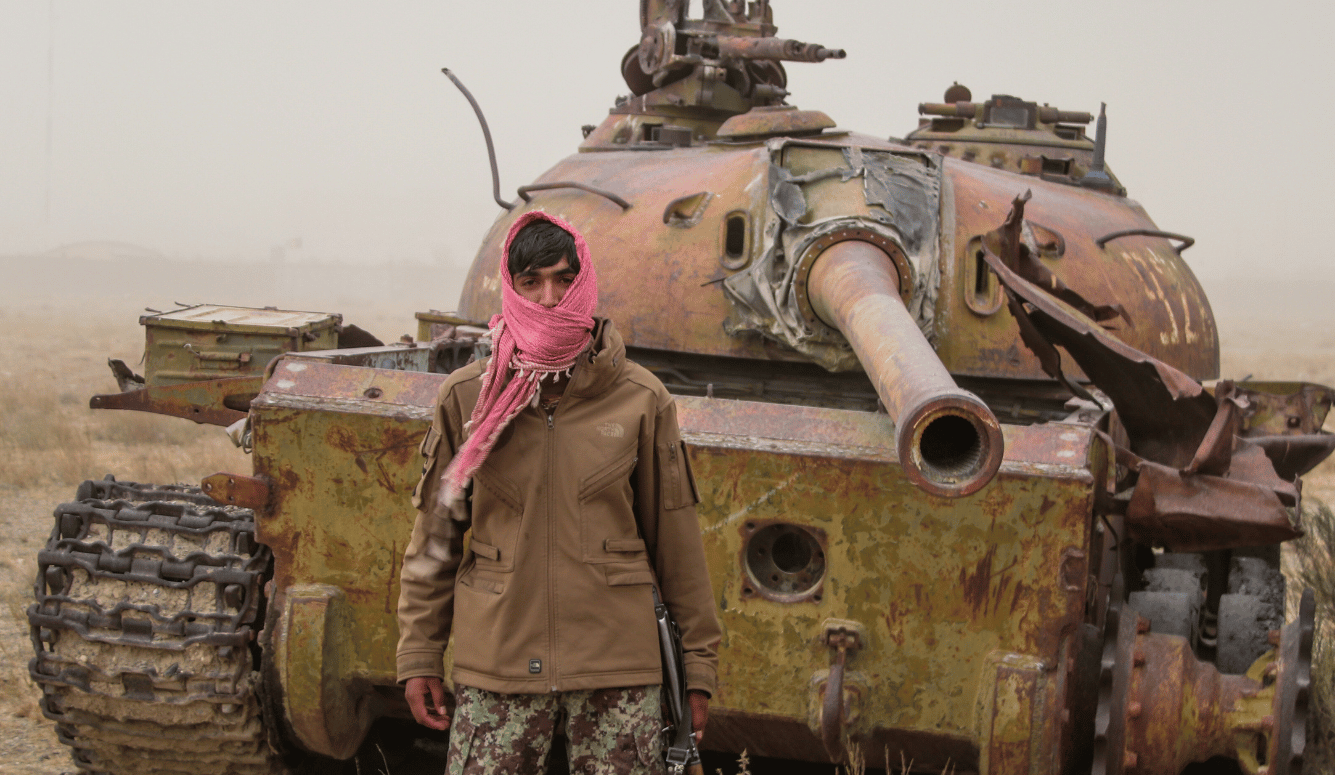

A review of To Lose a War: The Fall and Rise of the Taliban by Jon Lee Anderson, 400 pages, Penguin Press (August 2025)
Back in October 2001, in the first week of the war in Afghanistan, a British newspaper reporter spoke to a Taliban fighter on the Pakistani border. The young jihadist was full of bluster. The Americans, he said, would never win, because “they love Pepsi-Cola, but we love death.” This, it turned out, was no idle boast. In 2021, the Americans decided they’d had enough and the medieval Islamists are now back in power in Kabul reaping the dividends of patience.
The justice of the war in Afghanistan was never in doubt: the Taliban regime was harbouring Osama bin Laden and his confederates, and from that territory they had planned and carried out the terrorist attacks on New York and Washington on 11 September 2001. Very few people disagreed that extirpating the Taliban and their al Qaeda guests was justified or that this would constitute an act of deliverance for the benighted Afghan people, not least the female half compelled to live as chattel.
But the justness of a cause is no guarantee of its success, and twenty years later, the war ended in an ignominious withdrawal executed by President Joe Biden but set in motion by President Donald Trump the year before. The lives and money sacrificed in this prolonged intervention were hardly trivial: 2,500 US troops lost their lives, thousands more were wounded, and the cost to the American taxpayer is estimated to have run above US$2 trillion. This is what it took To Lose a War, as Jon Lee Anderson titles his powerful new book. Its subtitle, The Fall and Rise of the Taliban, offers a poignant reminder of hard-won gains carelessly frittered away.
As soon as US forces deployed to Afghanistan in October 2001, they found themselves reinforced by indigenous fighters of the United Islamic Front for the Salvation of Afghanistan (better known the Northern Alliance). Together, they defeated the Taliban—a cadre of pious “students” who had established a sharia state in 1996 with Saudi funding and support from sections of Pakistan’s intelligence services—only to surrender the country back to them two decades later. Back in power, the Taliban is reverting to type, maintaining strict religious law to restore purity and virtue to the land.
Anderson is a seasoned correspondent for the New Yorker who cut his teeth reporting on Afghanistan in the late 1980s when the Red Army was laid low by the mujahideen, an alliance of tribal warlords and Islamist guerrillas whose martial élan—and advanced Western weaponry—wrecked the Soviet occupation. “Afghanistan has always been more of a battleground of history than it has been a nation,” Anderson writes, and the Soviets were only the latest in a long line of foreign invaders to bleed grievously there.
To Lose a War is a compilation of Anderson’s previously published essays on Afghanistan, with splotches of new material hastily attached in what feels like an effort to pad the book. Nonetheless, it plainly seeks to offer a rounded view of the American enterprise there, “from its dramatic beginning all the way to its hapless end.” And on this score, it delivers handsomely.
This is Anderson’s second offering on the subject. His first, The Lion’s Grave, was “a chronicle of the first year of the American presence in Afghanistan,” rushed to press in 2002 while Lower Manhattan was still clearing the debris of the World Trade Center. It elevated Anderson’s status in that select band of correspondents who would spend the next few years in the chaotic streets of Kabul and the badlands of the Korengal Valley putting that forbidding place on the American map.
To Lose a War opens with the story of Ahmad Shah Massoud—the “lion” of Anderson’s previous title and a renowned mujahideen leader dispatched by al Qaeda suicide bombers on 9 September 2001, just two days before Osama bin Laden’s suicide squad struck American civil society. This neutralised the Taliban’s most stalwart enemy at just the time he was needed most, hindering US power before it was even brought to bear.
 John Lloyd
It’s hard to recall now, but before years of waste and corruption thwarted the proper functioning of the Afghan state during the American interregnum, and before it was clear that US forces would struggle in vain to fully pacify the countryside, the lightning US intervention in the shadow of 11 September was regarded as a “qualified success.” “The Taliban had vanished into the hills,” Anderson reminds us, “as had al Qaeda, and a pliant new pro-Western regime had been installed.” Kabul, which had banished all signs of Westernisation and all signs of women had suddenly ceased to be a City of God.
But this progress would not last. The initial euphoria occasioned by Afghanistan’s experiment in democratic federalism—its population doubled by the return of refugees and a birth bulge—wilted under the excessive venality of government officials in Kabul. And the accommodation with American power could not withstand the unrelenting campaign of violence meted out by the Taliban. In addition to regular engagements with US and Afghan forces, foreigners were regularly kidnapped and murdered, roads were mined, and schools—especially Hazara Shi’ite girls’ schools—were bombed.
Within a decade of the American intervention, it was unsafe to travel outside of the heavily fortified capital. The suicide blast walls erected around Kabul’s ministries gave the definite impression of a regime that exerted no authority beyond the government district. The massive US embassy is described by Anderson as a “veritable fortress,” unceremoniously abandoned after the decision was made to cast Afghanistan adrift.
The US presence was also marked by a profusion of blunders. Perhaps the most telling was Washington’s inordinate fear of the poppy. Instead of buying Afghanistan’s opium crop to keep the profits out of the hands of bandits and Taliban chieftains, US policy was to destroy it, fuelling resentment against the new order and replenishing support for the Taliban insurgency. A particularly engrossing chapter, “The Americans’ Opium War,” about the booming opium industry in Uruzgan, a rural province in the homeland of the Taliban, makes for especially dismal reading.
Keep reading
Three Years After 7 October
Payback Time for Steven Galloway
War Stories
Life in The Grim Old Days
In Defence of Academic Standards