Education
Lost in Social Constructionism's Epistemic Rabbit Hole
Where they have raised both eyebrows and tempers among social constructionism’s growing number of critics.


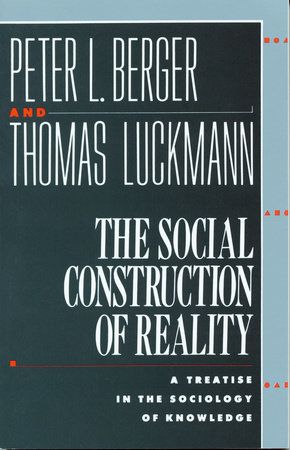
The popularisation of ‘social constructionism’ is widely agreed to be traceable to the publication of The Social Construction of Reality by the sociologists Peter L. Berger and Thomas Luckmann in 1966. In subsequent years, this concept attracted a large number of young, mostly left-leaning academics to the humanities departments of French universities, where social construction became an ideological tool useful to those engaged in the Parisian youth rebellion of 1968. From there, it spread rapidly though humanities departments in Europe and America, and into the social sciences.
The changes in intellectual thinking that this development catalysed reverberate across the West’s academic institutions to this day. What transpired in the late sixties was nothing short of a cultural revolution, riding a wave of academic trends referred to as ‘social constructionism,’ ‘postmodernism,’ and ‘poststructuralism,’ although it never became entirely clear if or how these concepts differ from one another. While foreign to some, social constructionist jargon is now routinely invoked by the young academics who successfully conquered the humanities over the ensuing 40 years.
These developments have not gone unnoticed in other parts of academia, where they have raised both eyebrows and tempers among social constructionism’s growing number of critics. Sceptics maintain that academic study of any kind demands intellectual rigour, consistency, and coherence if it is to produce meaningful intellectual reasoning and valuable conclusions. However, the major tenets of postmodernism/poststructuralism are that objectivity should be abandoned and academic endeavour should not be devoted to the pursuit of ‘truth,’ because objective truths simply do not exist.
The consequences of abandoning the search for truth and objectivity are grave everywhere. For instance, journalism from conflict zones that does not strive for neutrality and objectivity is of no use. The same is true for sociological or historical studies of social conflicts. It would even be true in the discovery of meaning in aesthetics – at its most extreme, the attack on objectivity leaves us unable to distinguish between the literary merit of a Proust passage and a Trump tweet. Postmodernist premises become especially debilitating in gender studies. Gender studies usually belong to the faculty of social sciences (at others, they belong to the humanities). Social constructionist thinking has been allowed to prevail in the social sciences and humanities, exempt from ideals of objectivity and truth seeking. The result has been that the theories and ‘findings’ of gender studies cannot be accepted by natural scientists.
It is especially unacceptable to natural scientists when social constructionists trespass on their territory. The decisive difference between lay explanations of the natural world and valid natural science is the adherence to a number of principles, such as: the omission of prejudices about the possible outcome of an ongoing investigation; a commitment to objectivity and neutrality; that results should be reproducible; that theories should be falsifiable; that one should test for statistical significance where applicable; and an openness to criticism and countervailing hypotheses.

Consider, for example, the study of the hormone Thyrotropin Releasing Factor (TRF), which regulates the release of thyrotropin from the brain’s hypothalamus in mammals and humans. In 1969, scientists succeeded in isolating sufficient amounts of this substance to be able to determine its chemical formula. This has been important to understanding the human metabolism and, subsequently, it has been used to cure some types of illness. The scientists responsible for this research were awarded a Nobel Prize. French postmodernist sociologist Bruno Latour, however, spent two years in the laboratory with the researchers who worked on TRF and, in 1979, he co-wrote an influential book about the experience entitled Laboratory Life: The Social Construction of Scientific Facts. Latour and his co-author Steve Woolgar concluded that TRF does not really exist. Chemists produce two mass spectrograms and derive its formula, in part from the difference between the two. But Latour and Woolgar claimed that TRF is the difference between the two spectra, and that it is therefore merely a social construct. They do not acknowledge that chemists can synthesise the chemical in the laboratory, inject it into humans, and observe the expected effect.
Well, I have read Laboratory Life, and it is evident that either the authors are incapable of understanding biochemistry or they simply refuse to understand it. Nonetheless, many of Latour’s peers in the humanities declared themselves impressed by his ability to deconstruct the findings of these Nobel Prize winners and other famous scientists, such as Louis Pasteur. In 2007, Latour was ranked as one of the most cited thinkers within the humanities and social sciences. Furthermore, he has received prestigious prizes for challenging the fundamentals of scientific study. Having read several of his books, I am of the firm view that he can provide no evidence for any of his claims.
A sociologist may find it useful to maintain that scientists’ results depend on their social situation, such as their own financial conditions, institutional hierarchies, and prevailing ways of thinking in society at large. But the formula of the substance called TRF would not have been different under alternative social conditions. Nevertheless, in order to demonstrate that scientific truths are social constructs, humanities scholars routinely defer to writers in the field of the sociology of knowledge, who they say offer support for their claims.
Sometimes, they will refer to a 1935 book by Ludwik Fleck entitled Genesis and Development of a Scientific Fact. Well, I have read that work and it contains no evidence that scientific truths are social constructs. They may refer to a 1929 book by Karl Mannheim entitled Ideology and Utopia: An Introduction to the Sociology of Knowledge, but this, too, contains no such evidence. They will refer to Berger and Luckmann’s aforementioned Social Construction of Reality, which I have also read, and which contains no evidence that reality is a social construct.
In the years after Berger and Luckmann’s book appeared, scores more books were published advancing the same claim that scientific truths are merely social constructs. They purport to verify this claim by citing Berger & Luckmann, who have no robust evidence, except for their references to Mannheim, who also has no robust evidence for this. This is the general trend found in postmodern texts that claim something or other is ‘just a social construct.’ They bring no independent evidence, and instead appeal to some previous authority, who also offers no evidence other than a further referral to an authority before them, who also fails to produce actual evidence . . . and so on, ad infinitum. The actual evidence in support of the foundational claim is nowhere to be found.
I had this experience a few years ago, when I made the mistake of becoming entangled in an online discussion about whether or not differences in male and female behaviour can, to some extent, be explained by biological factors like hormones. My opponents vehemently denied that biology plays any role in sex differences. One opponent declared that, “There exists so much literature about sex-typed behaviour being a construct that your insistence on biological determinism is beginning to be amusing.” I had already provided a long list of scientific references documenting the effect of biological mechanisms but my opponents refused to acknowledge it. And when I demanded a similar list of references demonstrating that sex-typed differences are social constructs, it was not forthcoming.
Finally, after a further 80 comments had passed back-and-forth, I was provided with three references. I was immediately able to reject two of these. The first of these was an article by the Marxist biologist R. Lewontin. He presents a gross caricature of sociobiology and more or less denies the importance of heritable traits. For instance, he writes: “There is not the slightest evidence that different degrees of homo- and heterosexuality are in any way genetically based.” This is completely false.1, 2 The second was a study by British educationalist Becky Francis. She demonstrated that toy preferences of boys and girls were highly gendered, but did not provide evidence of why this is so. She speculated that boys’ toy preferences would stimulate their technological understanding, but did nothing to substantiate this assertion.

The third was The SAGE Handbook of Gender and Education, a 2006 collection of essays edited by Christine Skelton, Becky Francis, and Lisa Smulyan, which runs to 511 pages of text. It contains 35 chapters, written by a total of 46 researchers in the fields of sociology and pedagogy. I did not read it at once, of course, but I did read it later. All of it. Of its 511 pages, only one page deals with possible biological explanations for sex differences, and here, the importance of biology is downplayed as much as possible. All of the remaining 510 pages presuppose that sex-typed behaviour is a social construct. Circumstantial and indirect evidence for this claim is presented in a single chapter. None of the remaining chapters present any direct evidence. However, references that purport to contain such evidence are cited throughout the book. I obtained the texts that looked most promising in this respect and I read those too. To my disappointment, the evidence remained elusive. But all those references cited other references that allegedly contained the evidence I sought. Once again, I obtained the most promising of these secondary references, and once again I did so in vain.
One of the chapters in the SAGE Handbook was written by a sociologist at the University of Sydney, R. W. Connell (who is a transsexual and whose own gender identity therefore, admittedly, is a social construct). Connell refers to Shards of Glass: Children Reading and Writing Beyond Gendered Identities, a 1993 text by Bronwyn Davies, an ‘independent scholar’ in Sydney, Australia. Davies describes innovative educational work that allegedly succeeds in teaching children that they can alter their position in gender discourses. But I have read Davies’s book and it provides no evidence in support of Connell’s claims. Connell also refers to a sophisticated analysis by Ø. G. Holter entitled “Gender, Patriarchy and Capitalism: A Social Forms Analysis” (available in two parts in PDF here and here). Holter purports to demonstrate that gender, masculinity, and femininity are historically specific features in social life. Okay, so I read all 600 pages of that reference. The only evidence provided in support of that claim was a reference to Connell, whose only evidence, in turn, as we have seen, refers back to Holter!
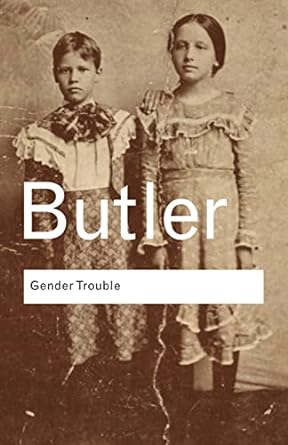
One of the stars of postmodernism is the feminist philosopher Judith Butler. Every person familiar with gender studies anywhere in the world is likely to know of her work. I have read her most important books, Gender Trouble and Bodies that Matter, in the hope that I could find her evidence for her preposterous claim that gender and sex differences are social constructs. This process was made even more difficult by Butler’s inscrutable prose style, which she learned from the French postmodernists. Some critics have argued that her tortuous, highbrow academic style helps to make her unassailable, but that it is actually nothing more than a cover for a dearth of supporting evidence. After consulting her books, I have concluded that they contain no evidence whatsoever for her claim that gender and sex are social constructs.
 Peter Clarke
Keep reading
The Genetics of Crime and Punishment


Jerry Kaplan on AI Doomers


Payback Time for Steven Galloway