Art & Culture
Are Women Victims? — Four Women Respond
Women can be victims. In this world, there are violent, exploitative people willing to use and abuse their fellow human beings.


Helen Pluckrose

Helen Pluckrose is a writer for Areo Magazine and has research interests in late medieval/early modern religious writing for and about women. Her writing is often critical of postmodernism and cultural constructivism which she sees as currently dominating the humanities.
Women can be victims. In this world, there are violent, exploitative people willing to use and abuse their fellow human beings. Sometimes those human beings are women and sometimes they are abused and sexually exploited by powerful men because they are women. But women are not a class of victims. We cannot be victimised by actions and words that men can simply shrug off – an unwanted sexual advance, a strong criticism, an unkind comment, a tasteless joke, a call, a whistle, a wink. We are competent adults, fully equipped to deal with difficult, unpleasant, annoying or simply gauche behaviour. We are possessed of humour, empathy, reason, perspective and charity by which we can evaluate the behaviour of the men around us without developing a siege mentality or constructing a war zone.
When the recent #MeToo phenomenon included horrendous accounts of rape but also clumsy flirting and unwanted compliments, when rape and possibly unintentional knee brushing are discussed as part of the same phenomenon and when 28% of young people think winking is sexual harassment, society could be excused for doubting women’s ability to evaluate danger and cope with public life. This is a reputation we cannot afford if we want to succeed in it.
Feminists of my mother’s generation resisted furiously the claims that women were too timid, too fragile, too neurotic and too easily upset to function in the public sphere. They won this battle. Sisters began doing it for themselves. Women took their places alongside men in boardrooms and political arenas, on lecture hall podiums and in operating theatres, in courts of law and in armies.
This is currently under threat from a cultural shift within feminism which has shifted the aim from female empowerment to status-by-victimhood. It threatens to undo the progress made for women, valorise fragility, discourage resilience, weaponise victimhood and fatally undermine gender relations. It’s not good for women to be treated as fragile victims rather than competent actors in the public sphere. It’s not good for either sex for men to become afraid that talking to women, complimenting women, criticising women, flirting with women or touching women in friendly greeting could destroy their careers and reputations.
Women must oppose the ‘sexual harassment’ moral panics and witch-hunts against men if we care about the credibility of victims of sexual assault, the rights and wellbeing of men and our own social standing.
Holly Ashe

Holly Ashe is a London based fashion and culture writer. She was previously published in Vogue International as a fashion designer and a start-up business entrepreneur.
From my childhood, I was taught to be a strong woman; that women are fully capable. I grew up in a single parent family, with no male influence whatsoever. My mother did everything. She laid a carpet down at eight months pregnant, she built cabinets and bunk beds single handed, she brought up two well respected girls by herself, under an early 90s socially conservative government, living with the ‘shame’ the government had created against her while having barely any money to live on.
But my mother was never a victim. It was something she so ardently despised, and made sure that my sister and I never felt less-than capable for being girls.
 Aaron Sarin
This is a mantra I now practise daily, that has helped me out of years of debilitating chronic illness, a broken-down marriage and a career change before I’ve even hit 30. I’ve had every excuse to play the victim card; to sit and pity myself, to whine and moan behind my keyboard to any of the millions of martyrs online that only fuel and encourage this pitiful practice, but why on God’s earth would I want to do that? Why would anyone, especially women, (after all the sacrifice our fore sisters had made to pave the way for the stigma of being ‘just a woman’ to be shaken off, and to start being taken seriously as capable human beings) want to
go so far back in time, and request the likes of ‘trigger warnings’ and ‘fainting couches’ and ‘chaperones’?
The absurdity of this latest trend (and yes, it is a trend) would be hilarious if it were not so backward, and if it was not promoted so aggressively by the media. Western women, who are in a very privileged position compared to their sisters globally, are stereotyping themselves as damsels in distress incapable of functioning in the adult world, and in permanent need of rescuing. It’s as senseless as it is damaging.
We may get to the point where men are afraid of working with women out of fear of harassment claims and employers are afraid of hiring women out of fear of lawsuits. As one feminist on Twitter recently claimed: “I’m actually not at all concerned about innocent men losing their jobs over false sexual assault/harassment allegations“.
To think that this movement helps women is simply delusional and myopic.
Amy Alkon
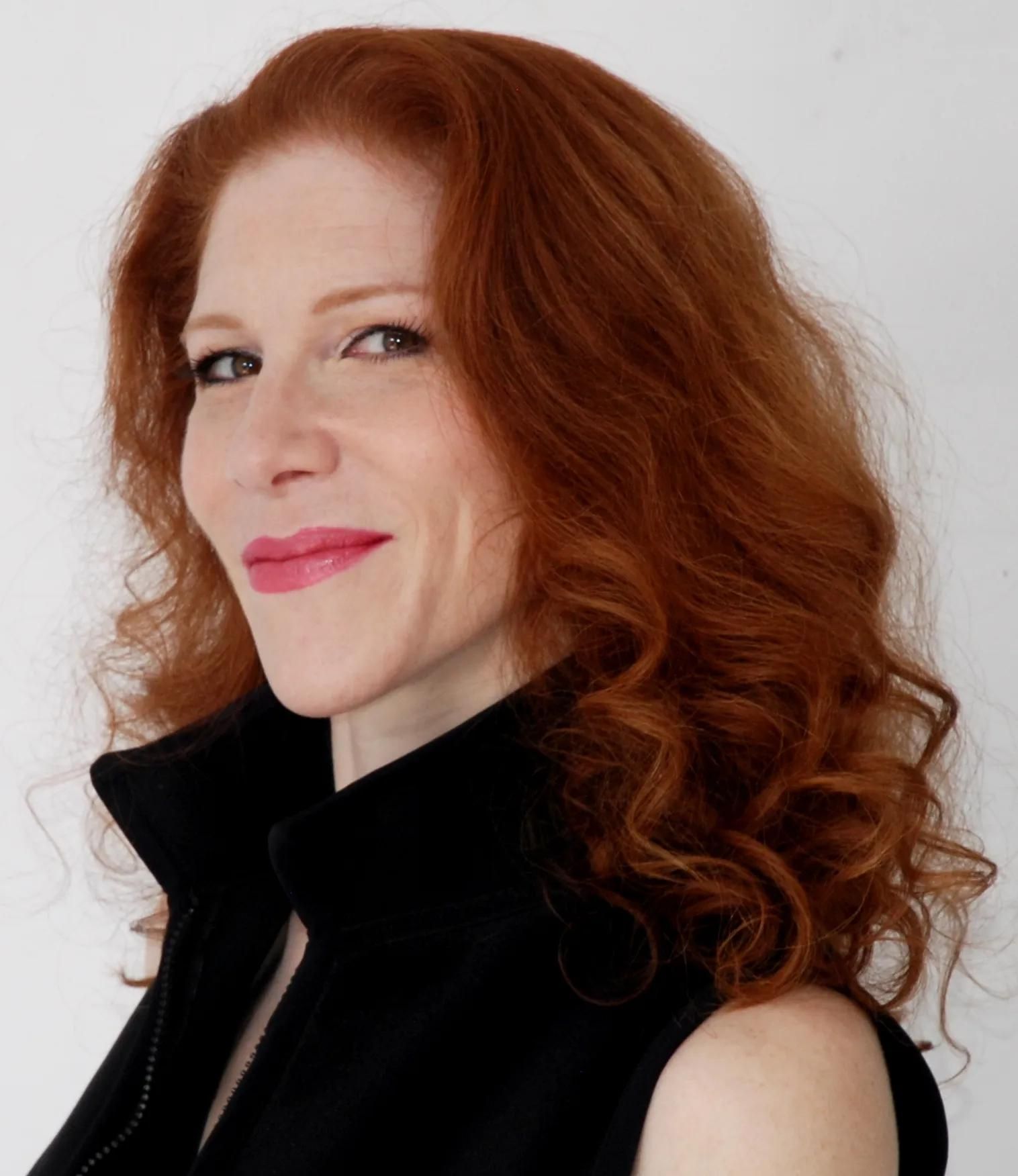
Amy Alkon does “applied behavioral science” translating scientific research into highly practical advice. Her upcoming book is titled Unf*ckology: A Field Guide to Living with Guts and Confidence (St. Martin’s Press, Jan. 2018). Follow her on Twitter @amyalkon.
It was New York, back in the 1990s. I was crossing Seventh Avenue when a guy going the other way called out, “Never seen a body like that on a white woman!”
Naturally, I screamed for a cop and had the man arrested and swiftly executed.
Of course, I’m completely kidding. I loved it then, and I look back fondly on it now—as a 53-year-old redhead, worried that I’ll eventually start looking like the clown from IT.
Note my failure to lap up the requisite bowl of feminist claptrap on the horrors of “objectification” and my companion failure to identify as a victim of patriarchal something-or-other.
Because I don’t identify as a victim, I can laugh, take a joke, and tell somebody who’s bothering me to cut the crap—instead of tattling to an authority figure.
Of course, it helps that I am not a feminist. I instead call myself a humanist, and yes, I know that term has some meanings hitched to it already. However, I use it to explain that I’m for individual rights—meaning the rights of all people, not just people with vaginas.
This runs contrary to what feminism has become. Though feminism claims to advocate for “equal rights,” it now busies itself demanding special rights for women—under the guise of equal rights. (By the way, there’s little that screams that women aren’t equal like calls for special treatment.)
Feminism now regularly calls for women to be treated as eggshells instead of equals. And through this, it does something pernicious to the women it claims to advocate for: Feminism has become a movement for female disempowerment, or what I call “encouraged helplessness” (from psychologist Martin Seligman’s “learned helplessness”—the feeling that there’s nothing you can do to escape your fate).
In fact, feminism, bizarrely, has morphed into paternalism—instructing women that they are fragile, passive, powerless victims who need authority figures to advocate for them.
That’s a movement I want no part of. Or, as I like to put it—because I’m neither a feminist nor much of a lady: Count me the fuck out.
Edie Wyatt
If you’re a woman, I encourage you to join me—count yourself the fuck out of what feminism has become.
This doesn’t require you to be fearless. You just need to shove your fears aside and do what needs to be done—say, getting up on your hind legs and telling some co-worker, “Stop saying that thing to me” or “…treating me this way.”
Keep reading
Jerry Kaplan on AI Doomers

Payback Time for Steven Galloway
War Stories

Life in The Grim Old Days