Liberalism
The Implosion of Western Liberalism
By the end of the twentieth century, liberal democracy seemed not only triumphant but, to some, inevitable.

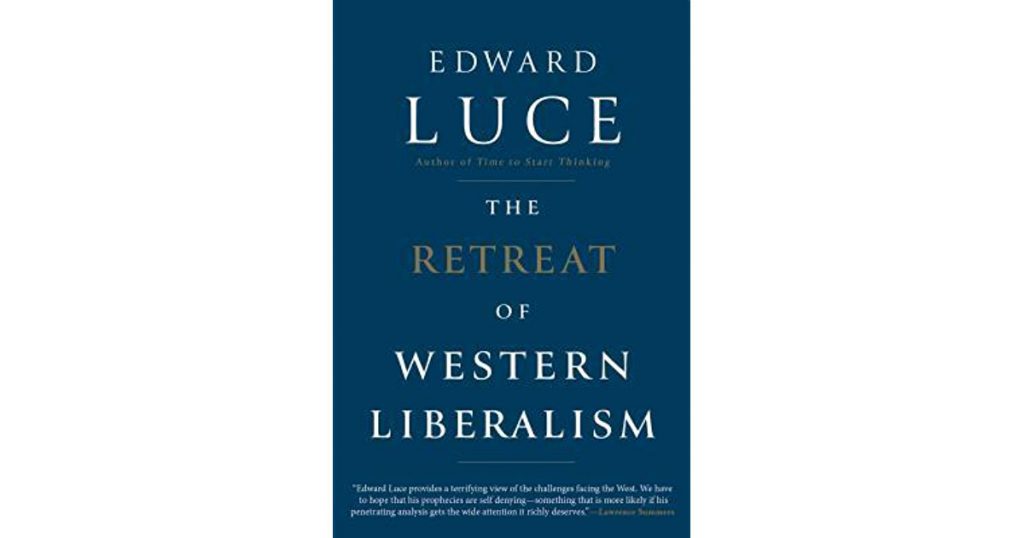
“Western liberalism is under siege,” writes Edward Luce in his short new book, The Retreat of Western Liberalism. Whether it is under siege, retreating or imploding, there is no longer any doubt that it is embattled. To anyone over forty, moreover, this is a puzzling—and likely also disturbing—development.
By the end of the twentieth century, liberal democracy seemed not only triumphant but, to some, inevitable. In the 1970s, Portugal, Greece and Spain closed the long chapter of European fascism. As the Soviets retreated from their satellites, democratic governments (more or less liberal) spread across central and eastern Europe. Through the 1990s, even Russia appeared to be moving closer to the Western consensus over individual human rights and popular representation through genuine, multi-party elections. In three decades (1970–2000), the number of democracies worldwide went from thirty to one hundred. Perhaps even China would liberalize, many Western leaders hoped, as it opened up to Western investment, belying its Marxist rhetoric with an increasingly capitalist reality.
After the fall of the Berlin Wall, Francis Fukuyama foresaw the possibility of “the end of history”, when the rivalry of regimes constituting the drama of history—or at least the drama of the last two and a half centuries—would conclude with a final act of liberal democracy triumphant everywhere. In retrospect, Fukuyama’s thesis seems absurd. History has continued. Since the turn of the 21st Century, twenty-five democracies have failed. Authoritarianism is resurgent all over the world. Tyrants control the erstwhile democracies of Russia, Turkey, Hungary, Venezuela, Thailand, Botswana and the Philippines. What is most disturbing to those, such as Luce, who think liberal democracy is the best sort of regime is that authoritarian candidates are now growing popular in the very countries that first embodied this Enlightenment ideal. Along with other far-right candidates in other European countries (Hofer in Austria, Gauland in Germany, Wilders in Holland), Le Pen has become a serious contender for the leadership of France. In the U.S.A, of course, there is Trump.
On the record as a fan of Putin, menacing racial minorities with executive orders, and openly contemptuous of the checks and balances in the U.S. Constitution, the former reality-TV star threatens to undermine Western liberalism from within the White House itself. Except for Trump, however, all of the candidates listed above lost. Even Trump lost the popular vote, and had it not been for the Comey letter, 70,000 Trump voters in the rust belt may have stayed home or changed their minds. To these bromides, liberals who consider this disorienting moment a hiccup add that Hilary Clinton’s campaign was bad—epically so. Had it been a presidential election like any of those that preceded it, though, none of this would have mattered. Something fundamental has changed—not only in America, but worldwide—and Luce joins the growing chorus who are trying to put a finger on it.
Western liberal democracy is closer to collapse, he believes, than it has been since the Second World War. “This time, however, we have conjured up the enemy from within.” It is not only that “we have put arsonists in charge of the fire brigade,” but worse: the contempt for liberal democracy is growing, regardless of who wins or loses particular elections. “One in six people of all ages in America and Europe,” he writes, “now believe it would be a good or a very good thing for the ‘army to rule’.” To put that in perspective, this response was “one in sixteen in the mid-1990s.” While longing for “a strong leader who doesn’t have to bother with parliament and elections” is also on the rise, esteem for democracy declines, especially among rich millennials—the very people who will inherit this crisis. “If today’s rich young are tomorrow’s thought leaders,” Luce concludes, “democracy has a shaky future.”
What happened? Luce focuses on three main causes: globalization, labor automation, and “the rise of the rest,” namely China, which is returning to the status it had enjoyed through much of recorded history until the 19th century. Weaving together statistics about each and stories from others, as well as anecdotes from his own adventurous career, Luce presents a gloomy prospect for Western liberalism.
I. Economic Malaise
The core of Luce’s argument is the “Elephant Chart” that precedes his preface.
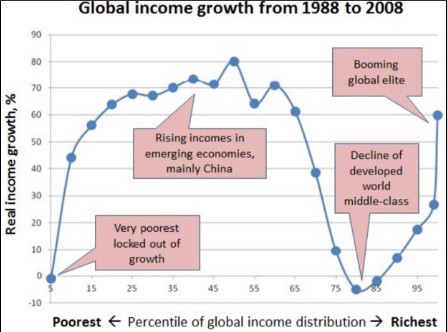
Along the x-axis is global income distribution in percentage points: the poorest of the world are at the far left, the richest at the right. Because the Western middle class is rich relative to most of the world, it is not in the middle of this axis, but instead to its right, occupying the segment from roughly 75% to 90%. The y-axis represents real increase in income during the period 1988-2008, or as Luce puts it more vaguely, “in the last generation,” encompassing the likelihood that this picture will become more dramatic once it includes data from the Great Recession to the present. In any case, the lesson of the graph is that globalization has been best for the global poor (the poorest of them excepted) and the richest of the rich.
The Western middle class, by contrast, has seen little gains; indeed, those around 80%—the heart of the Western middle class—have seen decreases in real income. Meanwhile, inflation has put staples of middle-class ambition (health insurance or college tuition) out of reach for many. Consequently, they became bitter about their abandonment by the “third way” politicians, those who led the parties that were supposed to be on their side while they were accelerating globalization with free-trade deals—the Democrats in the U.S.A., Labor in the U.K., and so on.
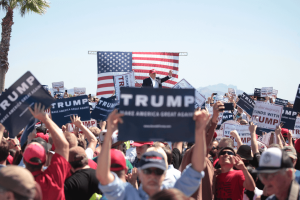
Luce tells a convincing story here about the cultural alienation that occurred between the middle class, on the one hand, who were attached to their regions and nations, and this new sort of politician, on the other, who felt more comfortable with his sophisticated peers in Davos than he did among his constituents in Kansas or the Midlands. “Every single one of America’s 493 wealthiest counties,” writes Luce, “almost all of them urban, voted for Hillary Clinton. The remaining 2623 counties, most of them suburban or small-town, went for Donald Trump.” Thrilled by his contempt for politicians, and sharing his protectionism, if not always his racism and xenophobia, the resentful “left-behinds” of Middle America chose Trump as their champion, despite his many flaws, and sometimes because of them.
“Western populism,” writes Luce, quoting a Dutch scholar, “is an illiberal democratic response to undemocratic liberalism.” In other words, Luce sees 2016 as one result of tension in the idea of liberal democracy itself. Pure democracy—such as that of classical Athens—permits the majority to pass whatever laws they please. Liberalism, exemplified by the American Bill of Rights, guarantees certain freedoms against the encroachment of government, even when that government is democratic. If courts abrogate popular laws as unconstitutional, or if bureaucracies make policy against the grain of popular sentiments, the experts who staff the judiciary and the government risk alienating the people and provoking a populist reaction. This is what happened, according to Luce, with both Brexit and Trump.
One of the appeals of this book is its international perspective. After Trump won, many on the left had ready explanations to suit the occasion: racism had once again revealed its perennial power in American society, or sexism kept voters from seeing Clinton as deserving the U.S. presidency. These were important factors in this election—important, but not decisive. Luce does not downplay them. He is also aware of the racist rhetoric used by populist politicians in Europe as Syrian refugees inundated that continent. Race played a role in both the American and European elections of recent years, he argues, but these are multiple manifestations of a common cause: economic distress for the Western middle class. “Without higher growth, the return of racial politics looks set to continue.” Unlike many American commentators, then, Luce aims to see Trump against a broader background: the rise of populism, the decline of liberal democracy, and the return of authoritarianism—across the world.
The question remains: how does the economic bitterness of the Western middle class explain the power of a Putin, Erdogan, Maduro or Duterte? Regrettably, Luce says very little about the first three, nor is it at all clear what he would say. Take Putin, for example. Masha Gessen’s superb new book, The Future is History: How Totalitarianism Reclaimed Russia, traces his power over Russia to the persistence there of Homo Sovieticus, a character-type fostered by the Bolsheviks and Stalin.
Masha Gessen provides a ground-level view of what life is like under Vladimir Putin https://t.co/9C5saaoCaG
— New York Times Books (@nytimesbooks) October 3, 2017
Gessen’s explanation challenges Luce’s thesis in two ways. First of all, it is cultural: certain types of people with certain values are more or less disposed to favor democracy or autocracy, and those types are the products of culture and education. Secondly, it is idiosyncratic: Russian totalitarianism has primarily Russian causes. Fluctuations in the oil markets, eastern expansion of NATO, and many other external factors are important to her story, but ultimately it is a story specific to Russians.
II. The Beijing Consensus
Luce’s explanation works better with the new Philippine president, who is popular for promoting “law and order.” He encourages private citizens—even family members—to kill “drug addicts.” More than seven thousand have died so far in this campaign that is legitimating the settling of personal scores, not to mention the murder of political opponents. Luce describes an experience with Duterte when he was still mayor of a remote city. Spending a weekend with him “flanked by a posse of goons in B-movie shades and cowboy boots,” Luce learned how the mayor controlled crime. Teaching suspects how to “fly,” as he put it, he threw them out of a helicopter. So much for due process. But how is this particular retreat of Western liberalism explained by the resentments of the Western middle class?
“Although the West likes to think of the late twentieth-century democratic wave as a Damascene conversion,” Luce believes that “much of it was purely instrumental.” During this period, as the last embers of fascism went cold and communism collapsed nearly everywhere, Western countries were flourishing. “Non-westerners could observe the fruits of Western growth on their television screens,” Luce adds, and “they knew which goose was laying the golden eggs.” However, the expensive and aggressive war in Iraq cost the U.S. both treasure and prestige. When the financial crisis of 2008 hit it and other Atlantic countries hard, whereas China’s growth accelerated, the rest of world observed “that advanced modernization can be combined with authoritarian rule.”
Leading with incentives as much as by example, China made investments on six continents, most notably Africa, forging international partnerships without—unlike the U.S.—any (liberal) strings attached. Furthermore, the world watched as Hu Jintao humiliated Obama in Beijing. Spectators made their own conclusions about the shifting balance of geopolitical power. The Philippines is a clear case of the consequences: Duterte called Obama a “son of a bitch,” then reoriented his diplomatic efforts away from Washington and toward Beijing.
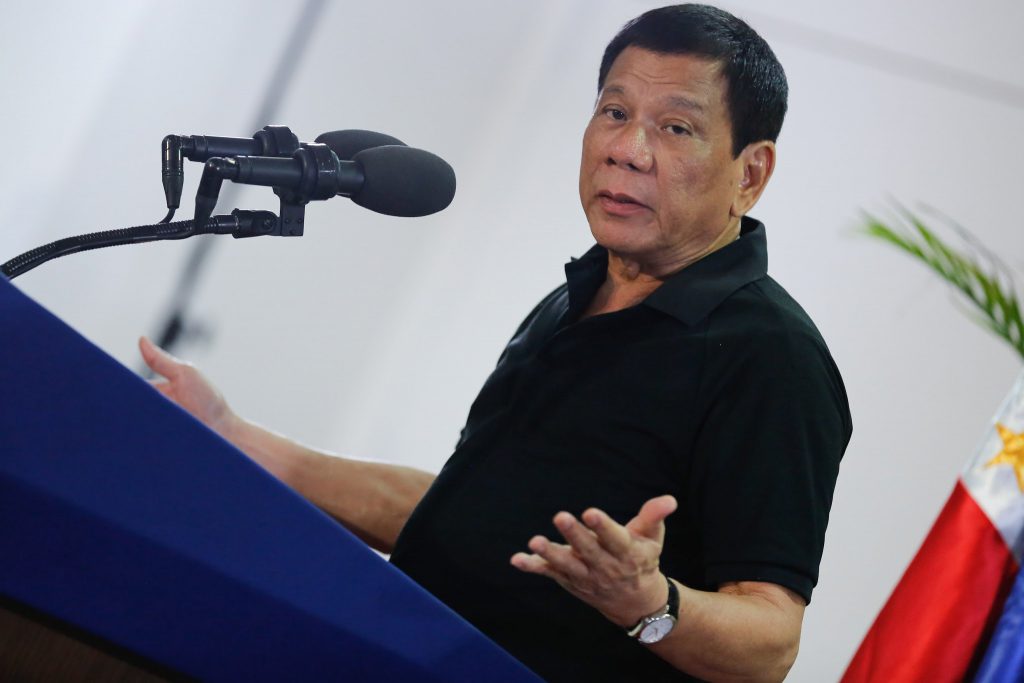
This is a portentous development as China builds islands in the South China Sea. Trump’s failure to support the Trans-Pacific Partnership only confirms the prudence of Duterte’s decision, especially as the aircraft carrier—with which the U.S.A. has projected its power since the end of the Second World War—becomes an obsolete military technology. Other Asian nations will heed the lesson.
Whether it is China or, to a lesser extent, Russia, authoritarian regimes in smaller countries looking for help with their development and security now have an alternative to the Bretton Woods institutions and alliances. China is not trying to assert itself as the new hegemon, let alone export revolutionary ideology, as it did in its Maoist days; “its goal nowadays is counter-revolutionary: like Moscow, Beijing’s real aim is to disrupt the West’s claim to universalism.” The principal argument in their shared campaign to dethrone the Washington consensus is that “America’s liberal democratic discourse is a cover for its geopolitical interests.” Its NGOs, for instance, may pretend to be humanitarian, but their goals are strategic. Whether fighting to make the world safe for democracy or capitalism, the U.S.A. has always sought to dominate the world. Having exposed this pretense as such, their argument for “civilizational diversity—a code term for autocracy—now finds a more receptive audience.”
The most aggressive exponent of this “counter-revolutionary” argument is Alexander Dugin, “Putin’s Brain.” His signal phrase, according to Gessen, is that “there is nothing universal about universal human rights.” They are instead a rhetorical trick used by the West to weaken a “traditional values civilization” such as Russia. According to him, Russia stands at the head of such a civilization, distinctly Eurasian, whose values are antithetical to those of the Atlantic. “It was the rule of Putin,” he has said, “that spelled the true victory of Eurasianist ideas.” These ideas are a mish-mash of Heidegger, homophobia, and conspiracy theory, among other ideas also known to the West. What is truly anti-Western in Dugin’s thought, however, is his contempt for the individual. In one of his early manifestos, for instance, he promoted “National Bolshevism,” the “worldview that is built on the total and radical negation of the individual and his centrality.”
Since then, Dugin’s ideology has mutated many times—subsuming, for instance, ecology—but he keeps defining it against Western modernity. Knowingly or not, Kremlin spokesmen and Russian TV commentators have adopted his peculiar vocabulary (e.g., “Russian World”), while he has cultivated contacts with far-right leaders from Istanbul to Paris. Any account of the siege of Western liberalism in Europe has to grapple with Dugin’s influence, yet Luce never mentions him. Why not? The bright lights of power-politics and economic forces have distracted him from the obscure ideas that help shape both. For their part, neither Russia nor China makes this mistake. While penny-pinched Western media are closing their international bureaus, Luce observes, China Central Television (CCTV) has set up thirty new ones, just as RT (Russia Today) is viewed in thirty million hotel rooms worldwide.
Luce fails to mention that the Voice of America (VOA) still exists and broadcasts to over two hundred million foreigners,11 but what is the message? Do American announcers confidently assert the values of Western liberalism abroad when those values are now so tepidly maintained at home? If so, the audience cannot be as receptive as it was two decades ago. “Beijing,” conversely, “now runs more than five hundred Confucius Institutes worldwide.” Whether they teach anything like authentic Confucianism, or whether they are fronts for other activities, is beside the point; the pretense alone is enough to see the contrast between China and America. Anything similar from a Western government—Plato Institutes?—is hard to imagine at this point.
III. Liberal Philosophy
Although he doesn’t quite say so, Luce seems to think that philosophical humility is a virtue rather than a vice of the West. “If the intellectual basis of Western liberalism is skepticism,” he writes in another context, “we should learn to live up to its meaning.” This is the closest Luce comes to giving any intellectual foundation to the political tradition he wishes to defend. This gap is excusable from a hot-take account written in the months following Trump’s unexpected victory, but there isn’t any sign that more meditation would have yielded anything firmer. Locke and Hobbes make cameo appearances, when Luce wants to claim that we are moving from a society of rights to a war of all against all. But that is the extent of his engagement with the tradition of liberal philosophy.
Luce does advocate “reviving a focus on the humanities, including basic levels of political literacy.” That said, he never explains how this focus would make any headway against the world-historical economic forces that are, according to him, the principal causes of the crisis. Moreover, Luce’s contradictions on the role of the humanities and values go deeper. “We are taught to think that our democracies are held together by values,” he says, “but liberal democracy’s strongest glue is economic growth.” If the Western countries are held together—internally, and in alliance with each other—by growth, what is it that makes their regimes worth preserving? The answer must be that they foster the most prosperity. Is that really all that’s at stake in this crisis?
Luce comes close to saying this when he claims that democracies are “more efficient” than autocracies. His evidence comes from a general appraisal of the combatants in the Second World War: “the two most efficient belligerents by far were the US and Britain,” he writes, because rather than fear, “trust is the glue of a successful free society.” So which is it, trust or growth? The correct answer is neither. Public trust and economic growth are good things, to be sure, and it may very well be true that Western liberalism will eventually expire without them, but it does not follow that either of them is its essence. That essence is a constellation of values that foster, though hardly guarantee, trust and growth. These are the values that ultimately unite us. And what are they?
Few are the Western soldiers who have enlisted, let alone died, to promote greater income equality or more accountability from politicians. Liberty, for better or worse, has summoned them to battlefields from Concord to the present. However, it may be objected, those are the times that try men’s souls. What about times like these, when the battle rages not with steel, but in books? Well, why does Luce himself join this battle? I doubt it’s for the sake of prosperity or transparency. And what about us? Will we go over the parapet with him because we want more money for ourselves or more honesty from our government? How does life in a rich and explicit tyranny sound to you? Would you compromise your present rights to discuss ideas like these, not to mention act upon them, if doing so promised more growth and security?
If so, as the surveys show more and more Americans choosing, then the retreat of Western liberalism is not happening, fundamentally, on account of China, automation or globalization, let alone because of Trump, Putin and Orbán, but from a much deeper failure—the failure of Western countries to reproduce liberal individuals holding liberal values. Luce reminds us that the US Constitution was saved from the proto-tyranny of Nixon less by the laws than by the unsung characters of Randolph Thrower, Johnnie M. Walters, and Mark Felt—as well as Archibald Cox, whom he does not mention. Luce is right, but people who understand liberal values, and have the courage to defend them, do not spring from the earth unless dragon’s teeth are first sown.
IV. Liberal Individuals
Our failure to produce liberal individuals in recent decades is, I have argued, a symptom of corruption in our schools, especially our universities, which are forming thought-leaders who are not only ignorant of liberalism, but occasionally hostile to it. The humanities classrooms Luce promotes as the places where Westerners can once again acquire “basic levels of political literacy” are often political, but they are usually critical of the classical liberalism Luce has in mind. When it comes to political theory, for example, undergraduates are less likely to read Locke, Madison and Mill than they are to read Nietzsche, Foucault and Derrida.
Thomas Jefferson, ‘emblem of white supremacy,’ targeted in UVA students’ list of demands https://t.co/GUU0jHEPrZ
— The Washington Times (@WashTimes) August 23, 2017
Perhaps the influence of postmodern philosophy on the humanities and social sciences has reached its high-water mark. If nothing else, the illiberal protests of student activists across the country, and the chaos at Evergreen State, in particular, have exposed its weakness as a positive political program. One can only hope. The damage has already been done, though, if the attitudes of young Westerners toward their liberal democratic tradition is any indication. Writers here and elsewhere are therefore calling for a return to modernism—according renewed importance to freedom, reason and science—in order to rejuvenate the university and the wider project of Western liberalism it serves. But however admirable their goals, these writers are naïve to think that the failure of postmodernism as a positive philosophy is enough to discredit its trenchant criticisms of modernist thought.
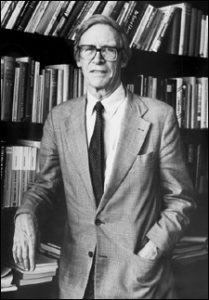
Here is not the place to survey those criticisms. What we can do quickly is present two of the last generation’s greatest defenders of Western liberalism and revisit the problems postmodernism caused for them. First, John Rawls. A Theory of Justice (1971) defended liberal democracy through the conceit of “the original position,” which presupposes “the veil of ignorance.” Imagine a group of people constituting the rules of a society in which they must then live. Now imagine that they have no knowledge of the identities or positions they will assume in that society. Rawls mentions social status, class, intelligence and strength, but remarkably, neither race nor sex. In any case, this is the veil of ignorance. Behind this veil, Rawls believed, none would promote the interests of one group over the others. This is the original position, where the judgments of neutral framers would yield a just social contract, maximizing equality by consent freely given.
However, only someone who is already a liberal individual would presume that judgments about justice could be made in such abstract circumstances. To someone who makes all moral judgments by reference to a caste, a tribe or a tradition—thinking historically, this describes the norm, to which the liberal individual is an exception—Rawls’ conceit becomes unintelligible. Catholic thinkers, for example, objected: my devotion to the magisterium of the Church determines my judgments about justice, so how could I make any judgments behind the veil of ignorance without knowing that I am Catholic? Critical race theorists, too, argued that all moral judgment is informed by one’s embodiment at a particular time in a particular race, meaning that the “abstraction” of the veil of ignorance was only a rhetorical device for enshrining the prejudices of whites.
In the same vein, evolutionary psychologists could make common cause with feminists, objecting that the different perspectives of women and men (as populations) would yield relevant differences in moral judgment in the original position, so that gender identity cannot really be abstracted. Feminists add that the judgments Rawls imputed to the “abstract” agents were in fact those of men. Whether or not that is true, there is clearly something wrong here when critical race theorists, feminists, evolutionary psychologists and Catholics make the same fundamental criticism: he cloaked an idiosyncratic notion of justice—namely, liberal democracy—with the rhetoric of neutrality and universality. Shorn of its own rhetorical excesses, this is the postmodern critique of liberalism. With Rawls, at the very least, it is accurate.
Keep reading
A Clockwork Filmmaker

The Insight Trap
Cornell and Consent
Robert Lynch on Status, Humour and the Apes We Pretend Not to Be | Quillette Cetera Episode 74