Crime
Ferguson Effect Detractors Are Wrong
The violence surge continued into fall. Homicides in Baltimore reached their highest per capita rate in the city’s history.
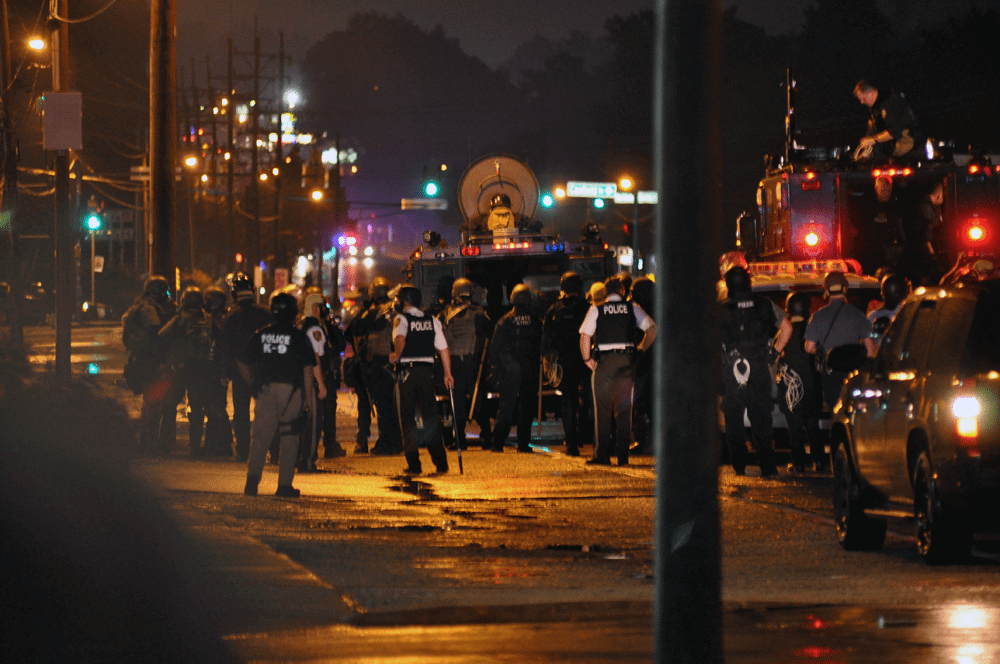

Violent crime in many American cities began rising in the second half of 2014, after two decades of decline. The Major Cities Chiefs Association convened an emergency session in August 2015 to discuss the double-digit surge in violence besetting its member police departments. Homicides at that point were up 76% in Milwaukee, 60% in St. Louis, and 56% in Baltimore, compared to the same period in 2014; the average homicide increase among 35 cities surveyed by the Association was 19%. “Crime is the worst I’ve ever seen it,” said St. Louis Alderman Joe Vacarro in May. July 2015 was the bloodiest month in Baltimore since 1972, with 45 people killed in 30 days. Arrests, summons, and pedestrian stops had dropped in many cities, where data on such police activity were available.
The violence surge continued into fall. Homicides in Baltimore reached their highest per capita rate in the city’s history. In October, Attorney General Loretta Lynch brought together over one hundred police chiefs, mayors, and federal prosecutors in another emergency meeting to strategize over the rising homicide rates. FBI Director James Comey noted in an October speech that “Most of America’s 50 largest cities have seen an increase in homicides and shootings this year, and many of them have seen a huge increase.”
The media confirmed the experience of law enforcement officials. In September, the data blog FiveThirtyEight found a 16% increase in homicide in the 60 largest cities so far that year. The Washington Post found a nearly 17% increase in homicides in 2015 in the 50 top cities, the largest one-year increase since 1993. (Had homicides dropped 17% in one year, mayors and police chiefs across the country would have been popping champagne corks.) The Brennan Center for Justice estimated a nearly 15% increase in homicides in 25 of the 30 largest cities in 2015. This year, many cities are still struggling with crime increases: the number of homicides in Chicago through March 11, for example, had nearly doubled from the same period in 2015, notwithstanding that homicides had already increased nearly 13% in all of 2015. Homicides in Los Angeles were up nearly 28% through March 9 and violent crime up 13%.
I first noted the rising violence in a Wall Street Journal op-ed in May 2015. And having spoken with police officers across the country, I posited a reason for it: officers were backing off of proactive policing in reaction to the hostility they were encountering in urban areas. Officers had told me about being surrounded by angry, jeering crowds who cursed and threw water bottles and rocks at them when they tried to make an arrest. Suspects and bystanders stuck cell phones in officers’ faces and refused to comply with lawful orders. Officers were continuing to answer 911 calls with alacrity, but in that large area of discretionary policing—getting out of a squad car at 1 a.m., for example, to question someone who appears to have a gun or may be casing a target—many officers were deciding to simply drive on by rather than risk a volatile, potentially career-ending confrontation that they were under no obligation to instigate.
I dubbed this latest outbreak of depolicing and the resulting emboldening of criminals the “Ferguson effect,” picking up on a term first used by St. Louis police chief Sam Dotson. The police shooting of Michael Brown in Ferguson, Mo., in August 2014 had triggered riots, die-ins, and cop assassinations. It gave rise to the angry Black Lives Matter protest movement, which asserts that racist (insert “white” whenever circumstances allow) cops are engaged in a killing spree against unarmed black men. Activists and academics denounced pedestrian stops and public order policing (otherwise known as Broken Windows policing) as racially biased and oppressive. As a result, officers were doing a lot less of such discretionary enforcement. Arrests in St. Louis city and county, for example, dropped a third after the Brown shooting; misdemeanor drug arrests in Baltimore dropped a third through November 2015.
The relationship between depolicing and crime was hardly a novel discovery; a 2005 University of Washington study of depolicing in Cincinnati following the anti-cop riots of 2001 had found a drop in arrests and a surge in crime in the city’s black areas. And I was hardly the only person to hear from police officers about their reluctance to engage in proactive enforcement. FBI director Comey reported that cops in one big city precinct “described being surrounded by young people with mobile phone cameras held high, taunting them the moment they get out of their cars.” The cops told Comey: “’We feel like we’re under siege and we don’t feel much like getting out of our cars.’” In November 2015, the acting head of the Drug Enforcement Administration, Chuck Rosenberg, said his own conversations with police officials had persuaded him that cops were worried about becoming the “next viral video,” because even if they did everything right, they could “still end up on the evening news.”
Keep reading
In Defence of Academic Standards

Letters to the Editor

Danielle Haas on How Activism Took Over Human Rights | Quillette Cetera Episode 73
On Trauma-ism